Buying guide
The Best Back Decompression Device for Home, Type by Type
By the IntoInversion teamUpdated
- 4 picks
- 29 sources
- 15 min read
We earn from qualifying purchases made through our links.

Our pick for most people
Teeter P2 Back Stretcher
The best back decompression device for most people is the one that lets you control the dose second by second, from a maker that tells you when to stop. No home device on this page has strong trial evidence behind it, so control and documentation are what separate them.
- The pull stops the moment you stop pushing
- Five-year full warranty from Teeter
- Manual gives hold times and clear stop signs
- Warranty
- 5 years
- Price range
- Budget
Maker sourceSpecs from the maker's own product page
Best inflatable belt
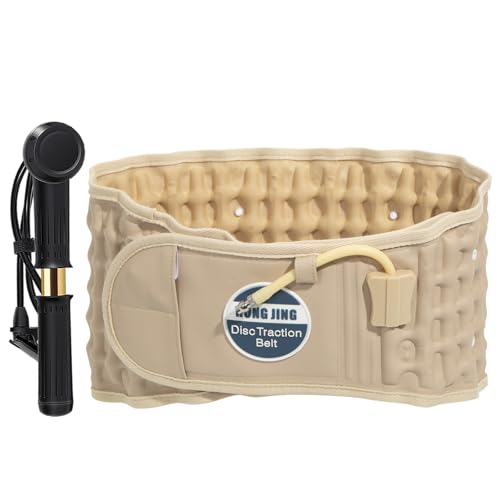
Choose it if you want something you can wear while sitting or walking and accept that belts like it are untested. Skip it if you want a maker's manual, a spec sheet or published wear times.

Best for standing traction
Stamina InLine Traction System
Choose it if getting down to the floor is hard and you want a longer, steady stretch without going upside down. Skip it if you weigh more than 250 lb or have no room for a frame.
Best premium machine
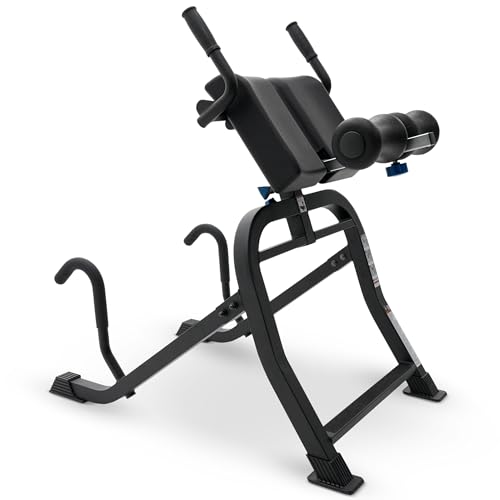
Choose it if you want hip-supported inversion with no load on the ankles, plus a core training station. Skip it if you have high blood pressure, glaucoma or anything else that rules out going head-down.

Best for neck and lower back
Choose it if your neck bothers you as much as your lower back and you prefer to lie down. Skip it if you have had spinal surgery or have implanted spinal hardware: the maker says not to use it.
A back decompression device is anything that tries to unload your lower spine at home: a belt you inflate, a frame you lean into, a stretcher you push against, or a machine that tips you forward. We did not test these devices on people. We read each maker’s manual and product page, checked the trial record for each type, and tied every health claim to a named study. If you buy through our links we may earn a commission, which never decides what we pick.
The Best Back Decompression Devices at a Glance
Search results for “back decompression device” mix five very different products, from a belt to a commercial-grade machine. Picking well starts with picking the type.
See our five picks in one table
Our Picks by Type
| If you want | Our pick | How it works | Tier |
|---|---|---|---|
| The most control | Teeter P2 Back Stretcher | You lie down and push handles; leverage pulls the lower back | budget |
| Something you wear | HONGJING inflatable belt | Air chambers expand around your waist | budget |
| To stay on your feet | Stamina InLine Traction Control System | Belt at the hips, you lean forward onto a chest pad | mid-range |
| Inversion without the ankles | Teeter DEX II | Tips you forward, held at the hips and thighs | premium |
| Neck and lower back together | Posture Pump 4100-D | You lie on air cells and pump them up | mid-range |
We don’t print prices, because they change from week to week.
The Specs Side by Side
Four of these columns come from the maker’s own page or manual. The belt has no maker site, so its column comes from the Amazon listing, and where a figure isn’t published the table says so.
| Spec | Editor's choiceTeeter P2 Back StretcherBudget, price tier 1 of 3Maker source | HONGJING Decompression BeltBudget, price tier 1 of 3Listing only | Stamina InLine Traction SystemMid-range, price tier 2 of 3Maker source | Teeter DEX IIPremium, price tier 3 of 3Maker source | Posture Pump 4100-DMid-range, price tier 2 of 3Maker source |
|---|---|---|---|---|---|
| Weight capacity | Not stated | Not stated | 250 lb | 350 lbHighest here | Not stated |
| How you use it | Pads on the thighs, rollers behind the knees; push the handles toward your feet and hold 5 to 10 seconds | Worn around the waist and inflated, sitting, standing or walking | Stand with feet flat, belt at the hips, and lean forward onto the chest pad for 2 to 3 minutes | Stand on the base, lean forward on the cane handles and rotate until the lap pad reaches its stop, knees bent | Lie on your back on the units, pump to a comfortable level, cycle up and down, then rest up to 15 minutes |
| Adjustment | Three positions (seated, lying, legs raised) and numbered lap pad widths; you set the force by how hard you push | One size, waist 29 to 49 in with the included extension | Spring-pin height to match the belt pivot to your hip; foam roller position sets stretch strength; arm pad width | Lap pad height set so your hips line up with its top edge; leg supports snug behind the thighs | Hand pumps inflate the neck and lower back air cells separately |
| Warranty | 5 years fullHighest here | 3 years, plus 60-day money-back guarantee (listing claim) | 3 years frame, 90 days parts | 5 years full (5-year extension sold separately)Highest here | 6 months parts and labor, 60-day money-back guarantee |
| FDA | Teeter calls it FDA-registered 510(k); its 510(k) K162702 covers a portable decompression device, Class I device type | Not stated | Not stated | Manual states Teeter inversion products are FDA-registered as 510(k) devices (brand-wide, no DEX-specific number) | Not stated |
| Assembly and setup | Two pieces join without tools and separate for travel; lap pad width set by a numbered knob on each side | None: wrap, fasten and inflate | Nine steps in the manual, 6 mm Allen wrench and wrench included; two people recommended | Five steps in the manual, two wrenches and a screwdriver supplied; BILT app instructions | None: neck unit and lower back unit join with a comfort pad |
| Buy | See today's price: Teeter P2 Back Stretcher on Amazon (opens in a new tab) | Not linked | See today's price: Stamina InLine Traction System on Amazon (opens in a new tab) | See today's price: Teeter DEX II on Amazon (opens in a new tab) | See today's price: Posture Pump 4100-D on Amazon (opens in a new tab) |
Editor's choiceTeeter P2 Back StretcherMaker source- Weight capacity
- Not stated
- How you use it
- Pads on the thighs, rollers behind the knees; push the handles toward your feet and hold 5 to 10 seconds
- Adjustment
- Three positions (seated, lying, legs raised) and numbered lap pad widths; you set the force by how hard you push
- Warranty
- 5 years fullHighest here
- FDA
- Teeter calls it FDA-registered 510(k); its 510(k) K162702 covers a portable decompression device, Class I device type
- Assembly and setup
- Two pieces join without tools and separate for travel; lap pad width set by a numbered knob on each side
HONGJING Decompression BeltListing only- Weight capacity
- Not stated
- How you use it
- Worn around the waist and inflated, sitting, standing or walking
- Adjustment
- One size, waist 29 to 49 in with the included extension
- Warranty
- 3 years, plus 60-day money-back guarantee (listing claim)
- FDA
- Not stated
- Assembly and setup
- None: wrap, fasten and inflate
Stamina InLine Traction SystemMaker source- Weight capacity
- 250 lb
- How you use it
- Stand with feet flat, belt at the hips, and lean forward onto the chest pad for 2 to 3 minutes
- Adjustment
- Spring-pin height to match the belt pivot to your hip; foam roller position sets stretch strength; arm pad width
- Warranty
- 3 years frame, 90 days parts
- FDA
- Not stated
- Assembly and setup
- Nine steps in the manual, 6 mm Allen wrench and wrench included; two people recommended
Teeter DEX IIMaker source- Weight capacity
- 350 lbHighest here
- How you use it
- Stand on the base, lean forward on the cane handles and rotate until the lap pad reaches its stop, knees bent
- Adjustment
- Lap pad height set so your hips line up with its top edge; leg supports snug behind the thighs
- Warranty
- 5 years full (5-year extension sold separately)Highest here
- FDA
- Manual states Teeter inversion products are FDA-registered as 510(k) devices (brand-wide, no DEX-specific number)
- Assembly and setup
- Five steps in the manual, two wrenches and a screwdriver supplied; BILT app instructions
Posture Pump 4100-DMaker source- Weight capacity
- Not stated
- How you use it
- Lie on your back on the units, pump to a comfortable level, cycle up and down, then rest up to 15 minutes
- Adjustment
- Hand pumps inflate the neck and lower back air cells separately
- Warranty
- 6 months parts and labor, 60-day money-back guarantee
- FDA
- Not stated
- Assembly and setup
- None: neck unit and lower back unit join with a comfort pad
Maker source from the maker's own page or manual, not independently testedListing only retail listing, no maker spec sheetNot stated the maker publishes nothing
The weight row is the first thing to check. Only Stamina and Teeter publish a limit, for the frame and the DEX II. The rows that separate the others are warranty and who stands behind the figures.
What a Back Decompression Device Actually Does
“Decompression” sounds like a treatment. Mechanically, every device on this page does one thing: it pulls, or tries to pull, the vertebrae of your lower back slightly apart.
Traction by Another Name
The medical word for that pull is traction. The Cochrane team that reviewed it counted manual traction, motorized traction and body-weight traction as variations of the same idea (Wegner, 2013). An inversion table, for example, is described in a 2023 article in Disability and Rehabilitation as “a form of spinal traction,” thought to help because gravity “distracts the lumbar vertebrae” (Kassay, 2023). That word “thought” matters. It describes a proposed mechanism, not a measured result.
Five Ways to Pull on a Spine at Home
The home devices differ in what supplies the pull:
- Inflatable belts wrap the waist and expand with air, pushing between the lower ribs and the hips.
- Leverage stretchers like the Teeter P2 turn a push of your arms into a pull on the lower back.
- Standing traction frames like the Stamina hold your hips while you lean forward, so your upper body weight does the work.
- Forward inversion machines like the DEX II tip you head-down, held at the hips.
- Air-cell devices like the Posture Pump lift the curves of the spine from underneath while you lie still.
What “Decompression” Can’t Promise
None of the makers on this page measured pressure inside a disc with their device. When a listing says a belt puts a disc “back to its natural position,” that is marketing language, not a finding. The fair reading is simpler: these devices stretch the area, and some people feel better while they do.
Do Back Decompression Devices Work? The Evidence by Type
The honest answer differs by type, and for most types the research is thin. Here is what exists.
Traction in General: Little or No Effect
The largest body of evidence covers traction as a whole. A Cochrane review published in 2013 pooled 32 trials with 2,762 people and concluded that traction, alone or with other treatments, “has little or no impact on pain intensity, functional status, global improvement and return to work” in low back pain (Wegner, 2013).
Guidelines follow that evidence. The UK’s NICE guideline on low back pain and sciatica tells clinicians: “Do not offer traction for managing low back pain with or without sciatica” (NICE, 2016). The North American Spine Society, looking at disc herniation with leg pain, found the evidence insufficient to recommend for or against traction (NASS, 2012). Insufficient is not the same as negative, but it is not a green light either.
Inflatable Belts: One Small Study, Not of a Belt You Can Buy
We searched the trial databases for inflatable, pneumatic and air-traction decompression belts and found no trial of the belts sold online. The closest study is a 2005 preliminary report on a custom-made pneumatic lumbar vest called Orthotrac. Forty-one patients aged 19 to 25 wore it 60 minutes three times a day for five weeks, and 32 of them (78%) improved (Dallolio, 2005).
There was no control group, so the result can’t be separated from the natural recovery that back pain often makes. The author himself asked for larger studies. Aetna’s policy on lumbar traction devices, which reviews this study, classes home pneumatic lumbar traction devices, the Orthotrac vest among them, as “experimental, investigational, or unproven” (Aetna policy on lumbar traction devices).
Soft Support Belts: A Different Device With a Real Trial
There is one good randomized trial of a belt, and it is easy to misread. In 2026, a French trial gave 168 adults with low back pain of 1 to 6 months either usual care or usual care plus a soft, elastic lumbar belt. At 12 weeks the belt group’s disability score had improved by 10.0 points against 5.3, a modest difference of 4.7 points (Grange et al., JAMA Network Open 2026).
That belt supports the back; it doesn’t inflate or stretch it. The trial had no sham device, was open-label, and was funded by the belt’s maker, all of which the authors acknowledge. It tells you a soft brace can help a little. It tells you nothing about whether an inflatable decompression belt does.
Home Traction Beds and Frames
The best-designed trial of a home-style traction device tested an overnight traction bed, not a frame or stretcher. In a 2025 double-blind trial in people with lumbar spondylosis, low-force traction for 5 to 8 hours a night improved pain, disability and quality of life against a sham bed after three weeks, but the pain advantage was gone by the 12-week follow-up (Seeger, 2025). The trial also excluded people with spinal stenosis or osteoporosis.
For the pneumatic home traction units that dominate searches for “lumbar traction device,” Aetna found no published peer-reviewed studies of the Saunders HomeTrac or STx specifically (Aetna policy on lumbar traction devices). We found no trial of the Teeter P2, the Stamina frame or the Posture Pump either.
Best Back Decompression Device Overall: Teeter P2 Back Stretcher
This is the device to start with if you want to know whether decompression helps you, at the lowest risk.
You control the pullMaker source
by TEETER
Best for most people who want to try decompression at home with full control over the stretch.
Skip it if you can't get down to the floor and back up, or have weak or unstable shoulders, elbows or wrists.
The only back stretcher here with a manufacturer manual, a contraindication list, a five-year warranty and an FDA 510(k) summary describing the device. You control the pull with your own arms, so you can stop the instant it feels wrong.
- Warranty
- 5 years
- Price range
- Budget
What we like
- Five-year full warranty from Teeter
- Manual with a contraindication list and clear stop signs
- Three positions, from a seated light stretch to a deep stretch
- Under 4 lb and splits in two for travel
Keep in mind
- Uses your arms and shoulders: harder with weak wrists, elbows or shoulders
- No published user height or weight range
- Costs more than any arch board, though still budget tier
- Holds are short (5 to 10 seconds), so it is an active routine, not a lie-down
Full specs
- Price range
- Budget
- Weight capacity
- Not stated
- Door and frame fit
- Three positions (seated, lying, legs raised) and numbered lap pad widths; you set the force by how hard you push
- Mounting
- Two pieces join without tools and separate for travel; lap pad width set by a numbered knob on each side
- Use
- Pads on the thighs, rollers behind the knees; push the handles toward your feet and hold 5 to 10 seconds
- Warranty
- 5 years full
- FDA
- Teeter calls it FDA-registered 510(k); its 510(k) K162702 covers a portable decompression device, Class I device type
Maker sourceFrom the maker's product page. Not stated means the maker publishes nothing.
We may earn a commission. It never changes which table we pick, or the order they appear in.
Why the P2
The reason is control. You lie on your back with the pads over your thighs and the rollers behind your knees, then push the handles; the leverage of the rollers turns that push into a pull on your lower back. Teeter describes three stretch positions for “light, moderate, or deep traction,” and its instructions recommend resting your lower legs on a chair or couch for the deepest one (Teeter P2 product page) (Teeter P2 instructions). When you stop pushing, the pull stops. No belt, frame or table on this page ends a stretch that fast.
How Teeter Tells You to Use It
The instructions are short and specific: “Hold for 5-10 seconds only. Rest and repeat at least two more times,” then rest on the floor for 20 to 30 seconds before getting out (Teeter P2 instructions). They also give the stop signs: “Discontinue use immediately if you experience any worsening pain or if you develop any weakness in your legs.”
That second line is worth keeping in mind with any device here. Leg weakness is not a stretching side effect to push through.
The FDA Record, and What It Means
Teeter calls the P2 “an FDA Registered 510(k) Medical Device indicated for relief of back pain and related conditions” (Teeter P2 product page). Teeter’s 2016 510(k) record, K162702, lists a “Teeter Portable Decompression Device” among its device names, though it doesn’t name the P2 model (FDA, 2016). The device type is Class I, the FDA’s lowest-risk class (FDA).
A 510(k) clearance means the FDA found a device substantially equivalent to one already sold. It is not proof that the device relieves back pain.
What It Won’t Do
Teeter doesn’t publish a maximum user weight for the P2, so that row reads “Not stated.” The holds are seconds long, not minutes. And the instructions list contraindications that need a doctor’s approval first, including osteoporosis, recent fractures, spinal injury, pregnancy and surgically implanted orthopedic supports (Teeter P2 instructions). Our guide to the best back stretcher compares the P2 with arch-style stretchers that work by lying over them instead.
Best Inflatable Decompression Belt: HONGJING
If you have decided you want a wearable belt, this is the one more buyers have chosen than any other we checked. Read the caveats first.
Wear it sitting or walkingListing only
by HONGJING
Best for people who want to try a wearable decompression belt while sitting, standing or walking.
Skip it if you want a maker's manual, published wear times or any trial evidence behind the product.
If you want to try a wearable decompression belt, this is the one more buyers have chosen than any other we checked, and it covers the widest waist range in its listing. No maker site stands behind it, and no trial has tested belts like it.
- Warranty
- 3 years
- Price range
- Budget
What we like
- Wear it sitting, standing or walking
- Fits waists of 29 to 49 inches per the listing
- Budget tier, no assembly and nothing to store
- Listing promises a 60-day money-back guarantee
Keep in mind
- No manufacturer site, manual or spec sheet
- No published wear time or pressure guidance
- No trial has tested inflatable belts like this one
- Listing tells you to ignore discomfort, which we don't
We are not linking to this model at the moment. The specs below still hold. See the alternatives we would pick instead.
Full specs
- Price range
- Budget
- Weight capacity
- Not stated
- Door and frame fit
- One size, waist 29 to 49 in with the included extension
- Mounting
- None: wrap, fasten and inflate
- Use
- Worn around the waist and inflated, sitting, standing or walking
- Warranty
- 3 years, plus 60-day money-back guarantee (listing claim)
Listing onlyFrom the retail listing; no maker spec sheet
What the Listing Claims, and What We’d Ignore
The listing says the inflated belt will “help intervertebral disc, nucleus pulposus back to its natural position” (HONGJING belt, Amazon listing). No study we found supports that for any belt sold online. It also tells buyers, “Don’t worry if you experience slight discomfort. It means the revamp posture belt is working.”
We would not follow that advice. The makers that publish manuals for their devices, Teeter and Posture Pump among them, tell you to stop when pain gets worse, not to read it as progress.
What You Get
According to the listing, the belt fits waists from 29 to 49 inches with the included extension, and comes with a 60-day money-back guarantee, six-month replacement and a three-year warranty (HONGJING belt, Amazon listing). There is no maker website behind those promises and no published guidance on how long to wear it or how hard to inflate it.
How to Try a Belt Sensibly
Inflate it until you feel support, not pressure. Wear it for short spells at first. Take it off if your pain spreads, your legs tingle or your breathing feels restricted. The only belt trial with a published protocol told people to wear a soft support belt in the daytime and never while sleeping (Grange et al., JAMA Network Open 2026), which is a reasonable default for an inflatable one too.
Best Standing Traction Device: Stamina InLine Traction Control System
This frame gives a longer, steadier stretch than the P2 without lying on the floor or going upside down.
Traction without going upside downMaker source
by Stamina
Best for people who find the floor hard and want a sustained lower back stretch with both feet on the ground.
Skip it if you weigh more than 250 lb or need something you can move alone.
It gives a sustained lower back stretch without lying on the floor or going upside down: you stand, belt at the hips, and lean forward. Stamina's manual sets clear limits, 250 lb and 2 to 3 minutes a hold.
- Weight limit
- 250 lb
- Warranty
- 3 years
- Price range
- Mid-range
What we like
- Feet stay flat on the floor the whole time
- No floor work and no inversion
- Three-year frame warranty in Stamina's manual
- Roller position makes the stretch gentler or stronger
Keep in mind
- Rated to 250 lb, lower than most tables
- Needs two people to move, per the manual
- No longer listed in Stamina's own Back Health range
- Parts covered for only 90 days
Full specs
- Price range
- Mid-range
- Weight capacity
- 250 lb
- Ankle system
- None: both feet stay flat on the floor
- Door and frame fit
- Spring-pin height to match the belt pivot to your hip; foam roller position sets stretch strength; arm pad width
- Mounting
- Nine steps in the manual, 6 mm Allen wrench and wrench included; two people recommended
- Use
- Stand with feet flat, belt at the hips, and lean forward onto the chest pad for 2 to 3 minutes
- Warranty
- 3 years frame, 90 days parts
Maker sourceFrom the maker's product page. Not stated means the maker publishes nothing.
We may earn a commission. It never changes which table we pick, or the order they appear in.
How It Works
You set the belt’s pivot to match your hip, step in until the belt sits against your waist, raise the chest pad, then “slowly lean into the machine” (Stamina 20-4800 manual). Your upper body leans forward over the pad while the belt holds your hips back, so your own weight does the stretching. The manual suggests holding a comfortable position “for 2 or 3 minutes” and repeating a few times. Moving the foam roller makes the stretch gentler or stronger.
The Limits
Stamina’s manual says the frame “should not be used by persons weighing over 250 pounds” (Stamina 20-4800 manual), below the 300 to 350 lb of most tables and the DEX II. Two people are needed to move it. The warranty covers parts for 90 days and the frame for three years. Stamina’s own back health range no longer includes this model (Stamina, Back Health range), though it is still sold on Amazon, so check stock before you plan around it.
Who It Suits
The frame suits someone who can stand and lean but struggles with the floor work the P2 needs, and who wants to avoid inversion. Keep both feet flat as the manual tells you, and stop at once if you feel faint or dizzy.
Best Premium Back Decompression Machine: Teeter DEX II
The DEX II is the most machine here, and the only one that inverts you.
Hip-supported, no ankle loadMaker source
by TEETER
Best for people who want hip-supported forward inversion and a back extension station in one frame.
Skip it if you have high blood pressure, glaucoma or any condition that rules out going head-down, or you lack the room for a frame that stays set up.
If hanging by your ankles is the problem, the DEX II takes the ankles out: it holds you at the hips and thighs with your knees bent, and Teeter rates it to 350 lb, 50 lb more than any FitSpine table.
- Weight limit
- 350 lb
- User height
- 4'8" to 6'6"
- Warranty
- 5 years
- Price range
- Premium
What we like
- Holds you at the hips and thighs, with no load on the ankles
- Rated to 350 lb for users from 4 ft 8 in to 6 ft 6 in
- Doubles as a back extension and ab crunch station
- Five-year full warranty, like the FitSpine tables
Keep in mind
- No angle setting: one forward stop, so no gentle 20° start
- Does not fold; Teeter says it is often left set up
- The manual asks new users for a spotter strong enough to lift them
- No heat or massage
Full specs
- Price range
- Premium
- Weight capacity
- 350 lb
- User height
- 4'8" to 6'6"
- Angle control
- No angle setting: rotates forward to one fixed stop, knees and hips bent at about 90/90
- Ankle system
- None: your thighs lock between the leg supports and the lap pad, with no load on the ankles
- Door and frame fit
- Lap pad height set so your hips line up with its top edge; leg supports snug behind the thighs
- Mounting
- Five steps in the manual, two wrenches and a screwdriver supplied; BILT app instructions
- Use
- Stand on the base, lean forward on the cane handles and rotate until the lap pad reaches its stop, knees bent
- Warranty
- 5 years full (5-year extension sold separately)
- FDA
- Manual states Teeter inversion products are FDA-registered as 510(k) devices (brand-wide, no DEX-specific number)
Maker sourceFrom the maker's product page. Not stated means the maker publishes nothing.
We may earn a commission. It never changes which table we pick, or the order they appear in.
Hip-Supported Inversion
Teeter describes it as a “forward-rotating machine” that “supports from the hips in the bent-knee/bent-hip position, which focuses decompression on the lower back,” with “no load on the ankles” (Teeter DEX II product page). You rotate forward until the lap pad reaches its stop, and “your body weight will now be supported by your thighs” (Teeter DEX II manual).
Teeter rates it for users from 4 ft 8 in to 6 ft 6 in and up to 350 lb (Teeter DEX II product page), the highest capacity on this page, with a five-year full warranty.
What It Asks of You
The manual says new users “will require the assistance of a spotter possessing the physical strength to lift and return the user to the upright position” (Teeter DEX II manual). It carries the same contraindication list as Teeter’s inversion tables. Teeter’s own comparison also notes that it has a larger footprint and is often left set up, while a table folds (Teeter, 2026). Our full Teeter DEX II review covers setup, the exercises and how it compares with a table.
DEX II or an Inversion Table?
If the DEX II appeals mainly for decompression, a table does the same job for less and folds away; the best inversion tables guide compares them. The DEX II earns its premium if ankle loading is your problem or you want the back extension station too.
See the DEX II next to two inversion tables
| Spec | Teeter DEX IIPremium, price tier 3 of 3Maker source |  Teeter FitSpine X3Premium, price tier 3 of 3Maker source |  Innova ITX9600Budget, price tier 1 of 3Maker source |
|---|---|---|---|
| Weight capacity | 350 lbHighest here | 300 lb | 300 lb |
| User height | 4'8" to 6'6" | 4'8" to 6'6" | 4'10" to 6'6" |
| Angle control | No angle setting: rotates forward to one fixed stop, knees and hips bent at about 90/90 | EZ-Angle tether marked at 20°, 40° and 60°; full inversion with secure lockout | Pin with protective cover; the manual labels the settings 15°, 30°, 45°, 60° and 85° (the product page calls it a six-position pin) |
| Ankle system | None: your thighs lock between the leg supports and the lap pad, with no load on the ankles | Deluxe EZ-Reach ankle lock, extra-long handle, micro-adjusting closure | Reversible ankle holders (foam rollers and U-shaped holders can trade places) |
| Warranty | 5 years full (5-year extension sold separately)Highest here | 5 years (extension to 10 sold separately)Highest here | 1 year limited |
| Buy | See today's price: Teeter DEX II on Amazon (opens in a new tab) | See today's price: Teeter FitSpine X3 on Amazon (opens in a new tab) | Not linked |
Teeter DEX IIMaker source- Weight capacity
- 350 lbHighest here
- User height
- 4'8" to 6'6"
- Angle control
- No angle setting: rotates forward to one fixed stop, knees and hips bent at about 90/90
- Ankle system
- None: your thighs lock between the leg supports and the lap pad, with no load on the ankles
- Warranty
- 5 years full (5-year extension sold separately)Highest here
Teeter FitSpine X3Maker source- Weight capacity
- 300 lb
- User height
- 4'8" to 6'6"
- Angle control
- EZ-Angle tether marked at 20°, 40° and 60°; full inversion with secure lockout
- Ankle system
- Deluxe EZ-Reach ankle lock, extra-long handle, micro-adjusting closure
- Warranty
- 5 years (extension to 10 sold separately)Highest here
Innova ITX9600Maker source- Weight capacity
- 300 lb
- User height
- 4'10" to 6'6"
- Angle control
- Pin with protective cover; the manual labels the settings 15°, 30°, 45°, 60° and 85° (the product page calls it a six-position pin)
- Ankle system
- Reversible ankle holders (foam rollers and U-shaped holders can trade places)
- Warranty
- 1 year limited
Maker source from the maker's own page or manual, not independently testedListing only retail listing, no maker spec sheetNot stated the maker publishes nothing
Best for Neck and Lower Back: Posture Pump 4100-D
This is a different approach: no pull along the spine, but air cells that lift its curves while you lie down.
Neck and lower back togetherMaker source
by Posture Pump
Best for people whose neck bothers them as much as their lower back and who prefer to lie down.
Skip it if you have had spinal surgery, have implanted spinal hardware, a fracture or spinal instability.
It is the only device here that works on the neck and the lower back at once, lying down, with air cells you pump to your own level. The maker publishes clear contraindications and a 15-minute ceiling.
- Price range
- Mid-range
What we like
- Neck and lower back units inflate separately
- You set the pressure by hand pump, never to pain
- Maker publishes who should not use it
- Made in the USA, per the maker
Keep in mind
- Warranty is only six months
- Maximum user weight is not published
- Needs you to lie on the floor or a firm surface
- Works on the curves of the spine, not a straight pull
Full specs
- Price range
- Mid-range
- Weight capacity
- Not stated
- Door and frame fit
- Hand pumps inflate the neck and lower back air cells separately
- Mounting
- None: neck unit and lower back unit join with a comfort pad
- Use
- Lie on your back on the units, pump to a comfortable level, cycle up and down, then rest up to 15 minutes
- Warranty
- 6 months parts and labor, 60-day money-back guarantee
Maker sourceFrom the maker's product page. Not stated means the maker publishes nothing.
We may earn a commission. It never changes which table we pick, or the order they appear in.
How the Air Cells Work
Posture Pro, the maker, says the 4100-D combines its Dual Disc Hydrator (Model 1400-D) for the neck and upper back with the Elliptical Back Rocker (Model 2000) for the lower back (Posture Pump 4100-D product page). You inflate each with a hand pump. Its FAQ says to pump only “to your own comfortable level, never to the point of pain,” cycle up and down five to ten times, then rest on the inflated unit “for about 15 min. maximum,” building up to that over several sessions (Posture Pump FAQ).
Who Should Not Use It
Posture Pump publishes a clear list. It says not to use its devices with a fracture, spinal instability, spinal cord compression, implanted spinal hardware, previous spinal surgery, extruded disc fragments, spreading or worsening symptoms, or during pregnancy, and not without first consulting a doctor (Posture Pump FAQ). That list is more specific than most, and it is the reason this device earns a place here.
The Trade-Offs
The warranty is six months on parts and labor, plus a 60-day money-back guarantee (Posture Pump FAQ). No weight limit is published. And because it shapes curves rather than pulling in a straight line, it is a different experience from the other four devices, closer to a supported stretch than to traction.
Clinic Decompression Tables vs. a Home Device
Many people searching for a decompression device have been offered, or have seen ads for, motorized spinal decompression at a clinic. That machine is not something you buy for home, but it helps to know how it compares.
What the Clinic Machine Does Differently
On a motorized decompression table you lie strapped into a harness while a computer-controlled motor pulls. The FDA classes powered traction equipment as Class II, one class above the non-powered traction devices on this page (FDA).
What the Trials Found
In a small randomized trial of 48 people with disc-related back pain, a branded decompression device (DRX9000) was not superior to ordinary motorized traction on pain, function, mood or quality of life (Kocak, 2018). A 2024 retrospective review of 160 patients at one clinic found the same pattern: decompression and plain motorized traction gave similar results (Adar et al., 2024).
So the expensive machine has not beaten the ordinary one, and traction in general has a weak record. Our page on inversion tables for a herniated disc sets out the clinic table comparison in more depth.
Risks and Who Should Not Use a Back Decompression Device
These devices are low-tech, but they are not risk-free, and traction itself has a record of harm in some patients.
What the Trials Recorded
In the Cochrane analysis, seven of the 32 trials reported adverse effects of traction, including “increased pain, aggravation of neurological signs and subsequent surgery” (Wegner, 2013). That is traction in general, but it is the closest thing to a safety record for the whole category.
The Stop Signs Every Maker Agrees On
Read across the manuals and the message is the same. Teeter says to stop the P2 at once for worse pain or leg weakness. Posture Pump says not to use its device if symptoms are spreading or getting worse. Stamina says to stop if you feel faint or dizzy. Treat any of these as the end of the session and a reason to call your doctor.
Extra Risks When You Go Head-Down
The DEX II inverts you, and inversion adds its own risks. Two minutes inverted raised blood pressure significantly in a small trial of healthy young women (Haskvitz, 1986), and five minutes of full inversion roughly doubled eye pressure in a 1984 study (Weinreb, 1984). Falls are the serious danger with any inverting device: a 2021 report of three cervical spinal cord injuries from inversion table falls describes users landing on the top of the head (Jung, 2021).
Teeter’s contraindication list for inversion, which applies to the DEX II, runs from high blood pressure and glaucoma to osteoporosis, hernias and pregnancy (Teeter). If any of it applies to you, a non-inverting device on this page is the better choice.
Devices We Looked at but Didn’t Pick
A few other names come up in searches. Here is why they are not on the list.
See the devices we looked at but didn't pick
Fisher Traction Lumbar Device
This device hooks to most doorknobs and uses a release strap for pull-and-release cycles while you lie on the floor (Fisher Traction, Amazon listing). The listing says those cycles “have been shown to improve disc hydration” without naming a study. A health claim with no study behind it is a reason not to feature it.
Sit and Decompress Back Stretcher
A harness that hangs from a bar while you sit. Its listing calls it “Safe for any and all conditions. Yes even pre or post surgery” (Sit and Decompress, Amazon listing). Every documented maker on this page lists conditions that need a doctor’s approval, so we can’t recommend a product that claims none. Stock has also been scarce.
Saunders and Other Prescription Traction Units
The Saunders Lumbar Home Traction Device leads search results for lumbar traction devices, yet Aetna found no published studies of it specifically, and classes home pneumatic traction units as unproven (Aetna policy on lumbar traction devices). It isn’t in the catalog we link to. If your physical therapist prescribes one, follow their setup.
Inversion Tables
An inversion table is the most common home decompression device of all, and it has more device-specific research than any type above, though the results are mixed. It sits on its own pages. For the ways to decompress without equipment, see how to decompress your spine, and for everything else that unloads the back, our guide to inversion table alternatives.
How to Choose a Back Decompression Device
If you have read this far, the choice comes down to three questions.
Can You Get to the Floor and Back?
If yes, start with the P2. If not, the Stamina frame or a belt are the options that keep you upright.
Do You Want to Go Head-Down?
If inversion is off the table for medical reasons, skip the DEX II and any inversion table. If it isn’t and ankle strain is your concern, the DEX II is the documented choice.
What Will You Accept Without Evidence?
Every device here is a trial of one: you. Pick the one with the clearest manual and the easiest stop, use it for short sessions, and judge it on how you feel over a couple of weeks. If nothing changes, the evidence says that is a common result, and a physical therapist is the next step, not a stronger device.
Your questions, answered
Frequently Asked Questions
What is the most effective device for spinal decompression?
No device has been shown to beat the others in a fair trial. The motorized clinic tables sold as decompression did no better than plain motorized traction in a small randomized trial, and home devices have barely been tested. For home use, pick on control and safety: the Teeter P2 lets you stop the pull instantly, which matters more than force.
Do spinal decompression devices actually work?
Some people feel relief, but the evidence for lasting benefit is weak. A Cochrane team pooled 32 traction trials and found little or no effect on low back pain, and the UK's NICE tells clinicians not to offer traction. The best home device trial, an overnight traction bed, helped at three weeks, but the pain advantage was gone by twelve.
Does the decompression belt really work?
Nobody has shown that it does. We found no trial of the inflatable belts sold online. The nearest study tested a custom pneumatic vest in 41 young patients with no control group. A separate randomized trial did find a soft elastic support belt helped a little, but that belt supports the back rather than stretching it, so its result doesn't transfer.
Do lumbar traction devices work?
For most people with low back pain, the research says probably not much. Traction in trials, whether by machine, by hand or by body weight, has made little or no difference to pain or function on average. Guidelines from NICE in the UK advise against it, and the North American Spine Society found too little evidence to recommend it for disc-related leg pain.
What are the disadvantages of lumbar traction?
It can make things worse for some people. In the Cochrane analysis, seven of 32 trials reported harms such as more pain, worsening nerve signs and later surgery. Home devices add their own risks: falls when you invert, strain on shoulders and wrists with push-type stretchers, and the temptation to keep going through pain that a maker's manual tells you to stop for.
What is the best home lumbar traction device?
For most people, a user-controlled stretcher like the Teeter P2, because the pull ends the moment you let go and the maker documents how to use it. If you can't get down to the floor, a standing frame such as the Stamina InLine keeps your feet flat. Prescription pneumatic units exist, but no published study has tested them specifically.
29 sources used for this guide
Each linked to the original. Citations in the text jump here.
View sources
Wegner I, Widyahening IS, van Tulder MW et al. Traction for low-back pain with or without sciatica. Cochrane Database of Systematic Reviews 2013, CD003010.
Kassay A, Soliman MAR, Jhawar BS. Recommendations for inversion table therapy. Disability and Rehabilitation 2023;45(22):3779-3782.
National Institute for Health and Care Excellence (NICE). Low back pain and sciatica in over 16s: assessment and management, Recommendations. NICE guideline NG59, published 30 November 2016, last updated 29 July 2026.
North American Spine Society (NASS), Lumbar Disc Herniation with Radiculopathy Work Group. Lumbar Disc Herniation with Radiculopathy: An Evidence-Based Clinical Guideline. NASS Evidence-Based Clinical Guidelines, 2012.
Dallolio V. Lumbar spinal decompression with a pneumatic orthesis (Orthotrac): preliminary study. Acta Neurochirurgica Supplement 2005;92:133-137.
Aetna. Lumbar Traction Devices, Clinical Policy Bulletin 0569. Aetna Medical Clinical Policy Bulletins, last reviewed August 6, 2026.
Grange L, Calmels P, Pers YM, et al. Lumbar Belt for Nonspecific Low Back Pain: A Randomized Clinical Trial. JAMA Network Open 2026;9(8):e2629793.
Seeger JB, Müller F. Randomized, controlled trial to analyze the effect of using a traction-bed-device on patients suffering from osteoarthritis/spondylosis of the lumbar spine. BMC Musculoskeletal Disorders 2025;26(1):812.
Teeter. P2 Back Stretcher. teeter.com, product page, accessed October 2026.
Teeter. P2 Back Stretcher: Assembly and Use Instructions. Owner's instructions, P21040.
FDA. 510(k) Premarket Notification K162702: Teeter Manual Inversion Table. U.S. Food and Drug Administration, 510(k) database, decision date December 30, 2016.
FDA. Device classification, product code HST: Apparatus, Traction, Non-Powered. U.S. Food and Drug Administration, device classification database (openFDA), 21 CFR 888.5850.
HONGJING. HONGJING Decompression Belt Inflatable Back Brace for Pain Relief (model HJ-LS-M102). Amazon.com product listing, ASIN B07RXKWXHT, accessed October 2026.
Stamina Products, Inc. inLine Traction Control System Owner's Manual, model 20-4800. Owner's manual, 2012.
Stamina Products, Inc. Exercise Equipment for Back Pain (Back Health collection). staminaproducts.com, accessed September 2026.
Teeter. DEX II Commercial Inversion & Core Training System. teeter.com, accessed September 2026.
Teeter. DEX II Inversion & Core Training System: Assembly & User Guide. Owner's manual, label D12010.
Teeter. Inversion Table vs. DEX II: Recline vs. Forward Inversion. teeter.com blog, June 2026.
Posture Pro, Inc. Posture Pump Dual Deluxe Full Spine (Model 4100-D). posturepump.com, product page, accessed October 2026.
Posture Pro, Inc. FAQ. posturepump.com/pages/faq, accessed October 2026.
FDA. Device classification, product code ITH: Equipment, Traction, Powered. U.S. Food and Drug Administration, device classification database (openFDA), 21 CFR 890.5900.
Kocak FA, Tunc H, Tomruk Sutbeyaz S, Akkus S, Koseoglu BF, Yilmaz E. Comparison of the short-term effects of the conventional motorized traction with non-surgical spinal decompression performed with a DRX9000 device on pain, functionality, depression, and quality of life in patients with low back pain associated with lumbar disc herniation: A single-blind randomized-controlled trial. Turkish Journal of Physical Medicine and Rehabilitation 2018;64(1):17-27.
Adar S, Apaydin O, Dundar U, et al. Comparison of the Effectiveness of Traditional Motorized Traction and Non-surgical Spinal Decompression Therapy Added to Conventional Physiotherapy for Treatment of Chronic Low Back Pain. Cureus 2024;16(9):e69610.
Haskvitz EM, Hanten WP. Blood pressure response to inversion traction. Physical Therapy 1986;66(9):1361-1364.
Weinreb RN, Cook J, Friberg TR. Effect of inverted body position on intraocular pressure. American Journal of Ophthalmology 1984;98(6):784-787.
Jung SH, Hwang JM, Kim CH. Inversion Table Fall Injury, the Phantom Menace: Three Case Reports on Cervical Spinal Cord Injury. Healthcare (Basel) 2021;9(5):492.
Teeter. Are there health issues that would prevent me from inverting?. teeter.com, Support Center (the same list appears in the owner's manual).
Fisher Traction. Fisher Traction Patented Lumbar Traction Device. Amazon.com product listing, ASIN B0BHXLQF68, accessed October 2026.
Dr Dorsey Brands. Sit and Decompress Back Stretcher, Lumbar Traction (Medium Harness, No Bar). Amazon.com product listing, ASIN B00OFATD9U, accessed October 2026.