Buying guide
Teeter FitSpine LX9: The Full Spec Sheet, and Whether It Beats the X3
We earn from qualifying purchases made through our links. How we make money
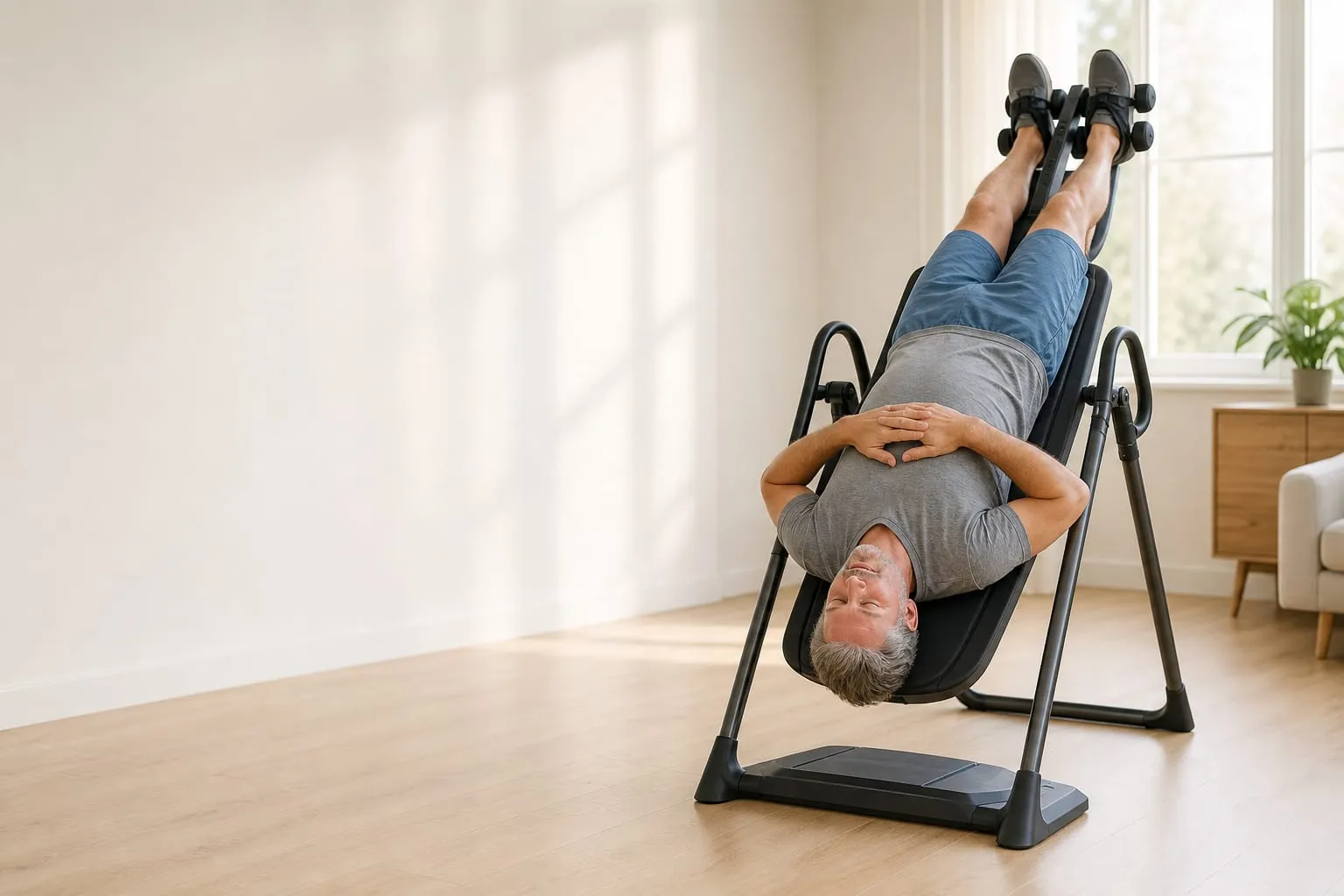
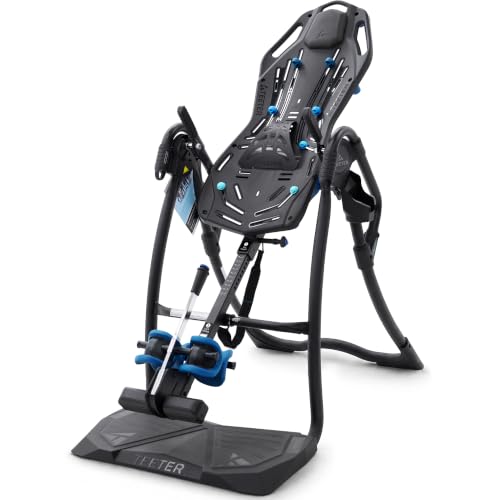
Our pick if getting on is the hard part
Teeter FitSpine LX9
The FitSpine X3 with three additions: an arched LX Ergonomic Frame, a Raised Boarding Platform and a Storage Caddy. Pay for it only if getting into the ankle lock is hard for you.
- Raised boarding platform and arched frame for getting on and off
- Same 20°, 40° and 60° marked tether as the X3
- Five-year full warranty, with a five-year extension sold separately
- Weight limit
- 300 lb
- User height
- 4'8" to 6'6"
- Warranty
- 5 years
- Price range
- Premium
VerifiedSpecs from the maker's own product page

Best if mounting is easy
Choose it if you can step in and close the ankle lock without strain: same marked angles, ankle lock, capacity, warranty and clearance, lower in the premium tier. Skip it if bending to your ankles or balancing on one foot while you lock in is hard for you.
This Teeter LX9 review goes through the table the way its maker documents it. We did not test the table ourselves, and we may earn a commission if you buy through the links on this page, which does not change the conclusion.
What the Teeter LX9 Adds Over the X3
The quickest way to understand the LX9 is to start from the X3 and ask what changes. We read both product pages in full, feature by feature. The answer is short.
The Three Additions
The LX9 page lists three features the X3 page does not. The first is the LX Ergonomic Frame, which Teeter says “features an arched design for effortless entry and exit.” The second is the Raised Boarding Platform, which it says “makes stepping into the Ankle Lock System easier than ever” (Teeter). The third is smaller: a Storage Caddy that holds a water bottle, the acupressure nodes or a phone.
Two of the three are about a single moment in each session: stepping in and locking your ankles. On the X3 you stand on the floor and reach down to the lock. On the LX9 you step up onto a platform, so the lock is closer to your hands and the frame arches away from your legs. The caddy is a convenience.
What Stays Exactly the Same
Everything that decides how the table inverts you is identical on the two pages. Both list the FlexTech backrest on an 8-point Floating Suspension, the Acupressure Nodes and Lumbar Bridge, the Stretch Max Handles and EZ-Stretch Traction Handles, the EZ-Angle tether with embroidered marks at 20, 40 and 60 degrees, the Deluxe EZ-Reach Ankle Lock System, the Ankle Comfort Dial, a 3-setting Roller Hinge, full inversion with a secure lockout, a 300 lb weight capacity and a 4’8” to 6’6” height range (Teeter).
| Spec | Editor's choiceTeeter FitSpine LX9Premium, price tier 3 of 3Verified | Teeter FitSpine X3Premium, price tier 3 of 3Verified |
|---|---|---|
| Weight capacity | 300 lb | 300 lb |
| User height | 4'8" to 6'6" | 4'8" to 6'6" |
| Angle control | EZ-Angle tether marked at 20°, 40° and 60°; full inversion with secure lockout | EZ-Angle tether marked at 20°, 40° and 60°; full inversion with secure lockout |
| Ankle system | Deluxe EZ-Reach ankle lock with Ankle Comfort Dial | Deluxe EZ-Reach ankle lock, extra-long handle, micro-adjusting closure |
| Warranty | 5 years (extension to 10 sold separately) | 5 years (extension to 10 sold separately) |
| Heat and massage | None | None |
| FDA | 510(k) cleared (K162702), Class I device | 510(k) cleared (K162702), Class I device |
| Assembly and setup | 85% pre-assembled, BILT app instructions (brand-wide claim) | 85% pre-assembled, BILT app instructions (brand-wide claim) |
| Buy | See today's price: Teeter FitSpine LX9 on Amazon (opens in a new tab) | See today's price: Teeter FitSpine X3 on Amazon (opens in a new tab) |
Editor's choiceTeeter FitSpine LX9- Weight capacity
- 300 lb
- User height
- 4'8" to 6'6"
- Angle control
- EZ-Angle tether marked at 20°, 40° and 60°; full inversion with secure lockout
- Ankle system
- Deluxe EZ-Reach ankle lock with Ankle Comfort Dial
- Warranty
- 5 years (extension to 10 sold separately)
- Heat and massage
- None
- FDA
- 510(k) cleared (K162702), Class I device
- Assembly and setup
- 85% pre-assembled, BILT app instructions (brand-wide claim)
Teeter FitSpine X3- Weight capacity
- 300 lb
- User height
- 4'8" to 6'6"
- Angle control
- EZ-Angle tether marked at 20°, 40° and 60°; full inversion with secure lockout
- Ankle system
- Deluxe EZ-Reach ankle lock, extra-long handle, micro-adjusting closure
- Warranty
- 5 years (extension to 10 sold separately)
- Heat and massage
- None
- FDA
- 510(k) cleared (K162702), Class I device
- Assembly and setup
- 85% pre-assembled, BILT app instructions (brand-wide claim)
Verified from the maker's own page or manualClaimed retail listing onlyNot stated the maker publishes nothing
Read the table from top to bottom and only the ankle lock row reads differently, and that is a wording difference: both tables use the Deluxe EZ-Reach system.
The Weight Difference
The one number that does change is how much the table itself weighs. Teeter publishes 73.6 lb for the LX9 and 65.8 lb for the X3. That gap of about 8 lb is consistent with the extra steel in the arched frame and the platform. It matters if you plan to fold the table and move it between rooms, and it doesn’t matter at all once the table is set up.
Teeter LX9 Full Specifications
The LX9 is Teeter’s item LX9B. We read the current LX9 product page, both revisions of the LX series assembly manual, and the LX9 user guide, then compared the LX9 line by line with the X3’s product page. Here is what the manufacturer publishes for it, and the one place where its own documents disagree.
Capacity, Height and Weight
The product page gives a weight capacity of 300 lb (136 kg), a user height range of 4’8” to 6’6” (142 to 198 cm), and a product weight of 73.6 lb (33.4 kg) (Teeter). The 2023 assembly manual prints the same capacity, the same height range and the same 73.6 lb (Teeter, 2023), and the 2024 revision of that manual still gives 73.6 lb on the same page (Teeter, 2024).
So on weight, three Teeter documents agree, and we found no Teeter document that gives the LX9 a different figure.
Dimensions: Two Sets of Numbers, and the One We Use
On dimensions, the documents do not agree. The product page and the assembly manual give different numbers for the same table:
| Dimension (L x W x H) | LX9 product page | LX series assembly manual |
|---|---|---|
| Folded, not in use | 63.2 x 32.0 x 60.0 in | 60.8 x 27.5 x 57.0 in |
| Maximum in use | 81.7 x 32.0 x 86.5 in | 81.5 x 27.5 x 87.0 in |
| Storage | 22.1 x 32.0 x 67.4 in | 27.5 x 27.5 x 68 in |
| Packaged | 49.0 x 29.0 x 9.5 in | not stated |
We publish the product page numbers as the LX9’s dimensions. The reason is in the manual itself. It is a single document for six models, the LX4 through the LX9, with one specifications table, a picture labeled “The LX9 is shown here. Your actual model may vary,” and a note that specifications may change without notice (Teeter, 2023).
The width is the giveaway: 27.5 in for every dimension in the manual, against 32.0 in on the LX9’s own page. That looks like a family figure, not an LX9 figure. The product page is specific to the LX9B SKU.
Warranty, Returns and FDA Status
The LX9 carries Teeter’s five-year full warranty, with a further five years sold separately (Teeter). Bought from Teeter directly, it can be returned within 90 days of delivery for a full refund if it is in original condition; used or damaged returns get up to 50% (Teeter). On Amazon, Amazon’s return policy applies instead.
Teeter’s inversion tables are cleared under FDA 510(k) number K162702, decided in December 2016 (FDA, 2016). The record names the “Teeter Manual Inversion Table” rather than the LX9 by model, so the clearance covers the range, not this table specifically. We explain the warranty, returns and the full FDA record across all four current models in our Teeter inversion table reviews.
What’s in the LX9 Box
The box list is where the LX9 and the X3 look most alike, and where the small differences are easiest to spot.
The Full Contents List
Teeter lists the following in the LX9 box: the table, the Deluxe EZ-Reach Ankle Lock System, the Lumbar Bridge, Acupressure Nodes with a Node Holder storage attachment, a headrest pillow, the Storage Caddy, the Stretch Max Handles, the traction handles, printed assembly instructions, a full-color user guide, 3D assembly support in the BILT app, and the Teeter Move app with subscription-free on-demand training (Teeter). The X3’s list has the same items except the Storage Caddy and the node holder (Teeter).
Where the Traction Handles Come From
The assembly manual’s parts list explains one feature that the product page names but doesn’t describe. The LX9 ships with “3-Hole Roller Hinges w/ Traction Handles” (part TR1003B), a part it shares only with the LX7. The LX4, LX5, LX6 and LX8 get plain 3-hole roller hinges without them (Teeter, 2023).
The same list marks the Storage Caddy (EX1900) as “LX9 only” within the LX series. We don’t sell the other LX models, but it confirms the traction handles are built into the hinge rather than added as a loose accessory.
Assembly
Teeter says its FitSpine tables arrive mostly pre-assembled, with the remaining steps shown in 3D in the BILT app. The printed manual covers the same steps, including the one most owners should not skip: choosing a Roller Hinge hole for your body weight.
The Roller Hinge: The Adjustment Most Reviews Skip
Most write-ups of the Teeter LX9 describe the angle tether and stop there. The manual describes a second setting that decides how the table responds to you, and it comes with a hard weight limit.
What the Three Holes Do
The Roller Hinge attaches the bed to the frame, and it has three holes, A to C. Hole A is the most responsive setting and hole C the least. The manual describes the full-inversion setting as one that lets you rotate to any angle and lock out fully, and the partial setting as a less responsive one for people who want to stay short of full inversion (Teeter, 2023). Picking a hole is picking how readily the table rotates under you, so it matters for control alongside the tether.
Teeter’s Recommendations by Body Weight
The manual ties the hole to your body weight and to whether you want partial or full inversion:
| Your body weight | Partial inversion (0 to 60°) | Full inversion (0 to 90°) |
|---|---|---|
| 80 to 120 lb (36 to 54 kg) | Hole B | Hole A |
| 120 to 220 lb (54 to 100 kg) | Hole C | Hole A |
| 220 to 300 lb (100 to 136 kg) | Hole C | Hole B |
The 220 lb Warning
The manual is explicit: do not use hole A for users over 220 lb (100 kg) (Teeter, 2023). The manual doesn’t explain the reason, and we won’t invent one; it is a line to follow, not to test. This is a manufacturer instruction, not a study finding, and it applies to the whole LX family rather than the LX9 alone. It is also the kind of detail that decides whether your first session is calm or alarming.
How Teeter Says to Use the LX9
The LX9 user guide includes a short protocol for new users. It is worth reading, and worth reading next to independent safety advice, because the two don’t say quite the same thing.
Teeter’s Own Protocol
Teeter’s guide tells beginners to start with one to two minute sessions and build to three to five minutes over time. It says to start at 20 degrees and eventually work up to 60 degrees, which it calls the “magic angle” (Teeter, 2023).
The same guide claims that at 60 degrees “the pressure in your discs is at or near zero.” That is Teeter’s statement. The guide cites no study for it, and we don’t repeat it as a measured fact.
This is where the LX9’s marked tether earns its place. Setting it at the 20° mark before you lie back means you cannot drift past your limit, however the session goes.
What Independent Safety Advice Adds
The authors of a 2021 case series describe three patients who fell off inversion tables and suffered cervical spinal cord injuries. Their account of the mechanism is blunt: once ankle strength fails or a foot slips, the user lands on the top of the head, and falls of one or two feet caused serious injury (Jung, 2021).
Three cases can’t tell you how often this happens. They do tell you it happens. Those authors recommend sessions under one minute, an angled pillow or rubber ramp under the head, and extra care for older and heavier users.
How to Read the Two Together
These are different sources answering different questions. Teeter’s guide is about how to progress. The case series is about the risk of falling, not about the best dose. Our reading: start at the short end of both, under two minutes at 20°, lengthen sessions only once getting on and off feels routine, and ask your doctor before you go further if you have any condition on Teeter’s list.
Teeter’s Ten Conditions: What the FDA Clearance Covers
Teeter’s product pages say its tables are “indicated for 10 back pain conditions” without naming them. The LX series assembly manual names all ten.
The List as Teeter States It
The manual says Teeter inversion tables are FDA-registered as 510(k) medical devices, indicated for back pain, muscle tension, degenerative disc disease, spinal degenerative joint disease, spinal stenosis, herniated disc, spinal curvature due to tight muscles, sciatica, muscle spasm and facet syndrome (Teeter, 2023). That is the indication Teeter declares for its devices. It is a statement of intended use, not a list of conditions the LX9 has been shown to treat. If a diagnosed curve is your reason for looking, read our page on using an inversion table with scoliosis before you buy.
What a 510(k) Is, and Isn’t
A 510(k) clearance means the FDA accepted that a device is substantially equivalent to one already legally sold. Teeter’s K162702 decision says exactly that: “Substantially Equivalent” (FDA, 2016). The device type, non-powered traction apparatus, sits in Class I, the FDA’s lowest-risk class (FDA). That is a risk category, not an endorsement.
What the Evidence Says About Results
On outcomes, the broadest evidence is a Cochrane review of 32 trials with 2,762 people, which found traction of any kind makes little or no difference to pain, function or return to work in low-back pain, with or without sciatica (Wegner, 2013). That covers traction in general, not inversion or Teeter specifically.
The inversion data Teeter advertises come from a 2021 registry in which 74% of patients (49 of 66) reported less pain at follow-up and the median pain score fell from 6 to 3 (Mendelow, 2021). Each patient was compared with their own earlier scores, with no control group, and the authors say the patients were not randomized. So it can’t separate the table’s effect from the natural improvement many back problems show over time. Our page on what inversion is actually shown to do goes through both studies in more detail.
X3 or LX9: How to Decide
With the specifications side by side, the decision comes down to one question about your body rather than the table.
Choose the LX9 If Mounting Is the Hard Part
If bending down to your ankles is painful, if balancing on one foot while you lock in is shaky, or if you are recovering from something that makes reaching the floor difficult, the LX9’s platform and arched frame are aimed at exactly that moment. It is also the moment you close the ankle lock, the part that holds you for the rest of the session, so doing it without strain is not a small thing. For that buyer, the Teeter LX9 is the right Teeter.
Raised boarding platformVerified
by TEETER
Best for people who find bending to their ankles or balancing on one foot hard.
Skip it if you can step in and close the ankle lock without strain: the X3 does the same job.
Same angle system as the X3, plus a boarding platform with an arched frame. Worth the step up only if getting on and off the table is the hard part for you.
- Weight limit
- 300 lb
- User height
- 4'8" to 6'6"
- Warranty
- 5 years
- Price range
- Premium
What we like
- Raised boarding platform and arched frame for getting on and off
- Same 20°, 40° and 60° marked tether as the X3
- Five-year full warranty, with a five-year extension sold separately
- Ships with a Storage Caddy and traction handles on the hinges
Keep in mind
- Otherwise identical to the X3, so you pay for the platform
- Roller hinge setting must match your body weight, per the manual
- No heat or massage
- Rated to 300 lb, max height 6 ft 6 in
Full specs
- Price range
- Premium
- Weight capacity
- 300 lb
- User height
- 4'8" to 6'6"
- Angle control
- EZ-Angle tether marked at 20°, 40° and 60°; full inversion with secure lockout
- Ankle system
- Deluxe EZ-Reach ankle lock with Ankle Comfort Dial
- Heat and massage
- None
- Warranty
- 5 years (extension to 10 sold separately)
- FDA
- 510(k) cleared (K162702), Class I device
VerifiedFrom the maker's product page. Not stated means the maker publishes nothing.
We may earn a commission. It never changes which table we pick, or the order they appear in.
Choose the X3 If Mounting Is Easy
If you can step in and close the ankle lock without strain, the LX9 gives you nothing the X3 lacks for the session itself. Same marked angles, same ankle lock, same capacity, same warranty, same clearance, and the X3 sits lower in the premium tier. Most people buying their first Teeter for back pain are in this group.
Marked angle presetsVerified
by TEETER
Best for people who can step in and close the ankle lock without strain.
Skip it if bending to your ankles or balancing on one foot while you lock in is hard: the LX9's platform and arched frame are aimed at that moment.
If you are inverting for back pain, the marked 20°, 40° and 60° presets are the reason to pay more: you set the limit before you get on, instead of finding it upside down. The 5-year warranty against Innova's 1 year is the other half of the case.
- Weight limit
- 300 lb
- User height
- 4'8" to 6'6"
- Warranty
- 5 years
- Price range
- Premium
What we like
- Tether marked at 20°, 40° and 60°, set before you get on
- Five-year full warranty, against Innova's one year
- Teeter's tables are FDA 510(k) cleared under K162702
- EZ-Reach ankle lock with an extra-long handle
Keep in mind
- No heat or massage
- No raised boarding platform, unlike the LX9
- Rated to 300 lb, max height 6 ft 6 in
Full specs
- Price range
- Premium
- Weight capacity
- 300 lb
- User height
- 4'8" to 6'6"
- Angle control
- EZ-Angle tether marked at 20°, 40° and 60°; full inversion with secure lockout
- Ankle system
- Deluxe EZ-Reach ankle lock, extra-long handle, micro-adjusting closure
- Heat and massage
- None
- Warranty
- 5 years (extension to 10 sold separately)
- FDA
- 510(k) cleared (K162702), Class I device
VerifiedFrom the maker's product page. Not stated means the maker publishes nothing.
We may earn a commission. It never changes which table we pick, or the order they appear in.
If You Still Can’t Decide
Ask how often more than one person will use the table, and who. A household with an older parent or someone with limited mobility is a reason to choose the LX9 even if you personally find mounting easy. A single, reasonably mobile user is a reason to keep the difference. For the rest of Teeter’s range, including the X1 and the EP-560, see our comparison of all current Teeter models.
When the LX9 Isn’t the Right Choice
The LX9 is Teeter’s most complete table, and it is still the wrong buy for several kinds of reader.
If You Weigh More Than 300 lb
The LX9 is rated to 300 lb, like every Teeter. Innova publishes a 350 lb capacity for its ITX1200, with a user height range of 4’10” to 6’6” (Innova). If you are over 300 lb, no Teeter is rated for you. Our guide to tables for big, tall and heavier users covers the options above that line.
If You Want Heat Built In
No FitSpine table, the LX9 included, has heat or massage as standard. Innova builds heat into its ITM tables, and our broader inversion table comparison puts them next to the Teeters, along with what you give up on warranty and FDA status.
If You Have a Condition on Teeter’s Own List
Teeter tells users not to invert until a licensed physician approves if they have high blood pressure, heart or circulatory conditions, glaucoma, a history of retinal detachment, osteoporosis, fractures or orthopedic implants, hernias, severe acid reflux, pregnancy or recent surgery, among others (Teeter).
Some of that list rests on measurements. In a study of 60 healthy women aged 20 to 30, two minutes of inversion raised both systolic and diastolic blood pressure significantly, and the authors wrote that people with hypertension may need to avoid it (Haskvitz, 1986). A better boarding platform doesn’t change who should be inverting. Our page on who should not use an inversion table sorts the list into what has been measured and what is caution.
If You Already Own an X3
There is no upgrade path worth paying for here. An X3 owner gets the same inversion from the LX9, and the only reasons to switch are the platform and frame. Unless mounting has become difficult since you bought the X3, keep it.
The Verdict on the Teeter LX9
The Teeter LX9 is a well-documented, FDA-cleared table with a five-year warranty and marked angles, and every one of those strengths is shared with the X3.
What the LX9 sells on top is an easier way in: an arched frame, a raised platform, and a caddy. For a buyer who struggles to reach their ankles, that is worth paying for. For everyone else, the X3 delivers the same session for less. Joe Rogan’s praise for Teeter is sometimes quoted as a tiebreaker, but he never named a model, as our reading of what Rogan said on JRE #1474 shows.
Whichever you buy, three instructions from Teeter’s own paperwork matter more than the model: set the Roller Hinge for your weight and never use hole A over 220 lb, start at the 20° mark, and keep early sessions short.
Your questions, answered
Frequently Asked Questions
What are the key differences between the Teeter FitSpine X3 and LX9?
Three, all on the LX9's side: an arched LX Ergonomic Frame, a Raised Boarding Platform you step onto to reach the ankle lock, and a Storage Caddy. Weight capacity, height range, the marked 20, 40 and 60 degree tether, the ankle lock, the warranty and the FDA clearance are the same on both. The LX9 is also heavier, 73.6 lb against 65.8 lb.
Does Teeter inversion really work?
It does what it is built to do, which is hold you at a set angle so your own weight stretches the spine. Relief is a separate question. A Cochrane analysis of traction in general found little or no benefit for low-back pain, and the encouraging inversion data come from small studies without a proper control group. Treat relief as possible, not promised.
How long should you hang upside down on a Teeter inversion table?
Teeter's LX9 guide starts new users at one to two minutes and suggests building to three to five over time. A 2021 case series on fall injuries argues for less, under one minute per session, to limit the time your ankles carry you. Start at the short end, stay shallow, and let your doctor set the ceiling if you have a medical condition.
Who should not use inversion therapy?
Anyone whose condition could be worsened by higher blood pressure, eye pressure or pressure inside the skull. Teeter's own list names high blood pressure, heart disease, glaucoma, retinal detachment, osteoporosis, fractures, implants, hernias, severe reflux, pregnancy and recent surgery, among others, and asks for a physician's approval first. Buying the LX9's easier boarding does not change any of that.
Are inversion tables bad for high blood pressure?
They can be a real concern. In a study of 60 healthy young women, two minutes of inversion raised both systolic and diastolic pressure significantly, and the authors suggested people with hypertension may need to avoid it. Teeter itself tells anyone with high blood pressure not to invert until a physician approves. Get that approval before you buy any table.
Which Teeter inversion table is considered the best?
For most buyers it is the X3, not the flagship. The X3 already carries the marked angle tether and the Deluxe EZ-Reach ankle lock. The LX9 becomes the better Teeter when climbing into the ankle lock is the difficult part of your session, because the raised platform and arched frame exist for that moment and nothing else.
14 sources used for this guide
Each linked to the original. Citations in the text jump here.
View sources
Teeter. FitSpine LX9 Inversion Table. teeter.com, product page.
Teeter. FitSpine X3 Inversion Table. teeter.com, product page.
Teeter. Assemble Your FitSpine LX Inversion Table: Assembly Instructions (models LX4 to LX9), rev. LX1040B 0123-0. teeter.com/wp-content/uploads/2023/03/FitSpine-LX-Series_Assembly-Instructions_LX4-thru-LX9_LX1040B_0123-0.pdf.
Teeter. Assemble Your FitSpine LX Inversion Table: Assembly Instructions (models LX4 to LX9), rev. LX1040B 0524-2. teeter.com/wp-content/uploads/2024/08/FitSpine-LX-Series_Assembly-Instructions_LX4-thru-LX9_LX1040B_0524-2.pdf.
Teeter. FitSpine LX9 Inversion Table: User Guide, rev. LX1030 0123-4. teeter.com/wp-content/uploads/2023/02/FitSpine-LX-Series_LX6-LX7-LX8-LX9_OM_LX1030_0123-4.pdf.
Jung SH, Hwang JM, Kim CH. Inversion Table Fall Injury, the Phantom Menace: Three Case Reports on Cervical Spinal Cord Injury. Healthcare (Basel) 2021;9(5):492.
FDA. 510(k) Premarket Notification K162702: Teeter Manual Inversion Table. U.S. Food and Drug Administration, 510(k) database, decision date December 30, 2016.
FDA. Device classification, product code HST: Apparatus, Traction, Non-Powered. U.S. Food and Drug Administration, device classification database (openFDA), 21 CFR 888.5850.
Wegner I, Widyahening IS, van Tulder MW et al. Traction for low-back pain with or without sciatica. Cochrane Database of Systematic Reviews 2013, CD003010.
Mendelow AD, Gregson BA, Mitchell P et al. Lumbar disc disease: the effect of inversion on clinical symptoms and a comparison of the rate of surgery after inversion therapy with the rate of surgery in neurosurgery controls. Journal of Physical Therapy Science 2021;33(11):801-808.
Teeter. Return Policy. teeter.com, Return Policy.
Teeter. Are there health issues that would prevent me from inverting?. teeter.com, Support Center (the same list appears in the owner's manual).
Haskvitz EM, Hanten WP. Blood pressure response to inversion traction. Physical Therapy 1986;66(9):1361-1364.
Innova. ITX1200 Inversion Table. innovaproductsinc.com, product page.