Health guide
Herniated Disc Exercises for the Lower Back: What to Do, What to Avoid
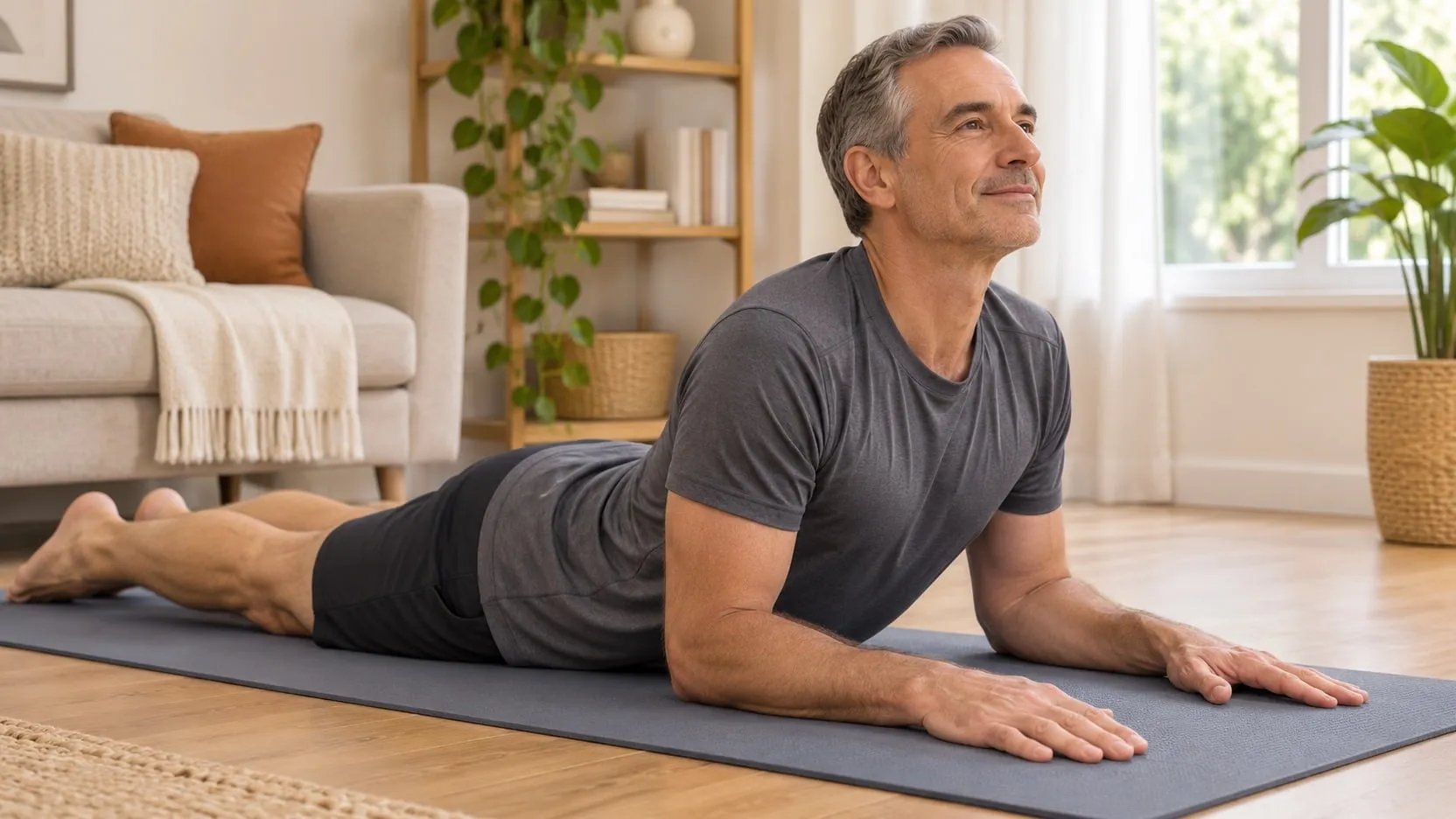
Herniated disc exercises are one of the first things people search after a scan or a diagnosis, and the advice online ranges from sensible to risky. This guide sets out which herniated disc exercises clinicians use for the lower back, the order to try them in, the simple pain rule that tells you whether to continue, what to avoid while the disc settles, and the symptoms that mean you should skip exercise and get seen. Each health statement names its source, and we say where the evidence is thin.
What a Herniated Disc Is, and Why Exercise Helps
The Disc and the Nerve
Each disc between the vertebrae has a soft center and a tougher outer ring. In a herniation, part of the disc moves beyond its normal edge. About 95% of lumbar herniations occur at L4-L5 or L5-S1 (StatPearls, 2023). When the displaced material irritates a nerve root, the pain, tingling or numbness can travel into the buttock and leg, which is what most people call sciatica.
Herniated vs Bulging
A bulge and a herniation are not the same on a scan. Under the official nomenclature, a bulge is disc tissue extending around most of the disc’s circumference, and by definition it is not a herniation (Fardon, 2001). The exercises below are used for both, but the outlook differs, as the next section shows. Our page on inversion tables for a herniated or bulging disc covers the difference in more detail.
Most Herniations Settle
The North American Spine Society’s guideline could not find reliable data on the natural history of lumbar disc herniation, so its work group gave a consensus opinion: most patients will improve independent of treatment, and disc herniations will often shrink or regress over time (NASS, 2012). A 2015 systematic review of people treated without surgery put numbers on the imaging side: spontaneous regression in 96% of sequestrations, 70% of extrusions, 41% of protrusions and 13% of bulges (Chiu et al., 2015). Those are scan changes, not pain scores, and only nine studies fed the calculation, but they explain why time and movement are the starting point.
What Exercise Can and Cannot Do
Exercise does not push a disc back in. Its job is to keep you moving, calm the irritated nerve and rebuild strength while the herniation settles. Mayo Clinic says most people feel better with conservative treatment, often within days or weeks, and that a physical therapist can teach stretches and core-strengthening exercises (Mayo Clinic).
What the Evidence Says About Herniated Disc Exercises
Structured Exercise Is an Option
The NASS guideline found limited evidence for structured exercise as a stand-alone treatment. Its work group’s consensus is that a limited course of structured exercise is an option for people with mild to moderate symptoms, and that clinical experience suggests exercise may help as part of a wider plan (NASS, 2012).
Stabilization Exercises Beat Doing Nothing
A 2010 systematic review of 18 trials with 1,671 people who had a disc herniation and leg symptoms found moderate evidence that stabilization exercises are more effective than no treatment. It also found that advice alone was less effective than microdiscectomy surgery in the short term but equally effective in the long term (Hahne et al., 2010). In other words, surgery is faster for some, but people who don’t have it often catch up.
Direction Matters
Many people with low back pain feel better bending backward, but not all. In the McKenzie approach, 58% to 91% of people with low back pain show centralization, and 67% to 85% of those prefer extension; one randomized trial found that exercises in the wrong direction gave worse outcomes (Mann, 2025). That is why the pain rule below matters more than any list of moves. Our McKenzie exercises guide covers that method on its own.
The Pain Rule: How to Tell If an Exercise Is Helping
Centralizing Is Good
Kaiser Permanente’s herniated disc exercise sheet sets the rule clearly. Some extra back pain when you start can be normal. Keep doing an exercise if your pain stays the same or moves from the leg and buttock toward the middle of the spine; pain moving out of the leg is a good sign (Kaiser Permanente, 2026).
Peripheralizing Means Stop
Stop an exercise if pain in your leg and buttock gets worse, or if you get leg pain you didn’t have before. And if your pain is much worse right after exercising and stays worse the next day, skip the exercises altogether (Kaiser Permanente, 2026).
Keep a Simple Record
Before each exercise, note where your pain reaches: buttock, thigh, knee, calf or foot. Do the exercise, then check again. A change in where the pain reaches tells you more than a change in how bad it is.
Herniated Disc Exercises for the Lower Back, Step by Step
These are the moves in the order clinicians commonly use them. Your doctor or physical therapist should tell you when to start and which suit you.
1. Lying on Your Stomach
Lie face down with your arms by your sides, or with your hands under your forehead if your neck complains. Relax your lower back and stay there for 2 minutes. If pain spreads down your leg, stop and don’t continue to the next step (Kaiser Permanente, 2026).
2. Press-Up on Your Elbows
Still face down, bring your elbows under your shoulders and press them into the floor to lift your upper back, keeping your stomach and back muscles relaxed. Hold for 2 minutes, and repeat 2 to 4 times (Kaiser Permanente, 2026).
3. Full Press-Up
With your hands under your shoulders, straighten your arms and push your upper body up as far as is comfortable, letting your lower back sag and your hips stay down. Hold about 6 seconds and relax. Repeat 8 to 12 times (Kaiser Permanente, 2026).
4. Standing Backward Bend
If you can’t get on the floor, stand with feet hip-width apart, hands in the small of your back, and bend backward, keeping your knees straight. Hold a few seconds and return. Repeat 2 to 4 times, a little further each time (Kaiser Permanente, 2026). This version is useful at work after long sitting.
5. Gentle Core Work Once Pain Settles
When leg pain has calmed, clinicians usually add stabilization work, the type the 2010 systematic review supports (Hahne et al., 2010). Two simple starting moves come from Mayo Clinic’s 15-minute back routine, which starts each at five repetitions a day and works up slowly to 30 (Mayo Clinic, 2026):
- Pelvic tilt: lying on your back with knees bent and feet flat, tighten your stomach and gently flatten your lower back toward the floor, hold five seconds, relax.
- Bridge: from the same position, tighten your stomach and buttocks and lift your hips into a straight line from knees to shoulders, hold for three breaths, lower slowly.
Mayo’s routine was written for back pain in general, not for a disc, and it also says to ask a physical therapist which activities are safe if you have ongoing back pain or an injury. Keep the range small, and apply the pain rule to each move.
6. Walking
Walking is the exercise almost every source agrees on. The NHS says you recover more quickly if you gradually start gentle exercise such as walking, swimming and yoga, and that the type matters less than whether it causes pain (NHS, 2024).
What to Avoid With a Herniated Disc
Too Much Bed Rest
Mayo Clinic warns that long periods in bed stiffen the joints and weaken the muscles, which can slow recovery. Its suggestion: rest in a comfortable position for about 30 minutes, then take a short walk or do light tasks (Mayo Clinic). NICE tells clinicians to encourage people with low back pain and sciatica to keep up normal activities (NICE, 2016).
Movements That Make the Pain Worse
Mayo Clinic’s home advice is simple: don’t do activities that make your pain worse, resume activity slowly, and move carefully when bending and lifting (Mayo Clinic). For many people with a fresh lumbar herniation, that means avoiding, for a while:
- Heavy lifting, especially from the floor with a rounded back.
- Repeated forward bending, such as toe touches or sit-ups, if they send pain down the leg.
- Sudden twisting under load, such as some golf swings or shoveling.
- High-impact running or jumping while the leg is painful.
Not every bending movement is harmful to every disc. The pain rule decides: if a move spreads pain into the leg, drop it for now.
Long, Unbroken Sitting
Sitting for long periods is one of the things the NHS names among causes and aggravators of a slipped disc (NHS, 2024). Break it up every half hour with a short walk or a standing backward bend.
Hanging and Inversion as Shortcuts
Hanging from a bar or tipping upside down is popular advice, but the guidelines are cautious about traction for this condition. Our guides to decompressing your spine and to inversion tables for a herniated disc set out what is known.
When to See a Doctor Instead
Same-Day or Emergency Care
The NHS says to call emergency services or go to the emergency department if you have back pain and any of these: numbness around your bottom or genitals, being unable to pee, loss of feeling in one or both legs, being unable to control when you pee or poo, or pain after a serious accident (NHS, 2024). In the U.S., call 911 or go to an emergency room.
Book an Appointment If
- Painkillers aren’t helping, or the pain is not improving after a few weeks.
- You have a fever, unexplained weight loss, swelling in the back, or pain that is worse at night.
- A leg is getting weaker, or numbness is spreading.
Mayo Clinic adds that surgery may be considered if symptoms don’t improve after about six weeks or there is ongoing severe pain, numbness or weakness, while most people don’t need it (Mayo Clinic).
A Simple Week of Herniated Disc Exercises
| When | What to do |
|---|---|
| Every day | Two or three short walks you can manage without more leg pain |
| Two or three times a day | The face-down sequence: 2 minutes lying, press-ups on elbows, full press-ups if comfortable |
| After long sitting | A standing backward bend, 2 to 4 times |
| Once leg pain has calmed, most days | Pelvic tilts and bridges, starting at five slow reps each |
This is our arrangement of the clinical sources above into a week, not a tested program. Adjust it with your clinician, and let the pain rule overrule the table.
Putting Herniated Disc Exercises to Work
Start by staying active: walk most days and avoid long stretches in bed or in a chair. Try the face-down press-up sequence and watch where your leg pain goes. If it retreats toward your back, continue and add gentle core work as the pain settles. If it spreads down your leg, stop and get advice, because your back may prefer a different direction. Give it a few weeks, keep the warning signs in mind, and remember that most herniated discs settle without surgery. If your symptoms are mostly in the leg, our guide to sciatica exercises covers the wider picture, and a heating pad can make the first days more comfortable.
Your questions, answered
Frequently Asked Questions
Can a herniated disc be fixed with exercise?
Exercise does not push a disc back into place, but it can help you recover while the herniation settles. Many herniations shrink on their own over months, and most people improve without surgery. A 2010 systematic review found moderate evidence that stabilization exercises beat no treatment, so exercise is worth doing, guided by how your leg pain responds.
What not to do with a herniated disc?
Don't stay in bed for days, don't push through exercises that send pain further down your leg, and avoid heavy lifting, repeated bending under load and sudden twisting while it is painful. Long, unbroken sitting tends to aggravate it too. Ignore warning signs such as numbness around the groin or new bladder problems: those need urgent care.
What's the worst thing you can do for a herniated disc?
Ignoring red-flag symptoms is the worst mistake: numbness in the groin or saddle area, trouble passing urine or controlling your bowels, or weakness getting worse in a leg need emergency care. After that, the common mistake is complete rest, which stiffens the back and slows recovery, followed closely by forcing painful exercises.
Does a bulging disc ever fully go away?
Sometimes, but less often than a true herniation. In a systematic review of imaging studies published in 2015, bulging discs regressed in about 13% of cases, against 70% for extrusions. Symptoms are a different matter: many people with a bulge have little or no pain, and the pain can settle even when the scan barely changes.
What exercises should I do if I have a herniated disc?
Start with walking and gentle movement you can do without more leg pain. Many clinicians begin with a lying face-down press-up sequence, then add gentle core work such as pelvic tilts and bridges once pain is calmer. The key test is your leg: if pain retreats toward your back, continue; if it spreads down the leg, stop.
11 sources used for this guide
Each linked to the original. Citations in the text jump here.
View sources
North American Spine Society (NASS), Lumbar Disc Herniation with Radiculopathy Work Group. Lumbar Disc Herniation with Radiculopathy: An Evidence-Based Clinical Guideline. NASS Evidence-Based Clinical Guidelines, 2012.
Hahne AJ, Ford JJ, McMeeken JM. Conservative management of lumbar disc herniation with associated radiculopathy: a systematic review. Spine 2010;35(11):E488-504.
Mayo Clinic Staff. Herniated disk: Diagnosis and treatment. mayoclinic.org.
Al Qaraghli MI, De Jesus O (StatPearls). Lumbar Disc Herniation. StatPearls Publishing, 2023.
Fardon DF, Milette PC. Nomenclature and Classification of Lumbar Disc Pathology. Spine 2001;26(5):E93-E113. Recommendations of the Combined Task Forces of the North American Spine Society (NASS), American Society of Spine Radiology (ASSR), and American Society of Neuroradiology (ASNR).
Chiu CC, Chuang TY, Chang KH, Wu CH, Lin PW, Hsu WY. The probability of spontaneous regression of lumbar herniated disc: a systematic review. Clinical Rehabilitation 2015;29(2):184-195.
Kaiser Permanente Health Encyclopedia (WebMD Ignite Staff, Clinical Review Board). Herniated Disc: Exercises. healthy.kaiserpermanente.org, current as of 3 October 2026.
Mann SJ, Stretanski MF, Singh P. McKenzie Back Exercises. StatPearls, StatPearls Publishing, 2025.
NHS. Slipped disc. nhs.uk, page last reviewed 24 April 2024.
Mayo Clinic Staff. Back exercises in 15 minutes a day. mayoclinic.org, 22 July 2026.
National Institute for Health and Care Excellence (NICE). Low back pain and sciatica in over 16s: assessment and management, Recommendations. NICE guideline NG59, published 30 November 2016, last updated 29 July 2026.