Buying guide
The Best TENS Unit for Back Pain, And What the Guidelines Say About It
By the IntoInversion teamUpdated
- 4 picks
- 7 sources
- 11 min read
We earn from qualifying purchases made through our links.
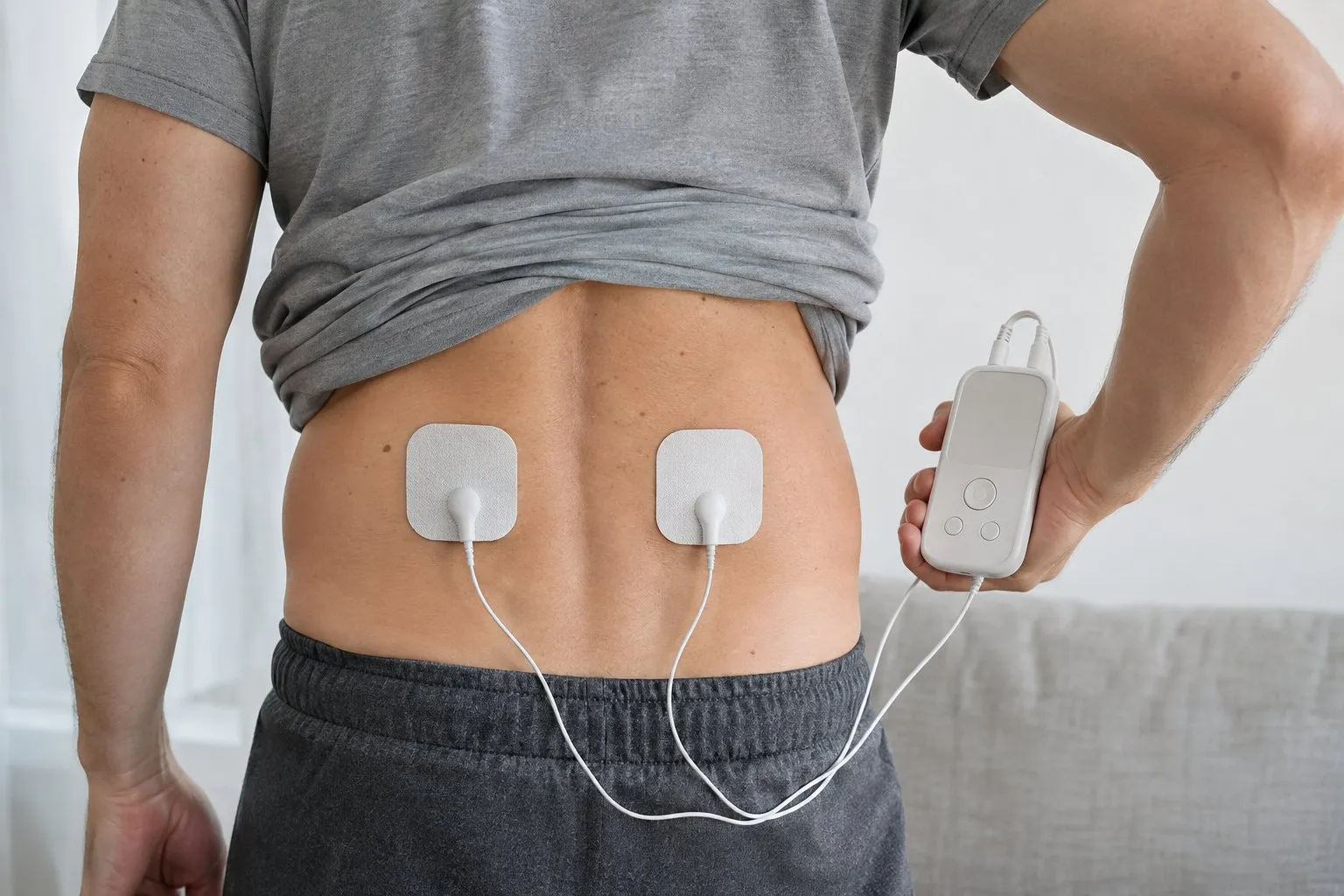

Our pick if you still want to try a TENS unit
TENS 7000 Digital
Be clear about the baseline first. NICE tells clinicians not to offer TENS for low back pain, and a Cochrane review did not support it for routine management of chronic low back pain. What a TENS unit may give you is relief while it runs. If that is worth a small spend to you, this is the simple, low-cost unit to try, and it is not a treatment for what is causing the pain.
- Two lead wires and four pads, so you can place both sides of the lower back
- A low spend for a plain two-wire unit
- Maker is Roscoe Medical, which also makes the Twin Stim
- Price range
- Budget
Listing onlySpecs from the retail listing; the maker publishes no spec sheet
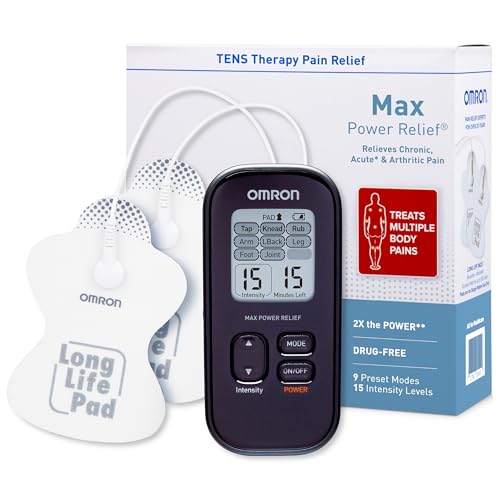
Simplest to use
Choose it if you want a single-channel unit with preset pain modes, one lower back mode among them, and a maker's manual to follow. Skip it if you want two channels or a rechargeable battery.

Cheapest rechargeable
Choose it if you want a rechargeable unit with a Type-C cable and extra pads in the box, for the lowest spend of the four. Skip it if you want a maker with a long record in medical devices, or a clearance number you can check.

If you also want EMS
Choose it if you want two channels and a muscle stimulation mode as well as TENS, and a clinician has suggested EMS. Skip it if you only want TENS for back pain. EMS is a different tool.
TENS is a device sold for pain, and the guideline evidence for back pain is against it. We did not test these units on people. We read each Amazon listing, opened the NICE guideline and the Cochrane abstract, and tied every health statement to a named source. When a listing makes a claim we could not confirm, we say so. If you buy through our links we may earn a commission, which never decides which unit we pick.
Best TENS Units for Back Pain at a Glance
A TENS unit is a small box that sends a weak electrical current through sticky pads on your skin. TENS stands for transcutaneous electrical nerve stimulation. The NHS describes it as passing a weak electrical current to your nerves, which can help ease pain (NHS, 2025). Search for a TENS unit for back pain and you get dozens of near-identical boxes. The real differences are channels, pads, battery and how much the listing promises.
See our four picks in one table
Our Four Picks
| If you want | Our pick | What decides it |
|---|---|---|
| The simple low-cost unit | TENS 7000 Digital | Two lead wires, four pads, 9V battery |
| One-button simplicity | Omron Max Power PM500 | Single channel, preset pain modes |
| Rechargeable, lowest spend | AUVON 24 Modes | Type-C charging, eight pads |
| TENS plus EMS | Roscoe Twin Stim | Two channels, two stimulation types |
We don’t print prices, because they move from week to week. The AUVON is the cheapest of the four, the TENS 7000 comes next, and the Omron and the Twin Stim cost more.
The Specs Side by Side
The columns come from each Amazon listing and, for the Omron, from the maker’s own product page. Where a figure is not published the table says so.
| Spec | Editor's choiceTENS 7000 DigitalBudget, price tier 1 of 3Listing only | Omron Max Power PM500Budget, price tier 1 of 3Maker source | AUVON 24 ModesBudget, price tier 1 of 3Listing only | Roscoe Twin StimBudget, price tier 1 of 3Listing only |
|---|---|---|---|---|
| Assembly and setup | Unit, 2 lead wires, 4 reusable pads, one 9V battery and a manual, per the listing | Unit, 2 pads, pad holder, cords, 2 AAA batteries and a manual, per Omron | Unit, 8 square gel pads, 2 lead wires, pad holder, Type-C cable, pouch and manual, per the listing | Two channels that control up to four pads, per the listing |
| Adjustment | Two lead wires, so two pairs of pads; mode and intensity set on the unit | Single channel; 15 intensity levels; six pain modes including lower back, plus three massage-like modes (Omron page) | 24 preset modes and adjustable timing | TENS and EMS modes on two independent channels |
| How you use it | Follow the manual; the listing states no session length | Omron's page gives a 15 minute maximum; the listing says 30 minutes, 3 times a day. Follow your manual | Rechargeable, up to 10 hours of continuous use, per the listing | Follow the manual; EMS is a muscle stimulation mode, separate from TENS |
| Warranty | Not stated | 1 year on the unit; 30 days on the cord with pads (Omron page)Highest here | 12 months (listing) | Not stated |
| FDA | Not stated | Not stated | Not stated | Not stated |
| Buy | See today's price: TENS 7000 Digital on Amazon (opens in a new tab) | See today's price: Omron Max Power PM500 on Amazon (opens in a new tab) | See today's price: AUVON 24 Modes on Amazon (opens in a new tab) | See today's price: Roscoe Twin Stim on Amazon (opens in a new tab) |
Editor's choiceTENS 7000 DigitalListing only- Assembly and setup
- Unit, 2 lead wires, 4 reusable pads, one 9V battery and a manual, per the listing
- Adjustment
- Two lead wires, so two pairs of pads; mode and intensity set on the unit
- How you use it
- Follow the manual; the listing states no session length
- Warranty
- Not stated
- FDA
- Not stated
Omron Max Power PM500Maker source- Assembly and setup
- Unit, 2 pads, pad holder, cords, 2 AAA batteries and a manual, per Omron
- Adjustment
- Single channel; 15 intensity levels; six pain modes including lower back, plus three massage-like modes (Omron page)
- How you use it
- Omron's page gives a 15 minute maximum; the listing says 30 minutes, 3 times a day. Follow your manual
- Warranty
- 1 year on the unit; 30 days on the cord with pads (Omron page)Highest here
- FDA
- Not stated
AUVON 24 ModesListing only- Assembly and setup
- Unit, 8 square gel pads, 2 lead wires, pad holder, Type-C cable, pouch and manual, per the listing
- Adjustment
- 24 preset modes and adjustable timing
- How you use it
- Rechargeable, up to 10 hours of continuous use, per the listing
- Warranty
- 12 months (listing)
- FDA
- Not stated
Roscoe Twin StimListing only- Assembly and setup
- Two channels that control up to four pads, per the listing
- Adjustment
- TENS and EMS modes on two independent channels
- How you use it
- Follow the manual; EMS is a muscle stimulation mode, separate from TENS
- Warranty
- Not stated
- FDA
- Not stated
Maker source from the maker's own page or manual, not independently testedListing only retail listing, no maker spec sheetNot stated the maker publishes nothing
None of the four listings gives a clearance number we could match to that exact model, so the clearance row says Not stated. More modes on a listing does not mean more evidence behind any one of them.
Do TENS Units Help Back Pain?
The honest answer has three parts, and they do not all point the same way.
What NICE Says
NICE guideline NG59 on low back pain and sciatica in people over 16 says: “Do not offer transcutaneous electrical nerve simulation (TENS) for managing low back pain with or without sciatica” (NICE, 2016). The word “simulation” is how NICE’s recommendation 1.2.11 is printed; it means stimulation. The same list tells clinicians not to offer traction, acupuncture, ultrasound or interferential therapy.
That is a recommendation about what a health service should offer. It is not a ban on buying a unit. It is, though, the clearest institutional position on this product, and you should know it before you spend money.
What the Cochrane Review Found
A Cochrane review by Khadilkar and colleagues compared TENS with placebo for chronic low back pain. It included four trials with 585 people. Results for pain were conflicting, and most physical outcomes showed no benefit over placebo. The authors concluded that the evidence from those trials does not support the use of TENS in the routine management of chronic low back pain (Khadilkar, 2008). It dates from 2008, and it covers chronic pain only.
The American College of Physicians 2017 low back pain guideline summary we read does not list TENS among its recommendations, and we do not say more than that (Qaseem, 2017).
The Case for Relief During a Session
There is a fair counterpoint. A 2022 meta-analysis in BMJ Open reviewed 381 trials with 24,532 people, across acute and chronic pain of many kinds, not only the back. In the 91 trials and 4,841 people of its placebo comparison, pain intensity was lower during or immediately after TENS, and the authors rated that evidence as moderate in certainty, marked down because many trials were small (Johnson, 2022). Cleveland Clinic puts the split plainly: it reports trials where TENS relieved pain and others where a placebo worked just as well (Cleveland Clinic, 2023).
Put the three together. TENS may take the edge off while it is running. Nothing we opened shows that it changes the course of low back pain, and the guideline for the back says not to offer it.
How to Choose a TENS Unit
If you decide a short-term pain tool is worth a try, choose on the practical points, not on mode counts.
Channels and Pads
A channel is one output with its pair of pads. A single-channel unit covers one area. A two-channel unit lets you place a pair on each side of the lower back. The TENS 7000 listing describes two lead wires and four reusable pads. The Omron PM500 is single channel.
Modes
Listings advertise 24 or 30 modes. Mode names are presets for pulse pattern and rate. Nothing we read shows that one preset treats back pain better than another, so extra modes are convenience, not evidence. Set intensity as your manual directs.
OTC Clearance
In the United States, a TENS device for pain relief is a Class II device under 21 CFR 882.5890 (21 CFR 882.5890). That is the rule for the device type, not proof about the unit in a listing. We could not tie an FDA clearance number to any of the four exact models, so we say Not stated. Before buying, look for the number in the manual or on the maker’s site.
Running Cost of Pads
Pads wear out. The Omron listing says its pads can be washed and reused for up to 150 uses. The AUVON listing says its gel pads last for around 45 uses. Those are the sellers’ figures. Replacement pads are the part you keep paying for, so check what a refill pack costs.
Best Simple Low-Cost Unit: TENS 7000 Digital
The classic, plain box.
The plain starter unitListing only
by TENS 7000
Best for a first, low-cost unit with two lead wires and four pads.
Skip it if you have a pacemaker or other implant, epilepsy, or are pregnant, or you want a rechargeable unit.
A plain, low-cost unit with a second lead wire so pads can go on both sides of the lower back. Its relief claims are the seller's own.
- Price range
- Budget
What we like
- Low spend
- Two lead wires and four pads
- Plain controls
Keep in mind
- Uses a 9V battery, not rechargeable
- Listing claims go beyond the evidence
- Clearance number for this model not stated
Full specs
- Price range
- Budget
- Settings
- Two lead wires, so two pairs of pads; mode and intensity set on the unit
- In the box
- Unit, 2 lead wires, 4 reusable pads, one 9V battery and a manual, per the listing
- Use
- Follow the manual; the listing states no session length
- Warranty
- Not stated
- FDA
- Not stated
Listing onlyFrom the retail listing; no maker spec sheet
We may earn a commission. It never changes what we pick, or the order picks appear in.
What the Listing Says
The unit is a digital TENS machine from the TENS 7000 brand, made by Roscoe Medical according to the listing. It comes with two lead wires, four reusable electrode pads, a 9V battery and a manual.
What You Give Up
The listing’s wording goes further than the evidence. It uses phrases such as “prescription strength” and “immediate and lasting” relief, which we do not repeat and cannot confirm. It runs on a 9V battery, not a rechargeable pack. We could not tie a clearance number to this model, so that row says Not stated.
Who It Suits
Someone who has been told TENS is fine for them and wants a plain unit with a second channel for both sides of the lower back.
Best for Simplicity: Omron Max Power PM500
A single-channel unit from a household health brand.
Fewest decisionsMaker source
by Omron
Best for a simple single-channel unit with preset pain modes and a maker's manual.
Skip it if you want two channels so you can place a pair on each side of the spine, or a rechargeable unit.
The simplest unit here: one channel, preset pain modes and a household health brand's manual and warranty.
- Warranty
- 1 year
- Price range
- Budget
What we like
- Simple single-channel controls
- One-year warranty from the maker
- Lower back among the preset modes
Keep in mind
- One channel only
- AAA batteries, not rechargeable
- Costs more than the TENS 7000 and the AUVON
- Clearance number not stated
Full specs
- Price range
- Budget
- Settings
- Single channel; 15 intensity levels; six pain modes including lower back, plus three massage-like modes (Omron page)
- In the box
- Unit, 2 pads, pad holder, cords, 2 AAA batteries and a manual, per Omron
- Use
- Omron's page gives a 15 minute maximum; the listing says 30 minutes, 3 times a day. Follow your manual
- Warranty
- 1 year on the unit; 30 days on the cord with pads (Omron page)
- FDA
- Not stated
Maker sourceFrom the maker's product page. Not stated means the maker publishes nothing.
We may earn a commission. It never changes what we pick, or the order picks appear in.
What the Maker’s Page Shows
Omron’s product page lists a single channel, six pain modes that include lower back, three massage-like modes, 15 intensity levels and two AAA batteries. It gives a one-year warranty on the unit and 30 days on the cord with pads. It does not state an FDA clearance, so we do not claim one.
What You Give Up
One channel means one pair of pads. It uses AAA batteries. It costs more than the TENS 7000 and the AUVON. The listing says the pads last for up to 150 uses, which is the seller’s figure. Omron’s page gives a maximum therapy duration of 15 minutes, while the Amazon listing says 30 minutes, 3 times a day, so follow the manual in your box.
Who It Suits
People who want the fewest decisions and a maker with a standard consumer warranty.
Best Cheap Rechargeable: AUVON 24 Modes
The lowest spend of the four, with a built-in battery.
Cheap and rechargeableListing only
by AUVON
Best for a cheap rechargeable unit with eight pads and a Type-C cable.
Skip it if you want a maker with a long record in medical devices or a clearance number you can verify.
The cheapest rechargeable unit in the set, with spare pads in the box. Its mechanism claims are the seller's own.
- Price range
- Budget
What we like
- Lowest spend of the four
- Rechargeable via Type-C
- Eight pads included
- 12-month warranty on the listing
Keep in mind
- Pads last about 45 uses per the listing
- Clearance number not stated
- Sold on claims the evidence does not back
Full specs
- Price range
- Budget
- Settings
- 24 preset modes and adjustable timing
- In the box
- Unit, 8 square gel pads, 2 lead wires, pad holder, Type-C cable, pouch and manual, per the listing
- Use
- Rechargeable, up to 10 hours of continuous use, per the listing
- Warranty
- 12 months (listing)
- FDA
- Not stated
Listing onlyFrom the retail listing; no maker spec sheet
We may earn a commission. It never changes what we pick, or the order picks appear in.
What the Listing Says
A rechargeable unit with 24 preset modes, eight square gel pads, two lead wires, a pad holder, a Type-C cable and a pouch. The listing gives a 12-month warranty and up to 10 hours of continuous use per charge.
What You Give Up
The listing says the pads last about 45 uses. Its wording about the “pain gate mechanism” is the seller’s explanation, not a finding. We could not confirm a clearance number for this model, so that row says Not stated.
Who It Suits
Someone who wants to try the idea at the lowest outlay and does not want to buy batteries.
Best if You Want EMS Too: Roscoe Twin Stim
Two channels and two stimulation types.
TENS plus EMSListing only
by Roscoe Medical
Best for a two-channel unit that combines TENS with EMS muscle stimulation.
Skip it if you only need TENS for back pain, or you have not asked a clinician about EMS.
The only unit here that adds EMS, from the maker of the TENS 7000, for someone whose clinician suggested muscle stimulation.
- Price range
- Budget
What we like
- Two independent channels
- Adds EMS
- Same maker as the TENS 7000
Keep in mind
- Half its job is outside back pain relief
- Listing uses claims like clinical strength
- Clearance number not stated
Full specs
- Price range
- Budget
- Settings
- TENS and EMS modes on two independent channels
- In the box
- Two channels that control up to four pads, per the listing
- Use
- Follow the manual; EMS is a muscle stimulation mode, separate from TENS
- Warranty
- Not stated
- FDA
- Not stated
Listing onlyFrom the retail listing; no maker spec sheet
We may earn a commission. It never changes what we pick, or the order picks appear in.
What the Listing Says
A combination TENS and EMS unit with two independent channels that control up to four pads, from the maker of the TENS 7000. The listing describes it as over the counter.
What You Give Up
EMS is for muscle stimulation, not pain relief, so half the unit’s job is outside what you are shopping for. The listing says “clinical strength” and “instant pain relief,” which we do not repeat. The listing does not give a clearance number we could match, so that row says Not stated. Check the manual or the maker for a clearance number before you buy.
Who It Suits
Someone whose clinician has suggested muscle stimulation as well, not a first-time buyer looking for back pain relief.
TENS Unit Placement for Lower Back Pain
The NHS gives the basic method. With the machine off, place the sticky pads on clean skin near the painful area and leave a gap between them. Then turn the machine on and raise the dial slowly until you feel a tingling. It should not be painful (NHS, 2025). A GP or physiotherapist can show you where the pads should go on your back (NHS, 2025).
We found no published chart for the lower back that we could cite, so we do not draw one. Follow the placement guide in your unit’s manual, within the limits in the next two sections, and turn the unit off and remove the pads if your skin becomes itchy, irritated or red (NHS, 2025).
Where to Never Put a TENS Unit
The NHS advises against pads on irritated, broken, infected or numb skin, on the neck, mouth or eyes, and on the chest and back at the same time (NHS, 2025). Cleveland Clinic adds the front or side of the neck, the head, the genitals, varicose veins, infected tissue and areas that recently had radiation therapy (Cleveland Clinic, 2023). The NHS also says not to use TENS while you sleep, in the bath or shower, or when driving or using tools or machinery (NHS, 2025).
It also lists risks: an allergic reaction to the pad adhesive, uncomfortable sensations and, rarely, burns from the electrodes (Cleveland Clinic, 2023). Check the skin under the pads after every session.
Who Should Not Use TENS
None of the listings gives a full list. The NHS says that if you are not sure what is causing your pain, you should see a healthcare professional before using a TENS machine (NHS, 2025). These groups should talk to a doctor first, and in the first four cases not use a unit at all unless told to.
- A pacemaker or other implanted device. Both the NHS and Cleveland Clinic say not to use TENS (NHS, 2025) (Cleveland Clinic, 2023).
- Epilepsy. The NHS says not to use TENS (NHS, 2025), and Cleveland Clinic lists it too (Cleveland Clinic, 2023).
- Pregnancy. The NHS says not to use it unless your doctor or midwife tells you to (NHS, 2025). Cleveland Clinic lists pregnancy among those who should not use it (Cleveland Clinic, 2023).
- Heart disease, cancer, deep vein thrombosis or a bleeding disorder. Cleveland Clinic lists all of these (Cleveland Clinic, 2023).
- Numb or damaged skin at the pad site.
Our page on who should not use an inversion table covers a wider list for the other devices in our guides.
TENS vs EMS
TENS is meant to change how pain feels. EMS, electrical muscle stimulation, is meant to make muscles contract. Some units, such as the Roscoe Twin Stim, offer both.
Is EMS Stronger Than TENS?
We found no source we opened that answers that comparison, so we do not claim one. The two do different jobs, and a stronger setting is not a better outcome. If you are tempted by an EMS mode, ask a clinician whether muscle stimulation is part of your plan.
What the Guidelines Recommend Instead
The back pain guidelines we opened agree on one thing: stay active. NICE tells clinicians to encourage people to continue with normal activities, and to consider a group exercise programme for a flare-up (NICE, 2016). It adds that manual therapy should be considered only as part of a package that includes exercise.
Heat is another low-tech option. The American College of Physicians 2017 guideline lists superficial heat for acute and subacute low back pain, with moderate-quality evidence (Qaseem, 2017). Our guide to the best heating pad for back pain covers it, and our look at red light therapy for back pain sorts the laser trials from the home belts.
If you want to stretch or change position, see our guides to decompressing your spine and the lower back stretcher. For the stronger option, with more caution, see the best inversion tables for back pain and the wider inversion table alternatives.
The Honest Verdict
Choose by what you want. If you want to try a TENS unit knowing it is a session-length pain tool, the TENS 7000 is the plain, low-cost test. The Omron is for simplicity, the AUVON for a rechargeable battery on a budget, and the Twin Stim only if a clinician has also suggested muscle stimulation. If your pain is persistent, if it spreads into a leg, or if anything on the warning list above applies, see a clinician first and skip the unit.
Your questions, answered
Frequently Asked Questions
Do TENS machines help with back pain?
They may ease pain while the unit is running, and a large 2022 analysis of trials across all kinds of pain found lower pain during or right after use compared with placebo. For chronic low back pain specifically, a Cochrane review did not support routine use, and NICE says not to offer it. Ask a clinician whether it fits your case.
Where to never put a TENS unit?
Never on the front or side of the neck, the mouth, the eyes, the head or the genitals, and not on broken, infected, numb or irritated skin. NHS advice also warns against pads on the chest and back at the same time. Cleveland Clinic adds varicose veins and areas that recently had radiation therapy.
Is it safe to use TENS everyday?
Cleveland Clinic says you can generally use a TENS unit as often as you want, and some people use one several times a day for up to 60 minutes each time. It still advises checking with your provider first, and your unit's manual may set a lower limit. If pain keeps needing daily electrical help, get the cause looked at.
Is there a downside to using a TENS unit?
Cleveland Clinic lists allergic reactions to the pad adhesive, uncomfortable sensations and, rarely, burns from the electrodes. The NHS says TENS does not work for everyone and gives only temporary relief. The bigger downside is relying on it in place of exercise, which is what the guidelines favor for low back pain.
7 sources used for this guide
Each linked to the original. Citations in the text jump here.
View sources
National Institute for Health and Care Excellence (NICE). Low back pain and sciatica in over 16s: assessment and management, Recommendations. NICE guideline NG59, published 30 November 2016, last updated 29 July 2026.
Qaseem A, Wilt TJ, McLean RM, Forciea MA, Clinical Guidelines Committee of the American College of Physicians, et al. Noninvasive Treatments for Acute, Subacute, and Chronic Low Back Pain: A Clinical Practice Guideline From the American College of Physicians. Annals of Internal Medicine 2017;166(7):514-530.
Khadilkar A, Odebiyi DO, Brosseau L, Wells GA. Transcutaneous electrical nerve stimulation (TENS) versus placebo for chronic low-back pain. Cochrane Database of Systematic Reviews 2008;(4):CD003008.
Johnson MI, Paley CA, Jones G, Mulvey MR, Wittkopf PG. Efficacy and safety of transcutaneous electrical nerve stimulation (TENS) for acute and chronic pain in adults: a systematic review and meta-analysis of 381 studies (the meta-TENS study). BMJ Open 2022;12(2):e051073.
NHS. TENS (transcutaneous electrical nerve stimulation). nhs.uk, last reviewed 14 February 2025.
Cleveland Clinic. Transcutaneous Electrical Nerve Stimulation (TENS). my.clevelandclinic.org, last updated 25 September 2023.
US Food and Drug Administration. 21 CFR 882.5890, Transcutaneous electrical nerve stimulator for pain relief. Code of Federal Regulations, via Cornell LII, accessed November 2026.