Buying guide
The Best Decompression Belt for Lower Back Pain, And What the Evidence Actually Says
By the IntoInversion teamUpdated
- 4 picks
- 10 sources
- 13 min read
We earn from qualifying purchases made through our links.
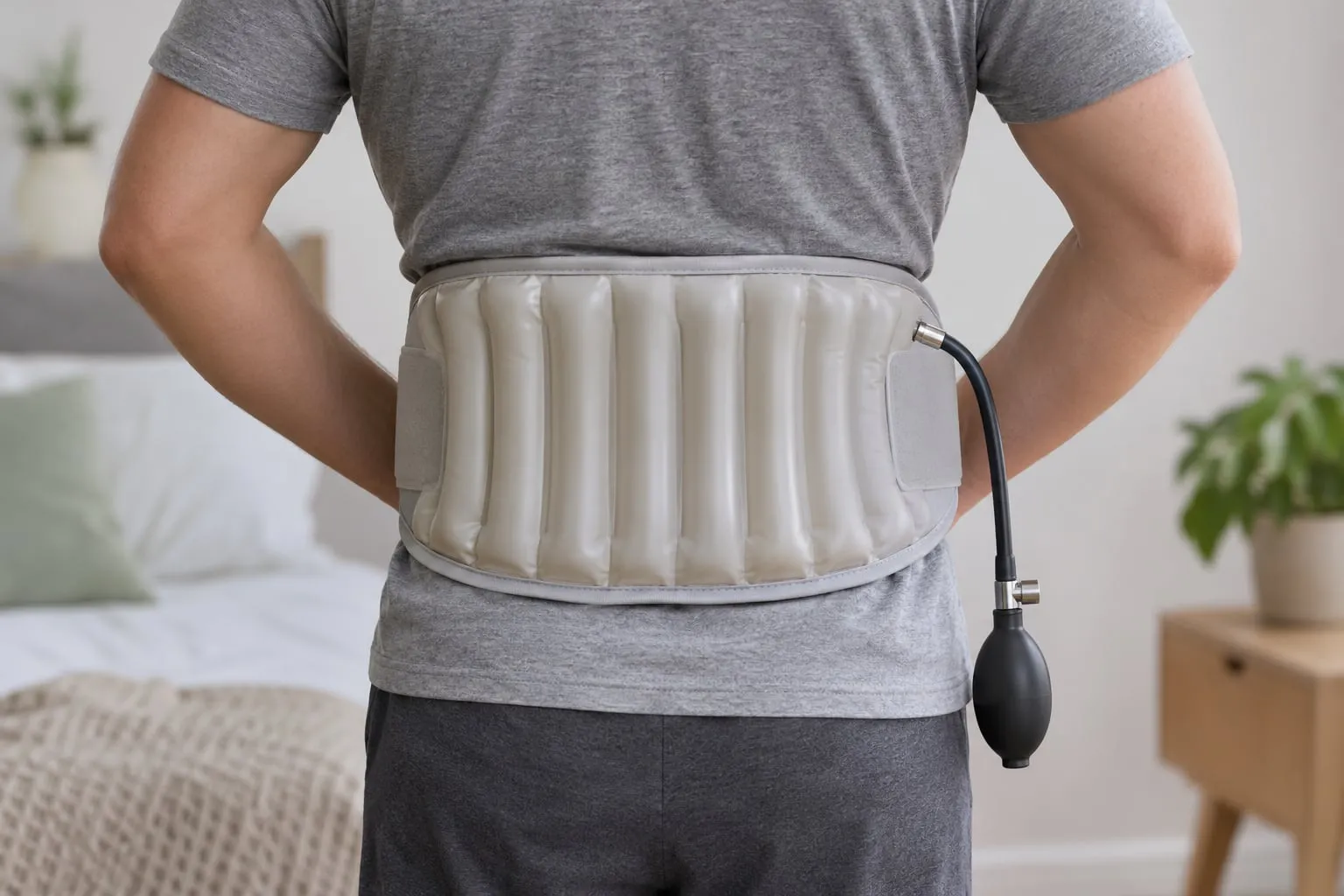

Our pick if you want to try an inflatable belt
HONGJING Hand Pump Decompression Belt
A plain inflatable belt with a manual pump, and the simplest way to find out whether you like the feel. No trial supports belts like it, so buy it for comfort, not for a cure, and read the section on who should skip one before you wear it.
- Hand pump with an automatic release, so no battery to charge
- Fits waists of 29 to 49 inches according to its listing
- Among the cheapest belts we found, so the experiment costs little
- Price range
- Budget
Listing onlySpecs from the retail listing; the maker publishes no spec sheet
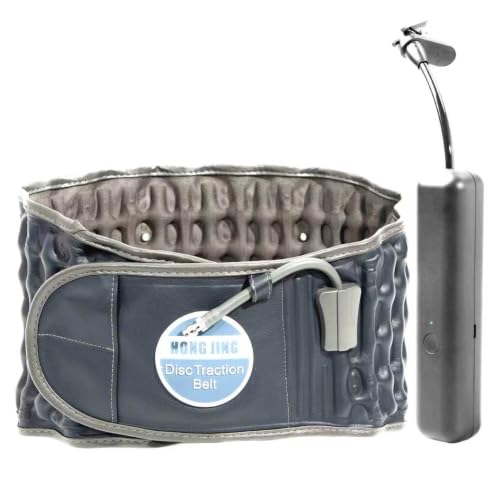
Best if you don't want to use a hand pump
HONGJING Electric Pump Decompression Belt
Choose it if squeezing a hand pump is hard on your hands, or you want push-button inflation that shuts itself off. Skip it if you want the cheapest option, or you want one less thing to charge.

Best alternative brand
6xigouma Inflatable Decompression Belt
Choose it if you want a second maker to compare against, in beige or blue. Skip it if you want a spec sheet: the listing gives little beyond fit and a model number.

Best if you want heat and vibration in the same belt
ERHIVORA Red Light Decompression Belt
Choose it if you already use a heating pad on your lower back and want it built into the belt. Skip it if you have reduced skin sensation, or you want the simplest belt with the fewest parts.
Decompression belts are cheap, and the evidence for them is thin. We did not test these belts on people. We read each Amazon listing, and we tied every health statement to a named source. Where a listing makes a medical claim, we quote it so you can see the claim and we say what backs it. These belts sell under several brand names with no maker website we could find, so most specs below come from the listings. If you buy through our links we may earn a commission, which never decides which belt we pick.
Decompression Belts at a Glance
Search for a decompression belt and you land on shops, not on advice. Nearly every result is selling one. That is why this page does two jobs: it compares the belts, and it tells you what has and has not been tested.
Our Four Picks
| If you want | Our pick | What decides it |
|---|---|---|
| To try a belt for the least | HONGJING hand pump belt | Hand pump, no battery |
| Push-button inflation | HONGJING electric pump belt | Pump stops by itself after 45 seconds, per the listing |
| A second brand to compare | 6xigouma inflatable belt | Reverse C shape, beige or blue |
| Heat and vibration built in | ERHIVORA red light belt | Battery, three heat levels, three vibration modes |
The Specs Side by Side
No belt here has a maker website we could open, so every column comes from the Amazon listing, and where a figure is not published the table says so.
| Spec | Editor's choiceHONGJING Hand Pump Decompression BeltBudget, price tier 1 of 3Listing only | HONGJING Electric Pump Decompression BeltBudget, price tier 1 of 3Listing only | 6xigouma Inflatable Decompression BeltBudget, price tier 1 of 3Listing only | ERHIVORA Red Light Decompression BeltBudget, price tier 1 of 3Listing only |
|---|---|---|---|---|
| Adjustment | One size, waist 29 to 49 in with the included extension, measured at the belly button | One size, waist 29 to 49 in with the extension belt, measured at the belly button | One size, waist 29 to 49 in with extension pads (the blue listing says 29 to 50 in), measured at the belly button | Waist 29 to 49 in with the extension strap; display shows Celsius only |
| How you use it | Worn around the waist and inflated, sitting, standing or walking, per the listing | Worn around the waist and inflated, during walking, driving or working, per the listing; 30 H-shaped air columns | Worn around the waist, at work, during exercise or housework, per the listing; reverse C-shaped design, model XGM-102R | The listing recommends 20 to 30 minutes of wear, with heat and vibration on or off |
| Assembly and setup | None: wrap, fasten and inflate with the hand pump, which releases air automatically when the belt is full | None: wrap, fasten and press the electric pump, which stops after 45 seconds per the listing | None: wrap, fasten and inflate | None: wrap, fasten and inflate; 5000 mAh battery, 3 hours to charge for 50 to 110 minutes of use |
| Warranty | Not stated | Not stated | Not stated | Not stated |
| Buy | See today's price: HONGJING Hand Pump Decompression Belt on Amazon (opens in a new tab) | See today's price: HONGJING Electric Pump Decompression Belt on Amazon (opens in a new tab) | See today's price: 6xigouma Inflatable Decompression Belt on Amazon (opens in a new tab) | See today's price: ERHIVORA Red Light Decompression Belt on Amazon (opens in a new tab) |
Editor's choiceHONGJING Hand Pump Decompression BeltListing only- Adjustment
- One size, waist 29 to 49 in with the included extension, measured at the belly button
- How you use it
- Worn around the waist and inflated, sitting, standing or walking, per the listing
- Assembly and setup
- None: wrap, fasten and inflate with the hand pump, which releases air automatically when the belt is full
- Warranty
- Not stated
HONGJING Electric Pump Decompression BeltListing only- Adjustment
- One size, waist 29 to 49 in with the extension belt, measured at the belly button
- How you use it
- Worn around the waist and inflated, during walking, driving or working, per the listing; 30 H-shaped air columns
- Assembly and setup
- None: wrap, fasten and press the electric pump, which stops after 45 seconds per the listing
- Warranty
- Not stated
6xigouma Inflatable Decompression BeltListing only- Adjustment
- One size, waist 29 to 49 in with extension pads (the blue listing says 29 to 50 in), measured at the belly button
- How you use it
- Worn around the waist, at work, during exercise or housework, per the listing; reverse C-shaped design, model XGM-102R
- Assembly and setup
- None: wrap, fasten and inflate
- Warranty
- Not stated
ERHIVORA Red Light Decompression BeltListing only- Adjustment
- Waist 29 to 49 in with the extension strap; display shows Celsius only
- How you use it
- The listing recommends 20 to 30 minutes of wear, with heat and vibration on or off
- Assembly and setup
- None: wrap, fasten and inflate; 5000 mAh battery, 3 hours to charge for 50 to 110 minutes of use
- Warranty
- Not stated
Maker source from the maker's own page or manual, not independently testedListing only retail listing, no maker spec sheetNot stated the maker publishes nothing
All four say they fit a 29 to 49 inch waist, and all four tell you to measure at the belly button rather than at the belt line. None lists a weight limit, a tested pressure or a safety certification in the feature text we read. Those gaps matter more than the difference in price between them.
What a Decompression Belt Does
You wrap a band around your waist, fasten it, and pump air into chambers along it until it firms up. The sellers describe the result as lifting the ribs off the hips. That is a claim about shape, so it helps to separate what the shape can plausibly do from what the listings promise.
Air Columns Between Ribs and Hips
Inflated, the belt becomes a stiff ring of air around your middle. One listing counts 30 H-shaped air columns, another describes a reverse C shape meant to follow the curve of the lower back. Both are descriptions of design. None of the listings publishes a measurement of how much space the air creates, or what happens to the spine inside it.
Decompression Belt vs Back Brace
A conventional back brace is a fabric or elastic support that you tighten. A decompression belt adds air chambers that you inflate, and the makers say that is what separates it from a brace. The two get lumped together in research and in guidelines, which is why the next section matters: the strongest trial involves a brace, not an inflatable belt.
What It Can’t Do
It cannot put a disc back in place. The HONGJING hand pump listing says the inflated belt will help the “intervertebral disc, nucleus pulposus back to its natural position,” and the listing also says that slight discomfort means the belt is working and that it will “realign your spine” (HONGJING hand pump belt, Amazon listing). We found no study that supports either statement for any belt sold online. Discomfort is not a sign that a belt is working, and our advice is the opposite of the listing’s: take it off when it hurts.
Do Decompression Belts Work?
The honest answer is that nobody knows for inflatable belts, and the nearest evidence points in different directions. Here is each piece, with its limits.
The Only Patient Study of a Wearable Pneumatic Device
In 2005, Dallolio reported on a custom-made inflatable lumbar vest called Orthotrac. Forty-one patients aged 19 to 25 with radicular pain from degenerative disc disease wore it 60 minutes three times a day for five weeks, and 32 of them (78%) reported a significant improvement (Dallolio, 2005). There was no control group, and the patients were very young. The vest was made to measure, so it is not the kind of belt sold online. It is the only study of its kind we found, and it is a preliminary one.
A Height Study in Healthy Lifters
One other study used a pneumatic belt. In 12 healthy young weight trainers, 20 minutes in a pneumatic decompression belt after a heavy lifting session restored 4.3 mm of spine height, against 1.8 mm after 20 minutes lying on the back (Cannon et al., 2016). The people had no back pain, the outcome was height on a stadiometer rather than pain or function, and the abstract does not name the belt. It shows that a belt can unload the spine a little in healthy people. It does not show that it treats anything.
A Soft Belt Did Better in One Trial
A French randomized trial gave 168 adults with low back pain lasting 1 to 6 months either usual care or usual care plus a soft, elastic lumbar belt. At 12 weeks the belt group’s Oswestry disability score had improved by 10.0 points against 5.3 for usual care alone, a difference of 4.7 points (Grange et al., JAMA Network Open 2026). The belt supports the back rather than inflating, so the result does not transfer to a decompression belt. The trial was open-label, had no sham device, and was paid for by the belt’s maker, as the authors say themselves (Grange et al., JAMA Network Open 2026).
What NICE and Insurers Say
NICE’s guideline on low back pain and sciatica says not to offer belts or corsets, and not to offer traction (NICE, 2016). It speaks of support belts in general and does not name inflatable decompression belts. A Cochrane review of 32 trials found that traction, alone or with other treatment, made little or no difference to pain, function or return to work (Wegner, 2013). That review covers traction in general, not belts.
Aetna’s policy on lumbar traction devices lists home pneumatic lumbar traction devices, including the Orthotrac vest and the DDS 500, among treatments it considers experimental, investigational or unproven for low back pain (Aetna policy on lumbar traction devices). That is one insurer’s coverage decision, not a clinical guideline, and it does not name the belts sold online.
Our Pick: HONGJING Hand Pump Belt
This is the belt to try first if you have decided you want one.
The simplest belt to tryListing only
by HONGJING
Best for people who want to try an inflatable belt for the least and with the fewest parts.
Skip it if you want a maker's manual, published wear times, or any trial evidence behind the product.
The simplest way to find out whether an inflated belt feels good on your back: a hand pump, no battery, no heat, and one of the lowest spends we found. No maker site stands behind it, and no trial has tested belts like it.
- Price range
- Budget
What we like
- Hand pump, nothing to charge
- Pump releases air when the belt is full, per the listing
- Fits waists of 29 to 49 inches per the listing
- One of the lowest spends here
Keep in mind
- No maker website or manual
- Listing claims it moves the disc, which no study supports
- No wear time or warranty stated in the listing
- You squeeze the pump yourself every time
Full specs
- Price range
- Budget
- Weight capacity
- Not stated
- Door and frame fit
- One size, waist 29 to 49 in with the included extension, measured at the belly button
- Mounting
- None: wrap, fasten and inflate with the hand pump, which releases air automatically when the belt is full
- Use
- Worn around the waist and inflated, sitting, standing or walking, per the listing
- Warranty
- Not stated
Listing onlyFrom the retail listing; no maker spec sheet
We may earn a commission. It never changes what we pick, or the order picks appear in.
What the Listing Says
The listing describes a blue inflatable belt with a hand pump that releases air automatically when the belt is full, for one size that fits a 29 to 49 inch waist with an included extension. It lists the belt at about 45 inches long and 5 inches wide, and it names the model as hj-tb-m1102. It says you can wear it while walking, sitting, lying down, gardening, driving or working (HONGJING hand pump belt, Amazon listing).
What You Give Up
The listing calls the belt “clinical grade” and says it moves the disc, claims we found no study to support. It gives no wear time, no pressure to aim for and no list of who should not use it, and it names no manufacturer site. A hand pump also means you squeeze it yourself each time.
Who It Suits
Someone who wants to see whether wearing an inflated band around the waist feels better, and who is happy to stop if it does not. If the idea of a battery or a button appeals more, the electric version below is the same brand.
Best With an Electric Pump: HONGJING Electric Pump Belt
The same brand, with the pump swapped for a motor.
No hand pumpListing only
by HONGJING
Best for people who find a hand pump awkward and want one push to inflate.
Skip it if you want the cheapest option, or you want a manual with published safety limits.
The same kind of belt with a push-button pump, for anyone whose hands make a hand pump the hard part.
- Price range
- Budget
What we like
- One-touch inflation that stops by itself, per the listing
- Easier for sore or weak hands
- Same 29 to 49 inch fit
Keep in mind
- Costs more than the hand pump version
- No battery details, dimensions or warranty in the feature text
- Listing claims lasting relief, which no study supports
Full specs
- Price range
- Budget
- Weight capacity
- Not stated
- Door and frame fit
- One size, waist 29 to 49 in with the extension belt, measured at the belly button
- Mounting
- None: wrap, fasten and press the electric pump, which stops after 45 seconds per the listing
- Use
- Worn around the waist and inflated, during walking, driving or working, per the listing; 30 H-shaped air columns
- Warranty
- Not stated
Listing onlyFrom the retail listing; no maker spec sheet
We may earn a commission. It never changes what we pick, or the order picks appear in.
What the Listing Says
The listing describes one-touch electric inflation that stops automatically after 45 seconds, 30 H-shaped air columns, and a 29 to 49 inch fit with an extension belt. It says the electric pump is easier than a manual one, especially for older users (HONGJING electric pump belt, Amazon listing).
What You Give Up
It costs more than the hand pump version, and the listing makes the same kind of medical claim: that the belt restores spinal alignment, reduces pressure on discs and nerves and delivers “quick and lasting relief.” None of those is backed by a study we found. The listing gives no dimensions, no warranty and no battery details in the feature text we read.
Who It Suits
People with weak grip or sore hands, for whom the pump is the main obstacle. If your hands are fine, the hand pump version buys you a very similar belt for less.
Best Alternative Brand: 6xigouma Inflatable Belt
A different maker, so you are not relying on one seller’s claims.
A second brandListing only
by 6xigouma
Best for people who want to compare a second brand with the same basic design.
Skip it if you want a spec sheet, a stated warranty or a maker website.
A second brand with the same basic design, so you are not relying on one seller's claims when you compare.
- Price range
- Budget
What we like
- A second maker to compare against
- Beige or blue
- Same one-size waist range
Keep in mind
- Listing claims it relieves a herniated disc, which no study supports
- Pump type and warranty not stated in the feature text
- No maker website
Full specs
- Price range
- Budget
- Weight capacity
- Not stated
- Door and frame fit
- One size, waist 29 to 49 in with extension pads (the blue listing says 29 to 50 in), measured at the belly button
- Mounting
- None: wrap, fasten and inflate
- Use
- Worn around the waist, at work, during exercise or housework, per the listing; reverse C-shaped design, model XGM-102R
- Warranty
- Not stated
Listing onlyFrom the retail listing; no maker spec sheet
We may earn a commission. It never changes what we pick, or the order picks appear in.
What the Listing Says
The listing describes a reverse C shape that follows the curve of the lower back, multiple air columns that support the waist all the way around, and a one size fit for 29 to 49 inch waists with extension pads (6xigouma belt, Amazon listing). It gives the model as XGM-102R and sells the belt in beige or blue. The two colors share one model number, and the blue listing’s fit line says 29 to 50 inches where the beige says 29 to 49, so check the color you open.
What You Give Up
The listing says the belt relieves herniated disc and lumbar nerve compression and “prevents excessive scoliosis.” We found no study that supports any of those claims, and the pump type, warranty and weight limit are not stated in the feature text we read. A belt that tells you it fixes a herniated disc is a reason to be more careful, not less.
Who It Suits
Buyers who want to compare two brands before settling on a shape, and who will treat the listing’s medical claims as marketing.
Best With Heat: ERHIVORA Red Light Belt
The most complicated belt here, with heat, vibration and a built-in battery.
Heat and vibration built inListing only
by ERHIVORA
Best for people who already use heat on the lower back and want it in the same belt as the air columns.
Skip it if you have reduced skin sensation, or you would rather not charge another device.
For people who already like heat on a sore lower back and want it in the same belt as the air columns.
- Price range
- Budget
What we like
- Heat and vibration in one belt
- Can be used as a plain inflatable belt
- Gives a recommended wear time
Keep in mind
- Most to spend of the four when we checked
- More parts to fail and a battery to charge
- No guidance for numb skin or poor circulation
Full specs
- Price range
- Budget
- Weight capacity
- Not stated
- Heat and massage
- Red light heat in three levels from 104 to 150 F and three vibration modes, per the listing
- Door and frame fit
- Waist 29 to 49 in with the extension strap; display shows Celsius only
- Mounting
- None: wrap, fasten and inflate; 5000 mAh battery, 3 hours to charge for 50 to 110 minutes of use
- Use
- The listing recommends 20 to 30 minutes of wear, with heat and vibration on or off
- Warranty
- Not stated
Listing onlyFrom the retail listing; no maker spec sheet
We may earn a commission. It never changes what we pick, or the order picks appear in.
What the Listing Says
It lists three heat levels from 104 to 150 degrees Fahrenheit, three vibration modes, and a 5000 mAh battery that takes 3 hours to charge and runs 50 to 110 minutes. It recommends wearing it for 20 to 30 minutes, says to stop if you feel uncomfortable, and notes that the display shows Celsius only (ERHIVORA belt, Amazon listing). The listing says you can also use it with the heat and vibration off, as an inflatable belt alone. It fits 29 to 49 inch waists with an extension strap. Its medical wording is mild: it says the belt gives traction and support and will “relax low back discomfort,” without promising a cure.
What You Give Up
It cost the most of the four when we checked, and it has more parts to fail than a plain belt. The listing gives no guidance for people with numb skin or poor circulation, so ask a clinician before using heat on your back if either applies. Because the heat and the inflation come in one product, you cannot swap one half.
Who It Suits
People who already like heat on a sore lower back and want one product instead of a heating pad and a belt. If you want the cleanest test of a belt itself, take the plain one.
Not Picked
Two belts that came up in our search did not make the list. The GINEKOO red light belt overlaps the ERHIVORA, with heat, vibration and electric inflation, and costs more than any other belt here. One heated belt is enough for a comparison. The GYLRD is not an inflatable belt at all: its listing describes a mechanical traction device with a rocker, a push rod and “up to 46 kgf” of pull, for users of 132 to 198 pounds. A mechanical lumbar traction device is a different product with different risks, and our lumbar traction device guide covers that kind.
How to Wear a Decompression Belt
No maker of these four belts publishes a protocol. What follows combines what the listings say, what the two studies did and our own common-sense advice, and we mark which is which.
How Long
The ERHIVORA listing recommends 20 to 30 minutes at a time. The other three listings give no wear time. The only belt trial with a published schedule told people with a soft elastic belt to wear it for 4 to 8 hours a day while active, adjusting it for comfortable support without excessive tightness (Grange et al., JAMA Network Open 2026). That belt does not inflate, so it is no guide to an inflatable one. The Orthotrac vest was worn 60 minutes three times a day, under a protocol for a custom device (Dallolio, 2005). Our advice is to start with short spells and see how your back feels the next morning.
Sitting, Standing, Never Sleeping
The listings describe wearing the belt sitting, standing, walking and driving. The trial that did publish wear instructions told people not to wear the belt while sleeping (Grange et al., JAMA Network Open 2026), and that is a sensible rule for any belt. Inflate it until you feel support, not pressure, and take it off if your pain spreads, your legs tingle or your breathing feels restricted. Those stop signs are our advice, not a maker’s.
Who Should Not Use a Decompression Belt
None of the four listings we read lists who should avoid the belt, which is a gap in itself. These groups should ask a clinician before they wear one.
A Diagnosed Disc Problem or a Hernia
If you have been told you have a herniated disc, a hernia or a nerve problem, a belt that claims to treat it is not a substitute for the plan your clinician gave you. A Cochrane review of 32 traction trials found that seven of them reported adverse effects of traction, including more pain, worse neurological signs and later surgery (Wegner, 2013). That is traction in general, not belts, and four trials said there were no adverse effects. It is a reason to be careful, not a verdict on belts.
Recent Surgery, Pregnancy or High Blood Pressure
We found no source that tests an inflatable belt in any of these groups, so we cannot say it is safe. Ask the clinician who knows your history before you wear one. Our page on who should not use an inversion table covers a wider list for stronger methods.
New or Changing Symptoms
NICE tells clinicians to think about alternative diagnoses in low back pain, especially with new or changed symptoms, and to exclude specific causes such as cancer, infection, trauma or inflammatory disease (NICE, 2016). Pain after a fall, with a fever, or with numbness or weakness is a reason to see a doctor, not to buy a belt.
If a Belt Isn’t Enough
A belt is the cheapest thing to try, and the least tested. If it does not help after a few short sessions, or you want a different kind of pull, these are the next steps.
A Lumbar Traction Device
A traction device lets you control the pull and stop it at once, which no inflated belt does. Our guide to the best back decompression device compares the belt types with lever stretchers and standing frames and says which ones to avoid.
Stretchers and Positions
If you want a gentler step, our back stretcher guide covers lumbar arches. Our guide to decompressing your spine covers positions that need no equipment.
Inversion and the Alternatives
Head-down inversion is a stronger step, with more caution and more people who should not do it. See our page on inversion table alternatives for the options that do not involve hanging upside down.
The Honest Verdict
If you are going to try a belt, try the HONGJING hand pump belt first: it costs little and has the fewest parts. Move to the electric version only if the pump is the problem, and to the ERHIVORA only if you already like heat. Compare any of them with a cheaper first step, such as a change of position, before you commit to a belt. Either way, a belt is a comfort tool, not a cure, and pain that is new or getting worse means a clinician comes first.
Your questions, answered
Frequently Asked Questions
Do decompression belts work for back pain?
Nobody has shown that they do. We found no trial of the inflatable belts sold online, and the closest study had no control group. Some wearers say a belt feels supportive, and that may be enough reason to try one. It is not evidence that a belt treats a disc or a nerve, so see a clinician if the pain lasts.
Do decompression back belts really work?
The sellers say so, and the proof is missing. Their claims about moving a disc or realigning the spine come from the listing, not from a published trial. What a belt can plausibly do is change how your waist feels while you wear it. Judge it by comfort over a few short sessions, and stop if anything gets worse.
When should you not use a back support belt?
Skip one, or ask a clinician first, if you have a diagnosed disc problem, a hernia, high blood pressure, recent surgery or pregnancy, or if the pain came with a fall, a fever, numbness or weakness. A belt is also a poor fit for sleeping. Pain that spreads or tingling in your legs while you wear it means take it off.
What are the downsides of using a back support belt?
The listed downsides are modest: discomfort, skin irritation and an awkward fit under clothes. The bigger risk is leaning on a belt instead of finding out why your back hurts. NICE advises clinicians against offering belts for low back pain, so a belt should never delay an assessment of pain that is new or getting worse.
Is it okay to decompress your back every day?
No trial tells you how often an inflatable belt is safe. The only belt trial we found had people wear a soft support belt for part of each day, and none of the makers of the belts here publishes a schedule. If you try one, start with short spells, watch how your back feels the next morning, and ask a clinician before daily use.
10 sources used for this guide
Each linked to the original. Citations in the text jump here.
View sources
National Institute for Health and Care Excellence (NICE). Low back pain and sciatica in over 16s: assessment and management, Recommendations. NICE guideline NG59, published 30 November 2016, last updated 29 July 2026.
Wegner I, Widyahening IS, van Tulder MW et al. Traction for low-back pain with or without sciatica. Cochrane Database of Systematic Reviews 2013, CD003010.
Dallolio V. Lumbar spinal decompression with a pneumatic orthesis (Orthotrac): preliminary study. Acta Neurochirurgica Supplement 2005;92:133-137.
Grange L, Calmels P, Pers YM, et al. Lumbar Belt for Nonspecific Low Back Pain: A Randomized Clinical Trial. JAMA Network Open 2026;9(8):e2629793.
Cannon J, Emond D, McGill SM. Evidence on the Ability of a Pneumatic Decompression Belt to Restore Spinal Height Following an Acute Bout of Exercise. Journal of Manipulative and Physiological Therapeutics 2016;39(4):304-310.
Aetna. Lumbar Traction Devices, Clinical Policy Bulletin 0569. Aetna Medical Clinical Policy Bulletins, last reviewed August 6, 2026.
HONGJING. HONGJING Decompression Belt for Lower Back Pain Relief, Inflatable Back Brace with Hand Pump (model hj-tb-m1102). Amazon.com product listing, ASIN B08M3RFRTG, accessed November 2026.
HONGJING. HONGJING Electric Pump Decompression Belt for Lower Back Pain Relief. Amazon.com product listing, ASIN B0GRVH7T73, accessed November 2026.
6xigouma. 6xigouma Decompression Back Belt, Inflatable Back Brace (model XGM-102R). Amazon.com product listing, ASIN B0BFCTV9SF, accessed November 2026.
ERHIVORA. ERHIVORA Decompression Back Belt with Red Light Heating and Massage. Amazon.com product listing, ASIN B0H5JY8MF9, accessed November 2026.