Review
Teeter DEX II Review: The Hip-Supported Alternative to an Inversion Table
By the IntoInversion teamUpdated
- 12 sources
- 12 min read
We earn from qualifying purchases made through our links.
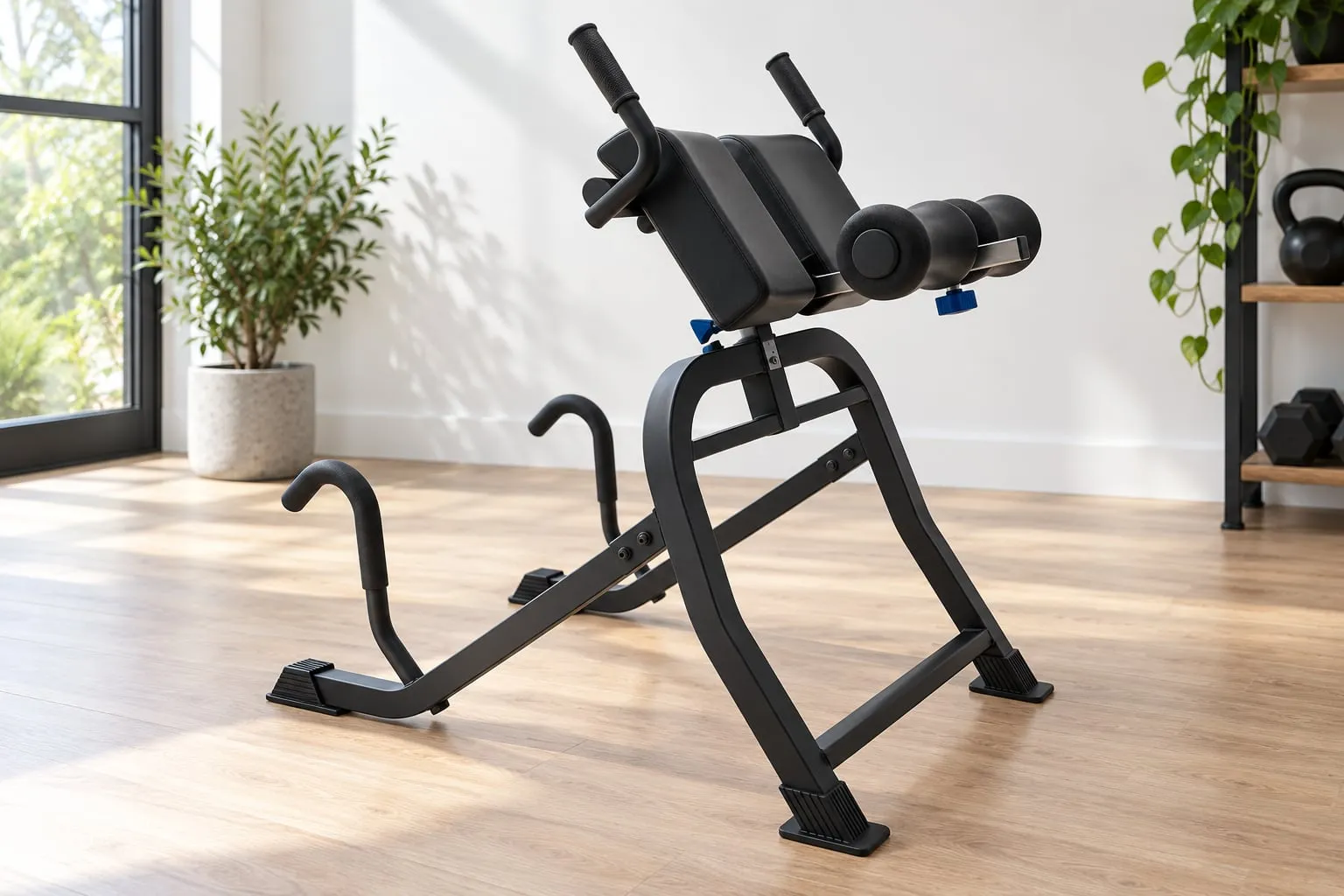
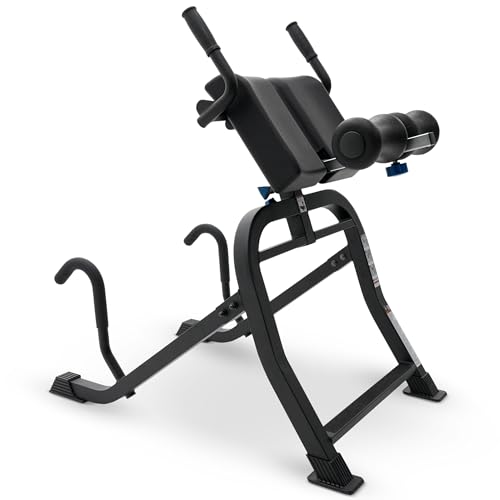
Our verdict: for when your ankles are the problem
Teeter DEX II
Not an inversion table, and Teeter doesn’t pretend it is. The DEX II tips you forward over a padded lap cushion, knees and hips bent, so gravity pulls on your lower back while your ankles carry nothing. It is rated to 350 lb, 50 lb more than any FitSpine table. Skip it if you want a gentle, adjustable angle to start at, or a machine that folds away.
- Holds you at the hips and thighs, with no load on the ankles
- Rated to 350 lb for users from 4 ft 8 in to 6 ft 6 in
- Five-year full warranty, the same as Teeter's FitSpine tables
- Weight limit
- 350 lb
- User height
- 4'8" to 6'6"
- Warranty
- 5 years
- Price range
- Premium
Maker sourceSpecs from the maker's own product page

Best if you want a true inversion table
Choose it if you want to start shallow and build up: the X3's tether is marked at 20, 40 and 60 degrees, and the table folds for storage. Skip it if hanging by your ankles is uncomfortable for you, or you weigh more than 300 lb.
This Teeter DEX II review is built from Teeter’s own documents: the product page, the 16-page Assembly and User Guide, and Teeter’s comparison of the DEX II with its tables. We have not tested the machine, and we may earn a commission if you buy through the links on this page, which does not change what the manual says.
What the Teeter DEX II Is, and What It Isn’t
The Teeter DEX II is a decompression and core training machine sold alongside Teeter’s inversion tables. The name trips people up, so it is worth being precise before anything else.
Forward Rotation From the Hips
On a table you lie on your back, lock your ankles and tip backward. On the DEX II you stand on a steel base, lean forward over a lap cushion and rotate until the cushion reaches a stop. Teeter describes it as a forward-rotating machine that “supports from the hips in the bent-knee/bent-hip position, which focuses decompression on the lower back,” with “no load on the ankles” (Teeter DEX II product page).
Teeter’s comparison article puts numbers on the posture: your knees and hips stay bent at roughly a 90/90 angle, and your weight “rests on your hips and thighs rather than your ankles” (Teeter, 2026). That is the whole idea of the machine in one sentence.
Not an Inversion Table, and Teeter Says So
Teeter sells both products and has no reason to run either one down, so its own comparison is useful. It says plainly that “neither position is better for everyone” (Teeter, 2026). The table gives a reclined, full-body stretch with an angle you control. The DEX II gives a forward stretch aimed at the lower back, with no ankle pressure and exercise options on the same frame.
DEX, DEX II and DEX II Commercial
If you search for the Teeter DEX, you land on the same machine. Teeter’s current product is the “DEX II Commercial Inversion & Core Training System,” item D12000C (Teeter DEX II product page), and the Amazon listing titled “Teeter DEX” is the same model, labeled DEX II Commercial. Everything on this page refers to that model.
Teeter DEX II Specs: What Teeter Publishes
Here is the DEX II next to Teeter’s FitSpine X3 and the Innova ITX1200, our pick among inversion tables rated above 300 lb. Every cell comes from the maker.
| Spec | Editor's choiceTeeter DEX IIPremium, price tier 3 of 3Maker source | Teeter FitSpine X3Premium, price tier 3 of 3Maker source | 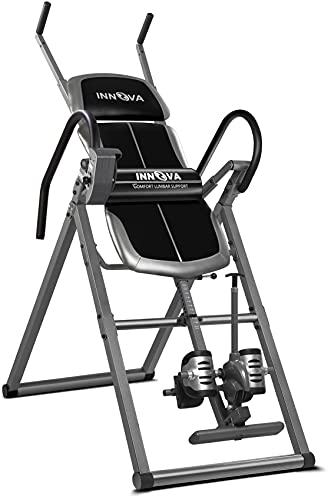 Innova ITX1200Mid-range, price tier 2 of 3Maker source |
|---|---|---|---|
| Weight capacity | 350 lbHighest here | 300 lb | 350 lbHighest here |
| User height | 4'8" to 6'6" | 4'8" to 6'6" | 4'10" to 6'6" |
| Angle control | No angle setting: rotates forward to one fixed stop, knees and hips bent at about 90/90 | EZ-Angle tether marked at 20°, 40° and 60°; full inversion with secure lockout | Three-position pin with protective cover; degrees not stated; adjustable stretch bars for a fuller stretch at lower slopes |
| Ankle system | None: your thighs lock between the leg supports and the lap pad, with no load on the ankles | Deluxe EZ-Reach ankle lock, extra-long handle, micro-adjusting closure | Reversible ankle holding system |
| Warranty | 5 years full (5-year extension sold separately)Highest here | 5 years (extension to 10 sold separately)Highest here | 1 year limited |
| FDA | Manual states Teeter inversion products are FDA-registered as 510(k) devices (brand-wide, no DEX-specific number) | 510(k) cleared (K162702), Class I device | Not stated |
| Assembly and setup | Five steps in the manual, two wrenches and a screwdriver supplied; BILT app instructions | 85% pre-assembled, BILT app instructions (brand-wide claim) | Not stated |
| Heat and massage | None | None | None |
| Buy | See today's price: Teeter DEX II on Amazon (opens in a new tab) | See today's price: Teeter FitSpine X3 on Amazon (opens in a new tab) | Not linked |
Editor's choiceTeeter DEX IIMaker source- Weight capacity
- 350 lbHighest here
- User height
- 4'8" to 6'6"
- Angle control
- No angle setting: rotates forward to one fixed stop, knees and hips bent at about 90/90
- Ankle system
- None: your thighs lock between the leg supports and the lap pad, with no load on the ankles
- Warranty
- 5 years full (5-year extension sold separately)Highest here
- FDA
- Manual states Teeter inversion products are FDA-registered as 510(k) devices (brand-wide, no DEX-specific number)
- Assembly and setup
- Five steps in the manual, two wrenches and a screwdriver supplied; BILT app instructions
- Heat and massage
- None
Teeter FitSpine X3Maker source- Weight capacity
- 300 lb
- User height
- 4'8" to 6'6"
- Angle control
- EZ-Angle tether marked at 20°, 40° and 60°; full inversion with secure lockout
- Ankle system
- Deluxe EZ-Reach ankle lock, extra-long handle, micro-adjusting closure
- Warranty
- 5 years (extension to 10 sold separately)Highest here
- FDA
- 510(k) cleared (K162702), Class I device
- Assembly and setup
- 85% pre-assembled, BILT app instructions (brand-wide claim)
- Heat and massage
- None
Innova ITX1200Maker source- Weight capacity
- 350 lbHighest here
- User height
- 4'10" to 6'6"
- Angle control
- Three-position pin with protective cover; degrees not stated; adjustable stretch bars for a fuller stretch at lower slopes
- Ankle system
- Reversible ankle holding system
- Warranty
- 1 year limited
- FDA
- Not stated
- Assembly and setup
- Not stated
- Heat and massage
- None
Maker source from the maker's own page or manual, not independently testedListing only retail listing, no maker spec sheetNot stated the maker publishes nothing
Capacity and Height: 350 lb, 4’8” to 6’6”
Teeter’s spec sheet gives a height capacity of 4 ft 8 in to 6 ft 6 in and a weight capacity of 350 lb (Teeter DEX II product page). The manual turns those numbers into a hard rule: do not use the machine “if you are over 6 ft 6 in (198 cm) or over 350 lbs. (159 kg),” because “structural failure could occur or head/neck may impact the floor during inversion” (Teeter DEX II manual).
For comparison, Teeter’s FitSpine tables stop at 300 lb (Teeter), and Innova publishes 350 lb for the ITX1200 (Innova). So the DEX II matches the highest verified rating we have found on any inversion product, and it is the only one of the three that takes the load off the ankles.
Size: Plan for a Machine That Stays Up
Teeter’s product page and manual agree on the footprint, 41 by 29 inches. They give different figures for the assembled height and for the machine’s own weight, so we don’t repeat either.
What matters more than the exact number is how you store it. Teeter’s comparison says the table “folds for storage between sessions,” while the DEX II has a “larger footprint, often left set up as a training station” (Teeter, 2026). If you need to put it away after every session, a folding table is the easier living-room choice.
Warranty, Returns and What “FDA-Registered” Means Here
Teeter includes a five-year full warranty against manufacturing defects in materials, workmanship, fabrics and padding, and pays for parts, labor and transportation on a covered repair (Teeter DEX II product page). A five-year extension is sold separately. Buying from teeter.com also gets you Teeter’s 90-day trial: return it within 90 days for a full refund, less return shipping.
The manual says that “Teeter inversion products are FDA-Registered as 510(k) medical devices” (Teeter DEX II manual). That is a brand-wide statement. The manual gives no clearance number specific to the DEX II, so we don’t attach one to it.
How to Use the Teeter DEX II, by the Manual
The DEX II is simpler to set up than a table, because there is no angle strap or balance point to find. It still has two settings that must be right before you tip forward.
Assembly: Five Steps
The manual assembles the DEX II in five steps, with two wrenches and a screwdriver in the box: feet on the base, legs on the base, the lap pad onto its frame, the lap pad onto the main shaft, and the leg supports onto the lap pad. The last instruction is a test. You stand between the handles, grip the traction handles, rotate the lap pad toward you, lift your legs and bounce lightly, to “test that all fasteners are secure and for smooth and steady rotation of the lap pad” (Teeter DEX II manual).
Fit It to Your Body: Hips to the Top of the Lap Pad
Two adjustments decide whether the DEX II holds you safely. The lap pad height is set so that, standing on the base, your hips line up with its top edge. The leg supports slide in or out so your thighs fit between the rollers and the pad. The manual’s wording is exact: “your hips are aligned with the top edge of the Lap Pad” and your thighs fit “snugly, yet comfortably,” with “no room between the back of your thighs and the leg supports” (Teeter DEX II manual).
Hear, Feel and See Before Every Session
Teeter’s check for the DEX II is a shorter cousin of the one on its tables. The manual tells you to “employ the method of ‘HEAR, FEEL, & SEE’ every time prior to inverting” (Teeter DEX II manual). Hear the height pin and the leg support knob click into place, feel that both are fully engaged and tight, and see that the pad sits at the top of your hips with no gap behind your thighs.
The manual also says that “new users will require the assistance of a spotter possessing the physical strength to lift and return the user to the upright position” (Teeter DEX II manual). That is a stronger requirement than a friend in the room: the spotter has to be able to lift you.
Rotating Forward and Coming Back Up
To go down, you bend one knee, lean forward and take hold of the cane handles, then keep leaning while you lift and bend the other leg. You “continue rotation until the Lap Pad reaches the stop position,” at which point “your body weight will now be supported by your thighs” (Teeter DEX II manual). Your hands can rest on the floor or behind your head.
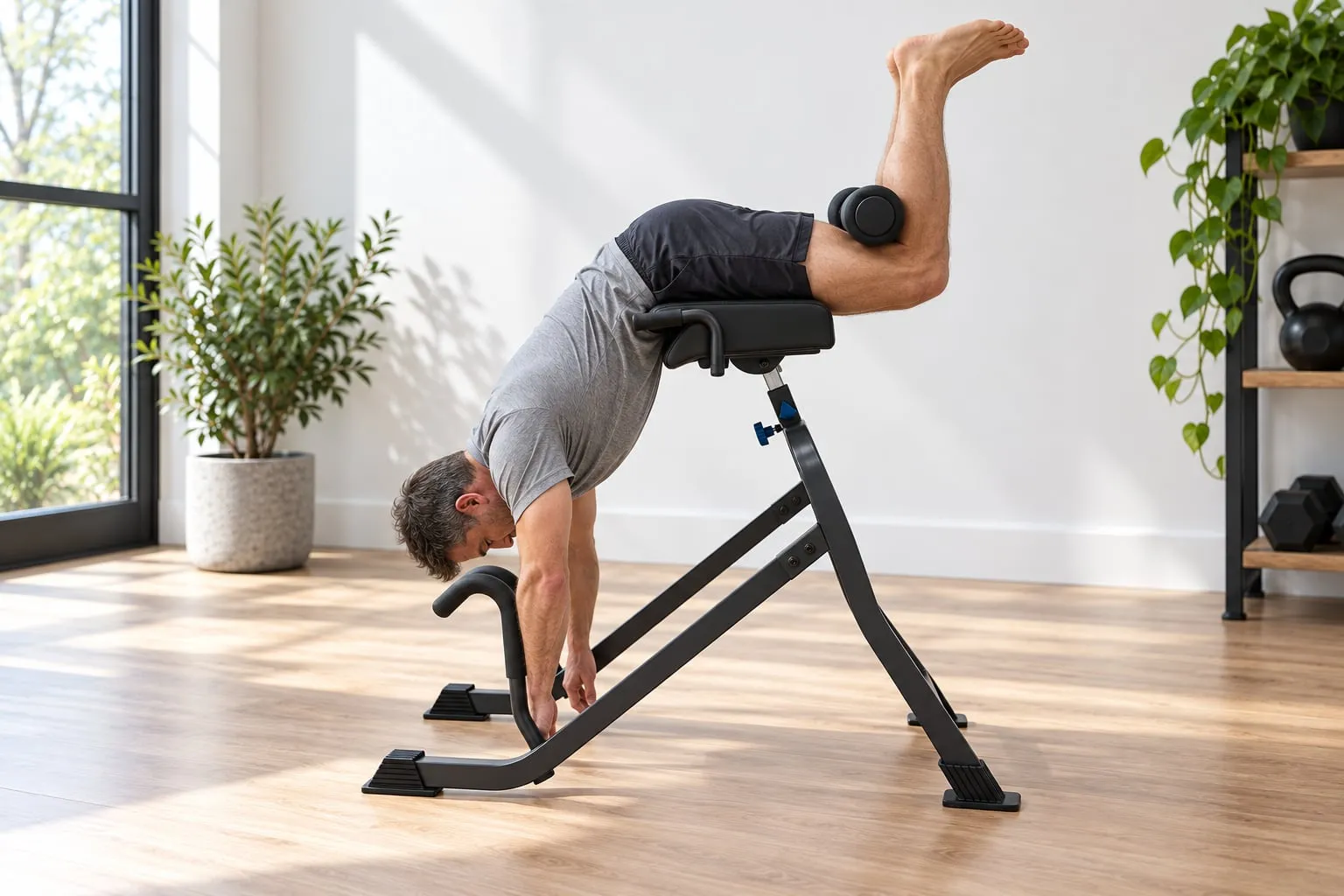
To come back, you push on the cane handles and walk yourself upright, straightening your legs, then step out once you have your balance. Two warnings apply throughout: keep your knees slightly bent to avoid hyperextension, and stop and return upright if you feel pain or become light-headed or dizzy.
How Long and How Often
Here the manual is silent: it gives no session length and no schedule. Teeter’s general inversion advice is to begin with one to two minutes and put frequency ahead of duration (Teeter, 2014). On the DEX II’s own product page, a Teeter product expert told one owner to “only invert for 1-2 minutes and dismount” (Teeter DEX II product page), though that answer was to someone recovering from a heart procedure.
For falls from inversion tables, the authors of a three-case report advise keeping sessions under one minute (Jung, 2021). Their cases involved ankles giving way on a table, a failure the DEX II’s design avoids, but the underlying advice, less time upside down while you learn, still holds. Our guide on how to use an inversion table sets out the timing advice in full.
What You Can Do on It: Stretch, Extend, Crunch
This is where the DEX II earns its “core training system” name. The manual lists four moves, and each one works because your hips are anchored and your knees are bent.
Traction Stretch
While inverted, “push against the Traction Handles located on the sides of the Lap Pad to attain a deeper decompressive stretch” (Teeter DEX II manual), then release and repeat. It is the DEX II’s version of pulling on a table’s frame: your arms add to the pull that gravity already provides.
Back Extensions, With and Without Rotation
Hanging with your hands crossed on your chest or behind your head, you tighten your glutes and back and lift your torso slowly, keeping your abs engaged. The manual’s limit is firm: do not use momentum, and do not “extend past parallel with the floor” (Teeter DEX II manual). The rotating version adds a slight twist on the way up.
Teeter’s claim for this position is that it “prevents over-extension and neutralizes the hamstrings to isolate the core during strength work” (Teeter DEX II product page). That is the maker’s description of the design, not a measured result.
Abdominal Crunches
From the same hanging position, you contract your abs and crunch inward toward the base frame, then release. Teeter also markets the base for reverse dips, modified push-ups and exercise band work (Teeter DEX II product page), done standing, not inverted.
What the Manual Rules Out
Keep the band work for when both feet are on the base.
DEX II vs an Inversion Table: How to Choose
Both devices use your body weight to pull on the spine. They differ in where they hold you, and that decides who each one suits.
| What differs | Teeter DEX II | Teeter FitSpine X3 |
|---|---|---|
| Where you are held | Hips and thighs, knees bent | Ankles, body straight |
| Angle control | One forward stop | Tether marked at 20, 40 and 60 degrees |
| Load on the ankles | None | Your full weight when inverted |
| Weight capacity | 350 lb | 300 lb |
| Height range | 4 ft 8 in to 6 ft 6 in | 4 ft 8 in to 6 ft 6 in |
| Storage | Often left set up | Folds between sessions |
| Warranty | Five years, full | Five years, full |
Choose the DEX II If
- Hanging by your ankles is uncomfortable, or your ankles or knees are the weak point.
- You weigh between 300 and 350 lb and want a Teeter product rated for you.
- You want a back extension and ab station as well as a stretch.
- You have floor space to leave it set up.
Choose an Inversion Table If
- You want to start at a shallow angle and build up slowly. On the DEX II there is only the stop position.
- You need to fold it away after each session.
- You want the documented table range, from the Teeter X3 to budget Innova models. Our Teeter inversion table reviews compare every FitSpine model.
If You Weigh More Than 300 lb
Most inversion tables, Teeter’s included, stop at 300 lb. The DEX II is one of the few products with a manufacturer rating of 350 lb, alongside tables such as the Innova ITX1200, and it is the only one of them that doesn’t hang that weight from your ankles. Our page on inversion tables with a 400 lb capacity explains why nothing verified goes higher.
Joe Rogan and the Teeter DEX II
A lot of DEX II searches start with a podcast. Here is what was actually said.
What He Said on JRE #1474
In episode #1474, Rogan describes Teeter’s inversion tables as “great for, you know, the same thing,” then adds: “But I actually prefer this product from them because this completely isolates the back. And you’re not pulling on your knees and your ankles when you’re decompressing” (JRE #1474, 2020). The product he means is the DEX II, which he calls “DEX2.”
His reasons are comfort and focus, not results. He says it is “really specifically good for back health,” and that you can do back extensions on it, which matches the manual’s exercise list.
The Quote on Teeter’s Site
Teeter’s marketing quotes him as saying “I use [the DEX II] every day…I swear by it,” credited to JRE #1474 and MMA Show #93 (Teeter). That exact line is not in the #1474 transcript. Our page on what Joe Rogan actually said about Teeter goes through the episode line by line.
Does the DEX II Work for Back Pain?
This is the question that matters most, and the answer has to separate what Teeter claims from what has been measured.
What Teeter Claims
Teeter says the bent-knee, bent-hip position “focuses decompression on the lower back” (Teeter DEX II product page), and its comparison article says the posture is “designed to place more emphasis on the lower back” (Teeter, 2026). Both are design claims. We found no published trial of the DEX II itself.
What the Evidence Covers
The DEX II works on the same principle as an inversion table. A 2023 paper in Disability and Rehabilitation describes inversion table therapy as “a form of spinal traction,” thought to help because gravity-assisted traction separates the lumbar vertebrae (Kassay, 2023). That is the proposed mechanism.
On outcomes, the broadest review covers traction of every kind. A Cochrane review of 32 trials with 2,762 people found that traction, alone or with other treatment, makes little or no difference to pain, function or return to work in low-back pain, with or without sciatica (Wegner, 2013). That applies to traction in general, not to this machine. Relief is possible; it is not promised. Our page on inversion table benefits covers the smaller studies with more encouraging numbers, our guide to inversion tables for back pain sets them beside the guidelines, and our guide to the best back decompression device sets the DEX II against belts, traction frames and the Teeter P2.
Who Should Not Use It
The DEX II keeps you head-down, so the medical cautions are the same as for a table. The manual says “DO NOT use until approved by a licensed physician” if you have any condition “that may be made more severe by an elevation of blood pressure, intracranial pressure or mechanical stress of the inverted position” (Teeter DEX II manual). Its list names, among others, high blood pressure, glaucoma, retinal detachment, osteoporosis, hernias, pregnancy, obesity, recent surgery and the use of anticoagulants.
The blood pressure concern is measured, not only cautious: in 60 healthy young women, two minutes of inversion raised both systolic and diastolic pressure significantly (Haskvitz, 1986). Our page on who should not use an inversion table sorts every condition by the evidence behind it.
Where to Buy the Teeter DEX II
Teeter sells the DEX II directly at teeter.com and through its own storefront on Amazon. The machine is in the premium tier, priced with Teeter’s top tables rather than with budget ones.
Direct From Teeter or on Amazon
The choice comes down to returns. Direct from Teeter you get the 90-day trial described above; on Amazon, Amazon’s return policy applies. The five-year warranty is Teeter’s, and the manual tells owners to contact Teeter, not the retailer, for missing parts or help. Check the live price in both places, since both run sales.
Hip-supported, no ankle loadMaker source
Teeter DEX II
by TEETER
Best for people who want to decompress the lower back without hanging from their ankles, up to 350 lb.
Skip it if you want a shallow, adjustable angle to start at, or a machine that folds away: a FitSpine table does both.
If hanging by your ankles is the problem, the DEX II takes the ankles out: it holds you at the hips and thighs with your knees bent, and Teeter rates it to 350 lb, 50 lb more than any FitSpine table.
- Weight limit
- 350 lb
- User height
- 4'8" to 6'6"
- Warranty
- 5 years
- Price range
- Premium
What we like
- Holds you at the hips and thighs, with no load on the ankles
- Rated to 350 lb for users from 4 ft 8 in to 6 ft 6 in
- Doubles as a back extension and ab crunch station
- Five-year full warranty, like the FitSpine tables
Keep in mind
- No angle setting: one forward stop, so no gentle 20° start
- Does not fold; Teeter says it is often left set up
- The manual asks new users for a spotter strong enough to lift them
- No heat or massage
Full specs
- Price range
- Premium
- Weight capacity
- 350 lb
- User height
- 4'8" to 6'6"
- Angle control
- No angle setting: rotates forward to one fixed stop, knees and hips bent at about 90/90
- Ankle system
- None: your thighs lock between the leg supports and the lap pad, with no load on the ankles
- Door and frame fit
- Lap pad height set so your hips line up with its top edge; leg supports snug behind the thighs
- Mounting
- Five steps in the manual, two wrenches and a screwdriver supplied; BILT app instructions
- Use
- Stand on the base, lean forward on the cane handles and rotate until the lap pad reaches its stop, knees bent
- Warranty
- 5 years full (5-year extension sold separately)
- FDA
- Manual states Teeter inversion products are FDA-registered as 510(k) devices (brand-wide, no DEX-specific number)
Maker sourceFrom the maker's product page. Not stated means the maker publishes nothing.
We may earn a commission. It never changes which table we pick, or the order they appear in.
The Verdict on the Teeter DEX II
The Teeter DEX II solves a specific problem well: it takes your ankles and knees out of inversion and holds you at the hips, with a 350 lb rating and Teeter’s five-year warranty behind it. It also gives you a back extension and ab station that a folding table isn’t built to be.
What it gives up is control over the angle and the ability to fold away. If you are new to inversion and want to start shallow, or you need the floor space back after every session, a table such as the Teeter FitSpine LX9 or X3 is the better fit, and our best inversion tables guide compares the rest. If your ankles are the reason you have not tried inversion, the DEX II is the one to look at, after your doctor has cleared you.
Your questions, answered
Frequently Asked Questions
Where can I buy a Teeter Dex II?
You can buy it directly from Teeter at teeter.com, or through Teeter's own storefront on Amazon. Buying direct gets you Teeter's 90-day return window, with a full refund less return shipping; on Amazon, Amazon's return terms apply instead. Either way the machine carries Teeter's five-year full warranty, and the model you want is the DEX II Commercial, item D12000C.
What spinal decompression does Joe Rogan use?
The one he talks about is the Teeter DEX II. On episode #1474 of his podcast he calls Teeter's inversion tables great, then says he prefers the DEX II because it isolates the back and does not pull on the knees and ankles. He mentions having one at his gym. He does not name an inversion table model he owns.
How often should I use a Teeter Dex II?
Teeter's DEX II manual does not give a session length or a schedule. Teeter's general inversion advice is short sessions of one to two minutes, more often rather than longer, and a Teeter expert advised one DEX II owner, back after a heart procedure, to invert for one to two minutes and dismount. Start there, and let your doctor set the limit if you have a medical condition.
12 sources used for this guide
Each linked to the original. Citations in the text jump here.
View sources
Teeter. DEX II Commercial Inversion & Core Training System. teeter.com, accessed September 2026.
Teeter. Inversion Table vs. DEX II: Recline vs. Forward Inversion. teeter.com blog, June 2026.
Teeter. DEX II Inversion & Core Training System: Assembly & User Guide. Owner's manual, label D12010.
Teeter. FitSpine X3 Inversion Table. teeter.com, product page.
Innova. ITX1200 Inversion Table. innovaproductsinc.com, product page.
Teeter. FAQ: Invert How Long And How Often?. teeter.com blog, 2014 (updated 2025).
Jung SH, Hwang JM, Kim CH. Inversion Table Fall Injury, the Phantom Menace: Three Case Reports on Cervical Spinal Cord Injury. Healthcare (Basel) 2021;9(5):492.
Joe Rogan, Rhonda Patrick. Joe Rogan Experience #1474 - Dr. Rhonda Patrick (episode transcript). jre.ai/episodes/1474-dr-rhonda-patrick/transcript.
Teeter. Joe Rogan On Teeter Inversion & Spinal Decompression. teeter.com/blog/joe-rogan-inversion/.
Kassay A, Soliman MAR, Jhawar BS. Recommendations for inversion table therapy. Disability and Rehabilitation 2023;45(22):3779-3782.
Wegner I, Widyahening IS, van Tulder MW et al. Traction for low-back pain with or without sciatica. Cochrane Database of Systematic Reviews 2013, CD003010.
Haskvitz EM, Hanten WP. Blood pressure response to inversion traction. Physical Therapy 1986;66(9):1361-1364.