Buying guide
The Best Back Stretcher: Arch or Traction, and Who Should Skip Both
By the IntoInversion teamUpdated
- 3 picks
- 15 sources
- 16 min read
We earn from qualifying purchases made through our links.
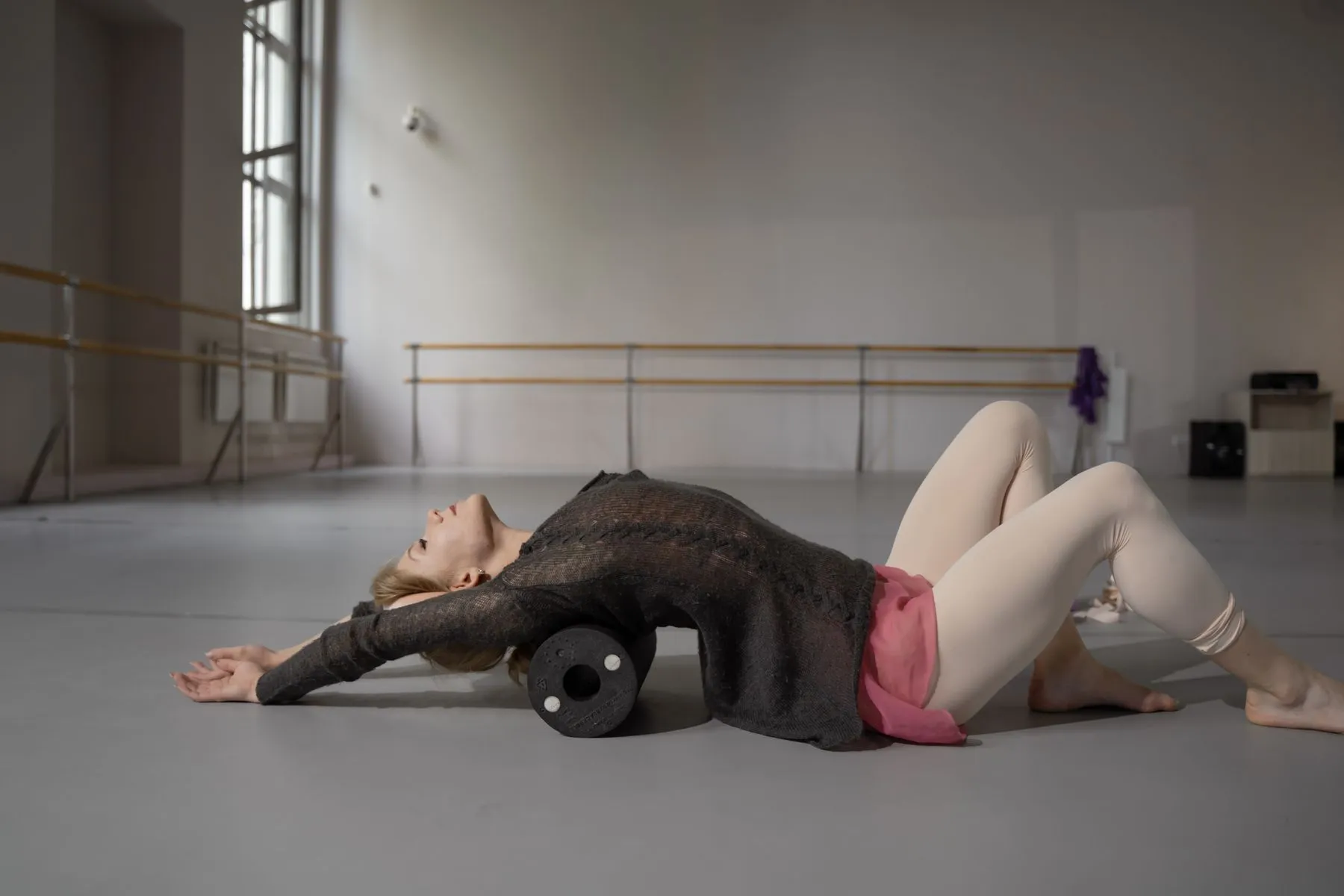

Our pick for most people
Teeter P2 Back Stretcher
The best back stretcher for most people, and the only one here with a maker’s manual, a warranty and an FDA filing behind it. It works in the opposite direction to the arch boards that dominate the category, which matters more than any spec.
- You set the force with your own arms
- Manual with a contraindication list
- Five-year full warranty
- Warranty
- 5 years
- Price range
- Budget
Maker sourceSpecs from the maker's own product page
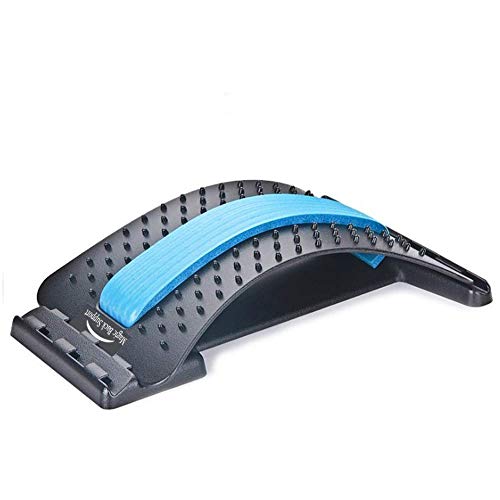
Best arch back stretcher
Magic Back Support Back Stretcher
Choose it if a backward bend is what eases your back and you want the simplest, lowest-cost option. Skip it if you have spinal stenosis, osteoporosis or leg symptoms that get worse when you stand or lean back.
A back stretcher is the cheapest decompression gadget you can buy, and the one with the least evidence behind it. We did not test these stretchers on people: we read the maker’s manual and FDA filing for the P2, read every listing for the arch boards, and tied each health claim to a named source. If you buy through our links we may earn a commission that never decides which stretcher we pick.
The Best Back Stretchers at a Glance
Search for a back stretcher and you will see dozens of near-identical plastic arches, plus one steel device from Teeter that looks nothing like them. That split is the real choice.
See our four picks in one table
Our Four Picks
| If you want | Our pick | Tier | What decides it |
|---|---|---|---|
| Control over the stretch | Teeter P2 Back Stretcher | budget | You set the force; manual, warranty, FDA filing |
| The classic arch | Magic Back Support | budget | Multi-level arch most buyers choose |
| An arch with stated angles | MINOLL Back Stretcher | budget | 15, 28 or 42 degrees, per the listing |
| A soft, simple arch | North American Healthcare Arched Back Stretcher | budget | Padded, one fixed arch |
All four sit in the budget tier. The P2 costs noticeably more than the arch boards. We don’t print prices, because they move from week to week.
The Specs Side by Side
The Teeter column comes from Teeter’s own product page and manual. The three arches have no manufacturer spec sheet online, so their columns come from their Amazon listings, and where a figure is not published the table says so.
| Spec | Editor's choiceTeeter P2 Back StretcherBudget, price tier 1 of 3Maker source | Magic Back Support Back StretcherBudget, price tier 1 of 3Listing only |  MINOLL Back StretcherBudget, price tier 1 of 3Listing only |  North American Healthcare Arched Back StretcherBudget, price tier 1 of 3Listing only |
|---|---|---|---|---|
| Adjustment | Three positions (seated, lying, legs raised) and numbered lap pad widths; you set the force by how hard you push | Multi-level arch; the listing does not state how many levels or what height | Three arch angles: 15, 28 or 42 degrees | None: a single fixed arch |
| How you use it | Pads on the thighs, rollers behind the knees; push the handles toward your feet and hold 5 to 10 seconds | Lie on your back over the arch on a mat, bed or chair; the listing suggests a towel on top at first | Lie on it 5 to 10 minutes, twice a day, per the listing | Lie back over the padded arch for short stretches |
| Weight capacity | Not stated | Not stated | 400 lbHighest here | Not stated |
| Warranty | 5 years fullHighest here | Not stated | Not stated | Not stated |
| FDA | Teeter calls it FDA-registered 510(k); its 510(k) K162702 covers a portable decompression device, Class I device type | Not stated | Not stated | Not stated |
| Assembly and setup | Two pieces join without tools and separate for travel; lap pad width set by a numbered knob on each side | No power or battery; ABS plastic arch, per the listing | PP plastic arch with an NBR foam strip down the middle, per the listing | One-piece padded arch, nothing to assemble |
| Buy | See today's price: Teeter P2 Back Stretcher on Amazon (opens in a new tab) | See today's price: Magic Back Support Back Stretcher on Amazon (opens in a new tab) | See today's price: MINOLL Back Stretcher on Amazon (opens in a new tab) | Not linked |
Editor's choiceTeeter P2 Back StretcherMaker source- Adjustment
- Three positions (seated, lying, legs raised) and numbered lap pad widths; you set the force by how hard you push
- How you use it
- Pads on the thighs, rollers behind the knees; push the handles toward your feet and hold 5 to 10 seconds
- Weight capacity
- Not stated
- Warranty
- 5 years fullHighest here
- FDA
- Teeter calls it FDA-registered 510(k); its 510(k) K162702 covers a portable decompression device, Class I device type
- Assembly and setup
- Two pieces join without tools and separate for travel; lap pad width set by a numbered knob on each side
Magic Back Support Back StretcherListing only- Adjustment
- Multi-level arch; the listing does not state how many levels or what height
- How you use it
- Lie on your back over the arch on a mat, bed or chair; the listing suggests a towel on top at first
- Weight capacity
- Not stated
- Warranty
- Not stated
- FDA
- Not stated
- Assembly and setup
- No power or battery; ABS plastic arch, per the listing
MINOLL Back StretcherListing only- Adjustment
- Three arch angles: 15, 28 or 42 degrees
- How you use it
- Lie on it 5 to 10 minutes, twice a day, per the listing
- Weight capacity
- 400 lbHighest here
- Warranty
- Not stated
- FDA
- Not stated
- Assembly and setup
- PP plastic arch with an NBR foam strip down the middle, per the listing
North American Healthcare Arched Back StretcherListing only- Adjustment
- None: a single fixed arch
- How you use it
- Lie back over the padded arch for short stretches
- Weight capacity
- Not stated
- Warranty
- Not stated
- FDA
- Not stated
- Assembly and setup
- One-piece padded arch, nothing to assemble
Maker source from the maker's own page or manual, not independently testedListing only retail listing, no maker spec sheetNot stated the maker publishes nothing
The rows that separate them are not capacity or size. They are warranty, documentation, and above all the “how you use it” row: the arches put you in one position, and the P2 asks you to do the work.
Two Kinds of Back Stretcher, Two Opposite Directions
Every back stretcher is sold with the same promise: decompress your spine. The two designs reach for it by moving your lower back in opposite directions.
The Arch: Your Back Bends Backward
A multi-level arch is a curved plastic board, usually with removable risers and rows of plastic nubs. You lie on your back with the curve under your lower back, and your spine drapes over it. In plain mechanical terms, that is extension: the lower back bends backward around the arch, and the higher the level, the bigger the bend.
The listings describe this as “restoring the natural curve” or as “spine decompression.” What actually changes is the shape your spine holds while you lie there. Nothing pulls your vertebrae apart; gravity pushes your back down onto the curve.
The Teeter P2: Hips Bent, Spine Pulled Long
The P2 is a small steel frame with two padded lap pads and two foam rollers. Teeter’s filing with the FDA describes the device it calls the Teeter Portable Decompression Device this way: you recline on your back “with knees and hips at 90°, flattening the lumbar curve,” and push the handles toward your feet, “applying self-controlled traction force to decompress the lumbar and mid-spine” (FDA 510(k) K162702 summary).
So the P2 does two things the arch does not. It flattens your lower back instead of arching it, and it adds a pull along the spine that you produce and control. Its manual adds that keeping your legs bent at roughly 90 degrees “will flatten your lower back and allow easier decompression” (Teeter P2 manual).
Why the Direction Matters
This is not a detail. Some back problems ease when the lower back bends backward and some get worse.
In lumbar spinal stenosis, a narrowing of the spinal canal that is common in older adults, a 2025 clinical review describes leg symptoms that are “worse with walking, standing, and lumbar extension, and relieved with flexion postures such as stooping forward and/or sitting” (Ammendolia, 2025). An arch board puts you in extension. The P2’s bent-hip position flattens the curve, closer to the flexion the review describes as easing symptoms.
At the other end, many people with ordinary back pain feel better bending backward. In the McKenzie method used by physical therapists, 67% to 85% of the patients whose pain centralizes show a directional preference for extension, and the authors of a StatPearls clinical chapter add that a randomized trial found exercises prescribed in the wrong direction gave worse results (Mann, 2025).
If you don’t know which direction helps you, a physical therapist can find out in one visit. That is worth more than any stretcher on this page.
Do Back Stretchers Work? What the Evidence Says
The honest answer is that nobody has tested the devices on this page. What exists is research on traction in general and on extension as a direction of movement.
No Trial Has Tested These Devices
We searched the Europe PMC research database for trials of back stretchers, lumbar stretchers, spine stretchers, arch boards, acupressure boards and the Teeter P2 by name. We found patents, stretchers for carrying patients, and nothing that tested a consumer back stretcher on people with back pain.
The P2’s FDA file doesn’t fill that gap. The 510(k) summary lists only “Safety evaluations (Inversion table and gravity boots only)” and a risk analysis as performance data (FDA 510(k) K162702 summary). The clearance rests on equivalence to an older traction device, not on a study of the P2.
What Traction Research Found
The P2 is a traction device, so the best summary of traction applies to it. A Cochrane review published in 2013 pooled 32 trials with 2,762 people and found traction, alone or with other treatments, had “little or no impact on pain intensity, functional status, global improvement and return to work” among people with low back pain (Wegner, 2013). Seven of those trials reported side effects of traction, including more pain, worse neurological signs and later surgery.
That review covers traction in clinics and on machines, not back stretchers. It is still the closest large body of evidence, and it does not point to a strong effect.
What the Guidelines Say
The UK’s NICE guideline on low back pain and sciatica tells clinicians: “Do not offer traction for managing low back pain with or without sciatica” (NICE, 2016). The American College of Physicians’ 2017 guideline points first to heat, massage, acupuncture, spinal manipulation, exercise, yoga and tai chi, and traction does not appear on any of its recommendation lists in the abstract (Qaseem, 2017).
For disc herniation with nerve pain, the North American Spine Society found “insufficient evidence to make a recommendation for or against the use of traction” (NASS, 2012). Insufficient means unproven, not proven useless.
Self-Controlled Traction: One Old Trial
One study comes close to the P2’s idea of letting the patient control the pull. In a 1993 trial of people with lumbar disc herniation, autotraction, where the patient pulls on bars at the head of a special clinic table to set the force, gave a favorable response in 30 of 40 patients against 6 of 27 on passive traction (Tesio, 1993).
Keep it in proportion. It was a small, open trial on a clinic table with a therapist adding rotation, more than thirty years ago, and the much larger Cochrane analysis came later. It shows that user-controlled traction has been tried and looked promising once. It does not show that a P2 on your living room floor does the same.
So why do so many people swear by their back stretcher? Because a stretch can feel good, and short-term relief is real to the person feeling it. A back stretcher is a comfort tool you can use between the things the guidelines do recommend, such as staying active and exercising. Judged that way, a budget stretcher is a reasonable experiment. Judged as a treatment, the evidence isn’t there.
Who Should Not Use a Back Stretcher
The arch boards come with almost no safety guidance. The P2 comes with a list. Between them, and the research on direction, a few groups should check with a doctor first.
Spinal Stenosis and the Arch
If you have been told you have spinal stenosis, or your legs ache, tingle or tire when you stand or walk and ease when you sit or lean on a shopping cart, be careful with an arch. The review above describes those symptoms as worse in lumbar extension (Ammendolia, 2025), and an arch board is extension by design.
No one has tested an arch board in people with stenosis, so we can’t say it harms them. We can say the device pushes your back in the direction that usually aggravates the condition. The P2’s flexed position is the more logical fit on paper, though it hasn’t been tested in stenosis either.
Osteoporosis, Fractures and Implants
Teeter’s P2 manual tells anyone with “Bone weakness (osteoporosis), recent or unhealed fractures, and skeletal implants” to get a physician’s approval first, along with people with a spinal injury, tumor or spinal cord condition, rheumatoid arthritis or swollen joints, pregnancy, dizziness or coordination problems, and weak or unstable shoulders, wrists, elbows or hips (Teeter P2 manual). The last group matters because the P2 runs on your arms.
Traction researchers take bone strength seriously too. A 2025 randomized trial of an overnight traction bed excluded people with osteoporosis “to avoid traction induced fracture” (Seeger, 2025). That was a different device, but the caution transfers.
The arch listings say almost nothing. MINOLL’s listing only suggests seeing a doctor after surgery or a back injury. A hard plastic arch under a fragile spine is not something to try without asking.
Stop Signs During Use
The P2 manual is direct: “DO NOT over-stretch. Discontinue use immediately if you experience any worsening pain or if you develop any weakness in your legs.” It also says to start slowly and treats soreness as a sign of “doing too much, too soon” (Teeter P2 manual). Those rules apply just as well to an arch board.
Sciatica: Get the Direction Checked
Sciatica is where direction matters most, because a stretch that centralizes pain for one person can push it further down the leg for another. If your leg pain eases when you lean back, an arch may suit you. If it eases when you sit or bend forward, it probably won’t. Our guide to the best inversion table for sciatica covers the evidence on traction for nerve pain in more depth.
How Long to Use a Back Stretcher
No study has tested a session length for any back stretcher, so every number below is the maker’s instruction, not a proven dose.
The Teeter P2: Seconds, Not Minutes
The P2 manual tells you to push the hand grips toward your feet, relax your lower back, and “Hold for 5-10 seconds only. Rest and repeat as desired.” When you finish, rest on the floor 20 to 30 seconds before getting out of it (Teeter P2 manual).
Answering a buyer on its product page, a Teeter product expert suggested starting with 1 to 2 minutes of stretching, increasing as you feel comfortable, and decompressing several times a day (Teeter P2 product page). Read the two together: a minute or two of short holds, not a two-minute pull.
Arch Boards: Start Low and Short
The arch listings mostly say nothing about time. MINOLL’s is the exception, suggesting 5 to 10 minutes twice a day. The Magic Back Support listing tells beginners to lay a towel over the board so the hard plate doesn’t hurt.
The sensible start is the lowest level, for a minute or two, then see how your back feels the next morning. Raise the level or the time only if it felt better, not merely different. Get off by rolling to your side, not by sitting straight up out of the arch.
Which Position on the P2
The P2 has three positions. Seated is the light stretch, lying with your feet flat on the floor is moderate, and lying with your legs propped on a chair or couch is the deep stretch (Teeter P2 manual). Teeter’s product page says the seated position is “Ideal for users with limited mobility or for those seeking a gentle lumbar stretch” (Teeter P2 product page). Start there, or with your feet on the floor, before you try the deep stretch.
Best Back Stretcher Overall: Teeter P2 Back Stretcher
This is the back stretcher to buy if you want control, documentation and a company behind it.
You control the pullMaker source
by TEETER
Best for people who want to control the stretch themselves and want a manual, a warranty and a maker that documents its product.
Skip it if you have weak or painful shoulders, elbows or wrists, since the P2 runs on your arms.
The only back stretcher here with a manufacturer manual, a contraindication list, a five-year warranty and an FDA 510(k) summary describing the device. You control the pull with your own arms, so you can stop the instant it feels wrong.
- Warranty
- 5 years
- Price range
- Budget
What we like
- Five-year full warranty from Teeter
- Manual with a contraindication list and clear stop signs
- Three positions, from a seated light stretch to a deep stretch
- Under 4 lb and splits in two for travel
Keep in mind
- Uses your arms and shoulders: harder with weak wrists, elbows or shoulders
- No published user height or weight range
- Costs more than any arch board, though still budget tier
- Holds are short (5 to 10 seconds), so it is an active routine, not a lie-down
Full specs
- Price range
- Budget
- Weight capacity
- Not stated
- Door and frame fit
- Three positions (seated, lying, legs raised) and numbered lap pad widths; you set the force by how hard you push
- Mounting
- Two pieces join without tools and separate for travel; lap pad width set by a numbered knob on each side
- Use
- Pads on the thighs, rollers behind the knees; push the handles toward your feet and hold 5 to 10 seconds
- Warranty
- 5 years full
- FDA
- Teeter calls it FDA-registered 510(k); its 510(k) K162702 covers a portable decompression device, Class I device type
Maker sourceFrom the maker's product page. Not stated means the maker publishes nothing.
We may earn a commission. It never changes which table we pick, or the order they appear in.
Why the P2
The P2 is the only back stretcher we found with a full manual, a contraindication list and a written warranty. Teeter includes a five-year full warranty that covers repair or replacement of defects in materials, workmanship, fabrics and padding, and says it pays for “all parts, labor and transportation” (Teeter P2 product page). Teeter’s page says it weighs under 4 pounds, and Teeter says no tools are needed: the two halves slide together and come apart for travel (Teeter P2 product page).
The bigger reason is control. On an arch, the stretch is whatever the arch gives you. On the P2, the force comes from your own push, so it starts at zero and stops the moment you relax your arms.
The FDA Record, and What It Means
Teeter’s product page calls the P2 “an FDA Registered 510(k) Medical Device indicated for relief of back pain and related conditions” (Teeter P2 product page). The 510(k) behind that is K162702, cleared in December 2016 for a family of Teeter devices that includes one called the Teeter Portable Decompression Device, whose description matches the P2 (FDA 510(k) K162702 summary).
The indications Teeter filed for the whole family list back pain, muscle tension, degenerative disc disease, spinal degenerative joint disease, spinal stenosis, herniated disc, spinal curvature due to tight muscles, sciatica, muscle spasm and facet syndrome. Be clear about what that is. A 510(k) means the FDA agreed the devices are substantially equivalent to one already on the market; it is not a finding that the P2 treats any of those conditions.
It still sets Teeter apart. An article on how inversion therapy is regulated, published in Disability and Rehabilitation in 2023, explains that the FDA only regulates devices whose makers claim a medical use, and most makers do not (Kassay, 2023). The device type, non-powered traction apparatus, is Class I, the FDA’s lowest-risk class (FDA). None of the arch boards we found state any FDA status.
Fit and the Trade-Offs
The lap pads slide and rotate to fit your thighs, but Teeter publishes no user height or weight range for the P2, and its own 510(k) table lists none for the portable device. If you are very short or very tall, buy where returns are easy. Bought directly from Teeter, the P2 can be returned within 90 days of delivery for a full refund, less return shipping (Teeter P2 product page). On Amazon, Amazon’s return policy applies.
The other trade-off is effort. The P2 is an active routine of short holds, not something to lie on while you read. If you want to switch your brain off, an arch is easier.
Best Arch Back Stretcher: Magic Back Support
If a backward bend is what eases your back, this is the multi-level arch most buyers choose.
The classic multi-level archListing only
by Magic Back Support
Best for people who already know a backward bend eases their back and want the simplest, lowest-cost stretcher.
Skip it if you have spinal stenosis, osteoporosis, or leg symptoms that get worse when you stand or lean back.
The most widely bought multi-level arch we found, from a seller with a long record on this exact product. If you want the classic arch board and know extension feels good for your back, this is the one most buyers have lived with.
- Price range
- Budget
What we like
- Simple: lie on it, no setup, no power
- Adjustable arch height, so you can start at the lowest level
- Light and small enough for a car or office chair
- Lowest spend of our picks
Keep in mind
- No manufacturer site, manual or warranty stated
- Listing does not state a weight limit or the arch heights
- Hard plastic with acupressure nubs; the listing itself suggests a towel at first
- Bends your lower back backward, which does not suit everyone
Full specs
- Price range
- Budget
- Weight capacity
- Not stated
- Door and frame fit
- Multi-level arch; the listing does not state how many levels or what height
- Mounting
- No power or battery; ABS plastic arch, per the listing
- Use
- Lie on your back over the arch on a mat, bed or chair; the listing suggests a towel on top at first
- Warranty
- Not stated
Listing onlyFrom the retail listing; no maker spec sheet
We may earn a commission. It never changes which table we pick, or the order they appear in.
What the Listing Says
The listing describes a multi-level ABS plastic arch that needs no power and uses your own body weight, sold for use on a bed, chair, car seat or yoga mat. It suggests beginners or anyone with a sore lower back put a soft cloth or towel over the board at first. It does not state how many levels the arch has, how high each one is, or a weight limit.
What You Give Up
There is no manufacturer site, no manual and no stated warranty. Every claim comes from the Amazon listing, and the listing promises more than an arch can show, naming herniated discs, sciatica and spinal stenosis among the things it helps. Read the stenosis section above before you take that last one at face value.
Who Should Pick It
Pick it if you have used an arch before, or a physical therapist has told you extension helps, and you want the version most people have lived with. Start at the lowest level with the towel on.
Best Arch With Published Angles: MINOLL Back Stretcher
This arch tells you more about itself than any rival we found.
Publishes its arch anglesListing only
by MINOLL
Best for arch buyers who want to know exactly how steep each level is before they lie on it.
Skip it if you want a warranty or figures checked by anyone other than the seller.
The only arch board we found whose listing publishes its three arch angles, a usage time and a weight limit. It is still a listing, not a spec sheet, but it tells you more than any rival.
- Weight limit
- 400 lb
- Price range
- Budget
What we like
- Arch angles stated: 15, 28 or 42 degrees
- Foam strip along the spine line
- Listing states a 400 lb limit
- Listing states a session time: 5 to 10 minutes, twice a day
Keep in mind
- All figures come from the Amazon listing, with no maker site behind them
- No warranty stated
- The 400 lb figure cites 'tested results' without saying who tested
- Listing's only safety note: see a doctor first after surgery or a back injury
Full specs
- Price range
- Budget
- Weight capacity
- 400 lb
- Angle control
- Three arch angles: 15, 28 or 42 degrees
- Door and frame fit
- Three arch angles: 15, 28 or 42 degrees
- Mounting
- PP plastic arch with an NBR foam strip down the middle, per the listing
- Use
- Lie on it 5 to 10 minutes, twice a day, per the listing
- Warranty
- Not stated
Listing onlyFrom the retail listing; no maker spec sheet
We may earn a commission. It never changes which table we pick, or the order they appear in.
What the Listing Says
MINOLL’s listing gives three arch angles, 15, 28 or 42 degrees, a 400 lb limit, a foam strip down the spine line, and a session time of 5 to 10 minutes twice a day. Knowing that the lowest setting is 15 degrees is useful when you are starting out, because it tells you how gentle “gentle” is.
What You Give Up
The same thing as every arch: no maker site, no manual, no warranty stated. The 400 lb figure is described as “tested” without saying who tested it, so treat it as the seller’s claim. The listing also mentions “acupuncture effects” and better circulation, which no source we read supports.
Best Simple Arch: North American Healthcare Arched Back Stretcher
For people who want a softer arch with nothing to adjust.
Padded, one fixed archListing only
by North American Wellness
Best for people who want a padded arch with no nubs and nothing to set up.
Skip it if you are new to arch stretching and want a low level to start on: this one has a single fixed arch.
A plain padded arch with no nubs and no levels, on sale under the same listing since at least 2015. It suits people who want a softer, simpler arch and already know a backward bend feels good.
- Price range
- Budget
What we like
- Firm padding instead of hard plastic nubs
- Nothing to adjust or assemble
- Same listing on sale since at least 2015
- Light enough to move around the house
Keep in mind
- One arch height: no gentler level to start on
- No weight limit or arch height stated
- No warranty stated
- Listing claims it soothes stress fractures, which no source supports
We are not linking to this model at the moment. The specs below still hold. See the alternatives we would pick instead.
Full specs
- Price range
- Budget
- Weight capacity
- Not stated
- Door and frame fit
- None: a single fixed arch
- Mounting
- One-piece padded arch, nothing to assemble
- Use
- Lie back over the padded arch for short stretches
- Warranty
- Not stated
Listing onlyFrom the retail listing; no maker spec sheet
What the Listing Says
A one-piece arch with firm padding instead of plastic nubs, sold as a back stretcher and spine board, light enough to carry around the house. It has been on sale under the same listing since at least 2015.
What You Give Up
One arch height, so no gentler first step. No weight limit and no warranty stated. The listing also claims it can soothe spinal arthritis, herniated discs and stress fractures. No source supports that, and if you have a stress fracture, lying on an arch is not the plan.
Back Stretchers We Looked at but Didn’t Pick
A few other names come up in every search for the best back stretcher. Here is why they are not on the list.
See the back stretchers we looked at but didn't pick
ChiFit Multi-Level Back Stretching Device
A three-level arch with acupressure nubs, sold on a listing that names herniated disc, sciatica and scoliosis in its title. It is a reasonable arch, but it publishes no arch angles, no weight limit and no warranty, so it gives you less information than the MINOLL for the same kind of device.
JUMPOW Back Stretcher
Another three-level arch with plastic nubs and a foam strip. Buyers have been less happy with it than with our arch picks, and nothing in its listing sets it apart from the MINOLL, which at least publishes its angles.
Back Magic Multi-Level Back Stretching Device
The older version of the Magic Back Support arch, under a separate listing. The current Magic Back Support model above is the one we checked against its listing, so that is the one we point you to.
When a Back Stretcher Isn’t Enough
A back stretcher is the cheapest step. If it doesn’t help after a few weeks, or you want a stronger stretch, these are the next ones, each with more cost and more caution.
Inversion Tables
An inversion table uses your body weight, tilted head-down, to pull on your spine. It is a bigger stretch than either kind of back stretcher, and a bigger commitment for your body. Two minutes of inversion raised blood pressure significantly in a small trial of healthy young women, and the authors wrote that people with high blood pressure may need to avoid it (Haskvitz, 1986). Read who should not use an inversion table before you buy one. Our guide to the best inversion tables compares them, and the page on inversion tables for back pain covers what the trials found.
The Teeter DEX II
If you like the P2’s bent-knee, bent-hip idea but want gravity to do the pulling, the DEX II is the larger version. Teeter says it supports you from the hips in a bent-knee position “which focuses decompression on the lower back,” with no load on the ankles (Teeter DEX II product page). Our Teeter DEX II review covers who it suits.
Other Ways to Decompress
If you can’t or shouldn’t go head-down, our guide to inversion table alternatives covers the other options, and the best back decompression devices compares belts, traction devices and tables side by side. For stretches and positions that need no equipment at all, see how to decompress your spine.
The Honest Verdict
Choose your back stretcher by direction. If bending backward eases your back, a budget arch is a fair experiment, and the Magic Back Support or the MINOLL is where to start. If you have stenosis, leg symptoms when you stand, or simply want control, the Teeter P2 is the better buy, and the only one with a maker standing behind it. Either way, it is a comfort tool, not a cure, and new leg weakness or numbness means stopping and seeing a doctor.
Your questions, answered
Frequently Asked Questions
Do back stretchers really work?
They do something real mechanically, but nobody has proven they treat back pain. We found no published trial of an arch board or of the Teeter P2. The closest evidence, a Cochrane analysis of traction in general, found little or no effect on pain or function. Some people still like how the stretch feels for a while afterward, and that is a fair reason to try a budget one.
How long should I lay on a back stretcher?
Start with a minute or two and build up only if your back feels better afterward, not worse. On an arch board, begin at the lowest level. On the Teeter P2, the manual counts in holds of 5 to 10 seconds with rests between them. No study has tested any session length, so these are maker instructions, not proven doses.
Is a back stretcher good for sciatica?
Sometimes, and the direction decides it. Leg pain that eases when you lean back may tolerate an arch; leg pain that eases when you sit or bend forward points away from one. The North American Spine Society found too little evidence to recommend traction for disc-related sciatica either way. Stop at once if leg pain spreads or a leg feels weak.
Are back stretchers good for lower back pain?
For some people with ordinary, non-specific lower back pain, yes, as a comfort tool rather than a treatment. The UK's NICE guideline advises clinicians not to offer traction, and the American College of Physicians points first to heat, massage, exercise and similar options. A stretcher can sit alongside those, not replace them.
What is the best back stretcher for lower back pain?
For most people, the Teeter P2, because it lets you control the pull, comes with a manual and a contraindication list, and carries a five-year warranty. If a backward bend is what eases your back, a multi-level arch such as the Magic Back Support costs less. If you have spinal stenosis, ask your doctor before using any arch.
15 sources used for this guide
Each linked to the original. Citations in the text jump here.
View sources
FDA; STL International, Inc. 510(k) Summary and Indications for Use, K162702: Teeter Decompression Devices. U.S. Food and Drug Administration, clearance letter of December 30, 2016, with the 510(k) summary.
Teeter. P2 Back Stretcher: Assembly & Use Instructions. Owner's instructions, label P21040 1016-1.
Ammendolia C. No drugs, more sex? And Rock'n Roll: effective non-operative treatments and practical management strategies for older adults with lumbar spinal stenosis. Chiropractic & Manual Therapies 2025;33(1):27.
Mann SJ, Stretanski MF, Singh P. McKenzie Back Exercises. StatPearls, StatPearls Publishing, 2025.
Wegner I, Widyahening IS, van Tulder MW et al. Traction for low-back pain with or without sciatica. Cochrane Database of Systematic Reviews 2013, CD003010.
National Institute for Health and Care Excellence (NICE). Low back pain and sciatica in over 16s: assessment and management, Recommendations. NICE guideline NG59, published 30 November 2016, last updated 29 July 2026.
Qaseem A, Wilt TJ, McLean RM, Forciea MA, Clinical Guidelines Committee of the American College of Physicians, et al. Noninvasive Treatments for Acute, Subacute, and Chronic Low Back Pain: A Clinical Practice Guideline From the American College of Physicians. Annals of Internal Medicine 2017;166(7):514-530.
North American Spine Society (NASS), Lumbar Disc Herniation with Radiculopathy Work Group. Lumbar Disc Herniation with Radiculopathy: An Evidence-Based Clinical Guideline. NASS Evidence-Based Clinical Guidelines, 2012.
Tesio L, Merlo A. Autotraction versus passive traction: an open controlled study in lumbar disc herniation. Archives of Physical Medicine and Rehabilitation 1993;74(8):871-876.
Seeger JB, Müller F. Randomized, controlled trial to analyze the effect of using a traction-bed-device on patients suffering from osteoarthritis/spondylosis of the lumbar spine. BMC Musculoskeletal Disorders 2025;26(1):812.
Teeter. P2 Back Stretcher. teeter.com, product page, accessed October 2026.
Kassay A, Soliman MAR, Jhawar BS. Recommendations for inversion table therapy. Disability and Rehabilitation 2023;45(22):3779-3782.
FDA. Device classification, product code HST: Apparatus, Traction, Non-Powered. U.S. Food and Drug Administration, device classification database (openFDA), 21 CFR 888.5850.
Haskvitz EM, Hanten WP. Blood pressure response to inversion traction. Physical Therapy 1986;66(9):1361-1364.
Teeter. DEX II Commercial Inversion & Core Training System. teeter.com, accessed September 2026.