Buying guide
Teeter Inversion Table Reviews: Comparing the FitSpine X1, X3, LX9 and EP-560
By the IntoInversion teamUpdated
- 2 picks
- 14 sources
- 14 min read
We earn from qualifying purchases made through our links.
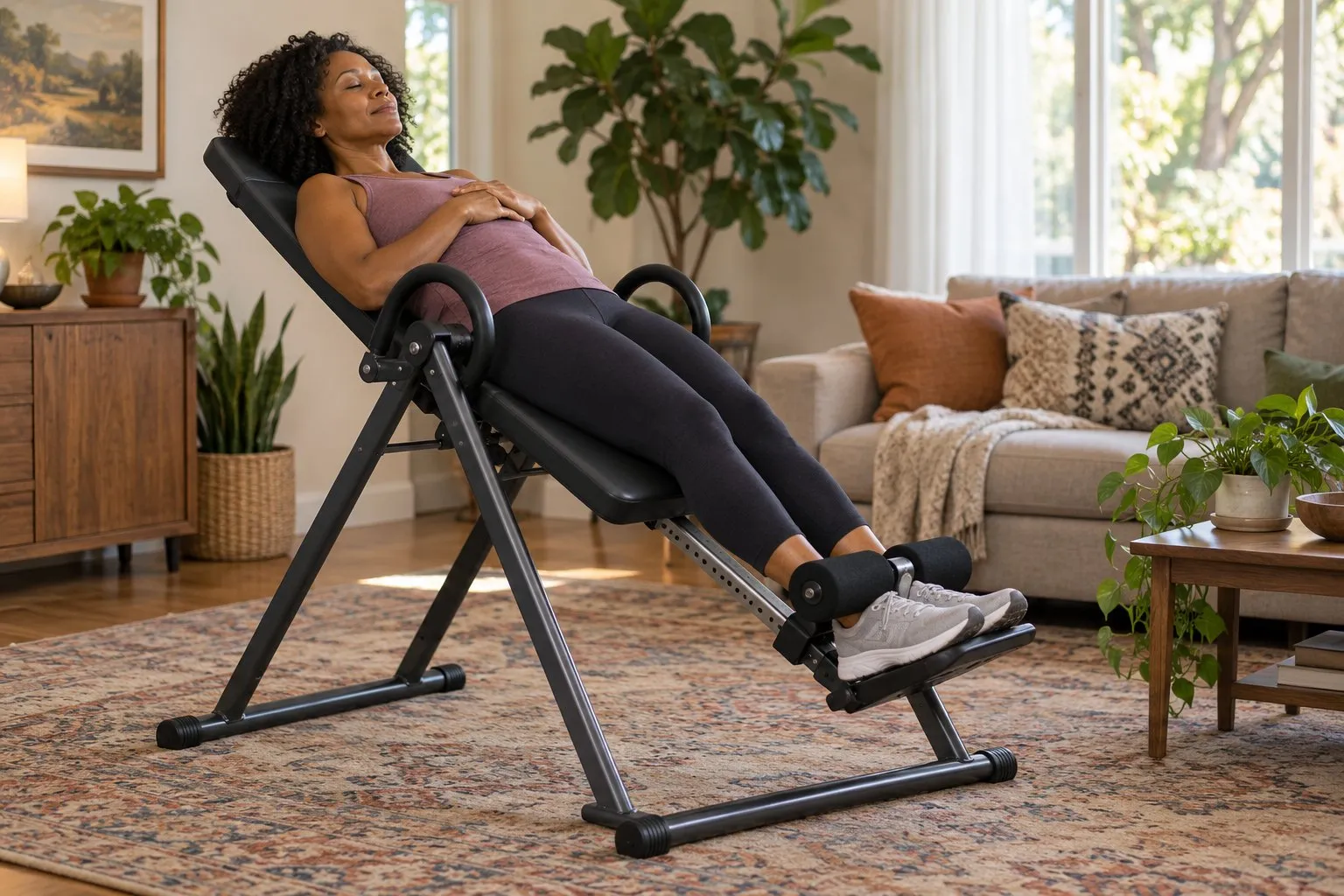

Our pick for most back pain buyers
Teeter FitSpine X3
The Teeter most back pain buyers should look at first, because its angle tether is marked at 20°, 40° and 60°. Of Teeter’s four current tables, the X1 drops the marked angles and the EP-560 is the only one offered with a heat and vibration cushion.
- Tether marked at 20°, 40° and 60°, set before you get on
- Deluxe EZ-Reach ankle lock with an extra-long handle
- Five-year full warranty, like every current Teeter
- Weight limit
- 300 lb
- User height
- 4'8" to 6'6"
- Warranty
- 5 years
- Price range
- Premium
Maker sourceSpecs from the maker's own product page
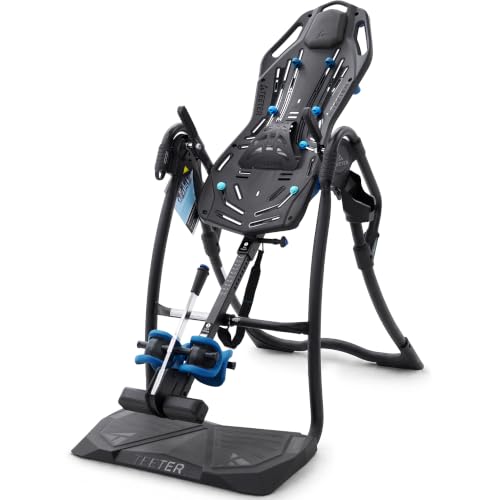
Best if getting on and off is hard
Choose it if bending down to your ankles or balancing while you mount is genuinely difficult: the boarding platform is the reason to pay more. Skip it if mounting is easy for you: it adds nothing to capacity, warranty or angle control.
These Teeter inversion table reviews compare the brand’s current range on the things that actually differ between models: how you set the angle, how the ankle lock closes, what the bed is made of, and how you get on. We did not test these tables, and we may earn a commission when you buy through links on this page; that does not decide which model we point you to.
The Current Teeter Lineup: X1 vs X3 vs LX9 vs EP-560
Teeter’s own product sitemap lists four inversion tables for sale today: FitSpine X1, FitSpine X3, FitSpine LX9 and the EP-560 (Teeter). The FitSpine X2, which many older lists still feature, is no longer in it. So any review that ranks the X2 alongside current models is describing a table Teeter no longer sells.
The three FitSpine models share a frame family and a weight rating. Here is how their published specs compare side by side.
| Spec |  Teeter FitSpine X1Premium, price tier 3 of 3Maker source | Editor's choiceTeeter FitSpine X3Premium, price tier 3 of 3Maker source | Teeter FitSpine LX9Premium, price tier 3 of 3Maker source |
|---|---|---|---|
| Weight capacity | 300 lb | 300 lb | 300 lb |
| User height | 4'8" to 6'6" | 4'8" to 6'6" | 4'8" to 6'6" |
| Angle control | Angle tether, no degree marks; full inversion with secure lockout | EZ-Angle tether marked at 20°, 40° and 60°; full inversion with secure lockout | EZ-Angle tether marked at 20°, 40° and 60°; full inversion with secure lockout |
| Ankle system | Ergo-Embrace ankle supports, spring-loaded closure, Ankle Comfort Dial | Deluxe EZ-Reach ankle lock, extra-long handle, micro-adjusting closure | Deluxe EZ-Reach ankle lock with Ankle Comfort Dial |
| Warranty | 5 years (extension to 10 sold separately) | 5 years (extension to 10 sold separately) | 5 years (extension to 10 sold separately) |
| Heat and massage | None | None | None |
| FDA | 510(k) cleared (K162702), Class I device | 510(k) cleared (K162702), Class I device | 510(k) cleared (K162702), Class I device |
| Assembly and setup | 85% pre-assembled, BILT app instructions (brand-wide claim) | 85% pre-assembled, BILT app instructions (brand-wide claim) | 85% pre-assembled, BILT app instructions (brand-wide claim) |
| Buy | See today's price: Teeter FitSpine X1 on Amazon (opens in a new tab) | See today's price: Teeter FitSpine X3 on Amazon (opens in a new tab) | See today's price: Teeter FitSpine LX9 on Amazon (opens in a new tab) |
Teeter FitSpine X1Maker source- Weight capacity
- 300 lb
- User height
- 4'8" to 6'6"
- Angle control
- Angle tether, no degree marks; full inversion with secure lockout
- Ankle system
- Ergo-Embrace ankle supports, spring-loaded closure, Ankle Comfort Dial
- Warranty
- 5 years (extension to 10 sold separately)
- Heat and massage
- None
- FDA
- 510(k) cleared (K162702), Class I device
- Assembly and setup
- 85% pre-assembled, BILT app instructions (brand-wide claim)
Editor's choiceTeeter FitSpine X3Maker source- Weight capacity
- 300 lb
- User height
- 4'8" to 6'6"
- Angle control
- EZ-Angle tether marked at 20°, 40° and 60°; full inversion with secure lockout
- Ankle system
- Deluxe EZ-Reach ankle lock, extra-long handle, micro-adjusting closure
- Warranty
- 5 years (extension to 10 sold separately)
- Heat and massage
- None
- FDA
- 510(k) cleared (K162702), Class I device
- Assembly and setup
- 85% pre-assembled, BILT app instructions (brand-wide claim)
Teeter FitSpine LX9Maker source- Weight capacity
- 300 lb
- User height
- 4'8" to 6'6"
- Angle control
- EZ-Angle tether marked at 20°, 40° and 60°; full inversion with secure lockout
- Ankle system
- Deluxe EZ-Reach ankle lock with Ankle Comfort Dial
- Warranty
- 5 years (extension to 10 sold separately)
- Heat and massage
- None
- FDA
- 510(k) cleared (K162702), Class I device
- Assembly and setup
- 85% pre-assembled, BILT app instructions (brand-wide claim)
Maker source from the maker's own page or manual, not independently testedListing only retail listing, no maker spec sheetNot stated the maker publishes nothing
The table makes one point clearly. Capacity, height range, warranty and FDA status are identical across the three.
FitSpine X1: The Entry FitSpine
The X1 is the starting point of the FitSpine series. It has the FlexTech backrest on an 8-point Floating Suspension, Ergo-Embrace ankle supports with a spring-loaded closure and T-shaped grip, and an angle tether you adjust by feel rather than by printed marks (Teeter). It still offers full inversion with a secure lockout, like the rest of the range.
What it gives up is precision. Without degree markings, you find your angle by adjusting the tether and trying it. That works fine for someone who already knows how far they like to go. It is less comfortable for a first-time user who wants to start at a known, shallow angle and stay there. Our Teeter FitSpine X1 review goes through its specs and setup in full.
FitSpine X3: Marked Angles and an Easier Ankle Lock
The X3 adds two things over the X1. The first is the EZ-Angle tether, marked at 20°, 40° and 60°, so you can see and set your limit before you lie back (Innova’s ITX9600 sets a limit with a pin whose degrees are in its manual). The second is the Deluxe EZ-Reach ankle lock, with an extra-long handle and a micro-adjusting closure, which means less bending and less fiddling to secure your feet.
Long ankle-lock handle, 5-year warrantyMaker source
by TEETER
Best for beginners who want a visible, marked 20 degree limit.
Skip it if bending down to your ankles or balancing while you mount is genuinely difficult: the LX9 adds a raised boarding platform for that.
What the premium over a cheaper table buys is the longer ankle-lock handle, the 5-year warranty against Innova's 1 year, and a tether marked at 20°, 40° and 60°. The Innova ITX9600 also lets you set a limit with a pin whose degrees are listed in its manual, so a marked angle is not exclusive to Teeter.
- Weight limit
- 300 lb
- User height
- 4'8" to 6'6"
- Warranty
- 5 years
- Price range
- Premium
What we like
- Tether marked at 20°, 40° and 60°, set before you get on
- Five-year full warranty, against Innova's one year
- Teeter's tables are FDA 510(k) cleared under K162702
- EZ-Reach ankle lock with an extra-long handle
Keep in mind
- No heat or massage
- No raised boarding platform, unlike the LX9
- Rated to 300 lb, max height 6 ft 6 in
Full specs
- Price range
- Premium
- Weight capacity
- 300 lb
- User height
- 4'8" to 6'6"
- Angle control
- EZ-Angle tether marked at 20°, 40° and 60°; full inversion with secure lockout
- Ankle system
- Deluxe EZ-Reach ankle lock, extra-long handle, micro-adjusting closure
- Heat and massage
- None
- Warranty
- 5 years (extension to 10 sold separately)
- FDA
- 510(k) cleared (K162702), Class I device
Maker sourceFrom the maker's product page. Not stated means the maker publishes nothing.
We may earn a commission. It never changes which table we pick, or the order they appear in.
These are product settings, not a recommended progression. Follow the current manual and any restrictions given by your clinician.
For most people buying a Teeter because of back pain, those two changes are the whole case for the X3. A beginner whose clinician or manual calls for the lowest angle can see that limit marked on the tether. Our Teeter FitSpine X3 review covers its dimensions, setup and safe use in full.
FitSpine LX9: The X3 Plus a Boarding Platform
The LX9 keeps the X3’s angle system and ankle lock and adds an arched frame and a raised boarding platform. Both are about the moment of getting on and off: you step up into the ankle lock instead of reaching down to it. If you have trouble bending, balancing on one foot, or reaching your ankles, that is a real difference. If you don’t, you are paying for convenience you won’t use.
Raised boarding platformMaker source
by TEETER
Best for people who have trouble bending, balancing on one foot or reaching their ankles.
Skip it if getting on and off is easy for you: you would be paying for convenience you won't use.
Same angle system as the X3, plus a boarding platform with an arched frame. Worth the step up only if getting on and off the table is the hard part for you.
- Weight limit
- 300 lb
- User height
- 4'8" to 6'6"
- Warranty
- 5 years
- Price range
- Premium
What we like
- Raised boarding platform and arched frame for getting on and off
- Same 20°, 40° and 60° marked tether as the X3
- Five-year full warranty, with a five-year extension sold separately
- Ships with a Storage Caddy and traction handles on the hinges
Keep in mind
- Otherwise identical to the X3, so you pay for the platform
- Roller hinge setting must match your body weight, per the manual
- No heat or massage
- Rated to 300 lb, max height 6 ft 6 in
Full specs
- Price range
- Premium
- Weight capacity
- 300 lb
- User height
- 4'8" to 6'6"
- Angle control
- EZ-Angle tether marked at 20°, 40° and 60°; full inversion with secure lockout
- Ankle system
- Deluxe EZ-Reach ankle lock with Ankle Comfort Dial
- Heat and massage
- None
- Warranty
- 5 years (extension to 10 sold separately)
- FDA
- 510(k) cleared (K162702), Class I device
Maker sourceFrom the maker's product page. Not stated means the maker publishes nothing.
We may earn a commission. It never changes which table we pick, or the order they appear in.
We cover the LX9 on its own, feature by feature, in our full Teeter LX9 breakdown. Here it is enough to know what it adds to the X3, and that it adds nothing to capacity, warranty or angle control.
EP-560: The ComforTrak Classic, With Optional Heat and Vibration
The EP-560 belongs to Teeter’s older ComforTrak series rather than FitSpine. Its bed is the ComforTrak backrest, and its ankle system is the Ergo-Embrace support with a T-pin closure, the same style as the X1. Teeter lists it as UL Safety Certified at a 300 lb weight rating, with a five-year warranty (Teeter). If you own or are looking at an older ComforTrak model, our page on the Teeter EP-960 covers what its manual says and what to check on a used one.
It is also the only current Teeter table sold with heat built into the package. Teeter offers the EP-560 in a configuration with a Heat and Vibration Comfort Cushion, which it describes as having six vibration motors and radiating heat, and sells the cushion on its own as an accessory (Teeter). The FitSpine models do not come with heat or vibration as standard.
The EP-560 is still for sale on teeter.com. It is not discontinued, and the heated version is also sold as the EP-560V, the EP-560 with the cushion in the box. One detail before you buy it for the heat: Teeter’s own page for the cushion lists a one-year warranty, separate from the table’s five years (Teeter). The table, the cushion and the folded size are on our Teeter EP-560 inversion table page.
 Teeter EP-560VCheck it on Amazon (opens in a new tab)
What Each Step Up Actually Buys You
Reading the four product pages together, the differences come down to four areas. Everything else is shared.
Angles and Presets
This is the single biggest functional difference in the range. The X1 and EP-560 use a plain angle tether: you adjust it, lie back, and feel where you stop. The X3 and LX9 print the angles on the strap. That matters most at the start, when you should be inverting shallowly and briefly, and when a few degrees past your comfort zone feels like a lot more.
It also matters if more than one person in the house uses the table. A marked strap lets each person return to their own setting without trial and error.
The Ankle System
Every inversion table hangs you by the ankles, so the lock is the part that matters most for safety. The authors of a 2021 case series on inversion table falls describe the mechanism plainly: once ankle strength is lost or the foot slips, the user lands on the top of the head, and falls of one or two feet caused cervical spinal cord injuries in their three patients (Jung, 2021). It is three cases, so it tells you the danger is real, not how often it happens.
Against that background, the X1 and EP-560 use a spring-loaded T-pin closure. The X3 and LX9 use the Deluxe EZ-Reach lock, with a longer handle and finer adjustment.
Every model in the range lists an Ankle Comfort Dial. We can’t tell you one lock is safer than the other; Teeter publishes no failure data for either. What the EZ-Reach does is reduce how far you have to bend to close it, which is itself a small safety gain for anyone stiff or unsteady.
Bed Technology: FlexTech vs ComforTrak
The three FitSpine tables use the FlexTech backrest, which Teeter says lifts off the frame on an 8-point Floating Suspension to flex as you move (Teeter). The EP-560 uses the older ComforTrak backrest. Both are firm, smooth surfaces designed to let your body slide slightly as you invert, rather than foam that grips.
Teeter describes the feel of each, but nobody has published a comparison of the two beds, so we won’t rank them. If the bed is your deciding factor, it is one of the few things worth trying in a store.
Assembly, What’s in the Box, and the Apps
The contents are nearly the same across the range. On the X1, Teeter lists the table, the ankle lock system, a Lumbar Bridge, Acupressure Nodes, a headrest pillow, printed assembly instructions, a full-color user guide, 3D assembly support through the BILT app, and the Teeter Move app with subscription-free on-demand training (Teeter). The EP-560 box lists the same accessories (Teeter). The X3 and LX9 swap in the Deluxe EZ-Reach lock.
Teeter’s FitSpine page now says its tables arrive 85% pre-assembled, with the rest guided step by step in the BILT app (Teeter). If you’d rather not do it yourself, Teeter partners with FixTman for professional assembly, priced by ZIP code, so we can’t quote a figure.
Is Teeter FDA-Registered? What the FDA Record Actually Shows
This is where Teeter really does separate itself from most of the market, and where most Teeter inversion table reviews get vague. Here is the record itself.
What K162702 Covers
The FDA cleared Teeter’s manual inversion table through its 510(k) process under number K162702. The application came from STL International, the company behind Teeter, was received on September 28, 2016, and was decided on December 30, 2016 as “Substantially Equivalent.” The device type is “Apparatus, Traction, Non-Powered,” product code HST, regulation 21 CFR 888.5850 (FDA, 2016). The same clearance also names Teeter Gravity Boots and three Teeter decompression devices.
Note the wording. The record names the “Teeter Manual Inversion Table,” not the X1, X3, LX9 or EP-560 individually. So the accurate statement is that Teeter’s inversion tables are 510(k)-cleared under K162702. Any claim that a specific model “was cleared in 2016” goes further than the record does.
What a 510(k) Is, and What It Isn’t
A 510(k) clearance means the FDA accepted that a device is substantially equivalent to one already legally on the market. It is not a clinical trial, and it is not proof that the device relieves back pain. It says the product belongs to a known device type and meets the requirements for that type.
The FDA classifies non-powered traction apparatus, the HST code that covers inversion tables, as Class I, its lowest-risk class (FDA).
“FDA-Registered Class I” or “510(k)”? Both Are True
Teeter’s own copy uses both phrases. Its company story says its tables are “UL Safety-Certified and FDA-Registered as Class I medical devices” (Teeter), while its product pages call them a 510(k) medical device.
Some readers take that as a contradiction. It isn’t. The device type is Class I, and this particular product was cleared through the 510(k) route. The FDA record supports both statements at once.
Two claims we leave with Teeter. The UL certification is the company’s statement; we have not checked it in UL’s own database. And the product pages say the tables are indicated for “10 back pain conditions”; that is Teeter’s framing, and we don’t repeat it as a finding.
Why Most Other Tables Have No FDA Record
The FDA only regulates inversion tables whose makers claim a medical use, and most makers don’t, so most tables sit outside FDA regulation entirely (Kassay, 2023). The same paper notes that the FDA’s device reporting database lists serious injuries from inversion table therapy, including spinal cord injury, fractures, lacerations and death, without giving a count or a rate. A 510(k) doesn’t make a table safe for everyone. It does mean Teeter chose to make a medical claim and went through the FDA to do it, which most competitors have not.
What Clearance Doesn’t Tell You About Results
Clearance is about the device, not the outcome. On results, the broadest evidence is a Cochrane review of 32 traction trials, which found that traction of all kinds makes little or no difference to pain, function or return to work in low-back pain (Wegner, 2013). That covers traction in general, not Teeter or inversion specifically. The more encouraging data are narrower, and we go through them in our page on what inversion is actually shown to do.
Warranty and Returns
The warranty is the other place Teeter is clearly ahead of most of its competitors, and it applies to all four current tables.
The Five-Year Warranty
Teeter includes a five-year full warranty covering repair and replacement of manufacturing defects in materials, workmanship, fabrics and padding, running from the day of retail purchase (Teeter). An extension of a further five years is sold separately.
For comparison, Innova’s tables carry a one-year limited warranty. When a part does need replacing, our page on getting inversion table parts from Teeter and Innova walks through Teeter’s Warranty / Parts Request form.
The 90-Day Return Window, and Where It Applies
Bought directly from Teeter, a table returned in original condition within 90 days of delivery is refunded at 100% of the item’s price. A return that is damaged, missing parts or shows obvious use gets up to 50% (Teeter). That window is generous for something you can’t really judge until you have used it for a few weeks.
Registering and Keeping Your Proof of Purchase
Because the warranty runs from the date of retail purchase, keep the receipt or order confirmation wherever you bought. It is the one document that turns the five years into something you can claim.
Where Teeter Isn’t the Right Choice
Teeter is not the answer for everyone, and the comparison above makes it easy to see who it doesn’t fit.
If You Want Heat and Massage Built In
The FitSpine models have no heat or massage as standard. Teeter’s only heated option is the EP-560 with its cushion, the EP-560V, which is our heat pick in our guide to the best inversion tables. If you want heat built into the table for less, Innova builds it into three tables at lower price points, each with a different pad.
| Spec | 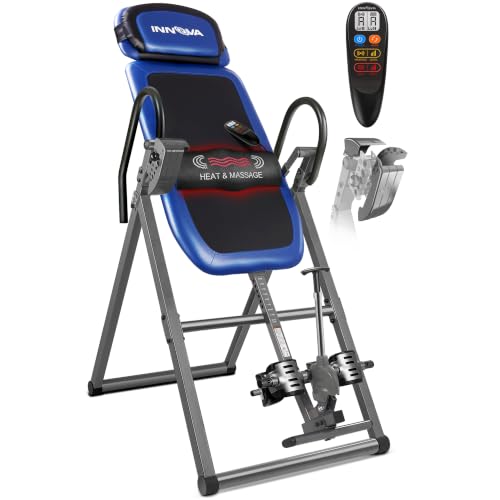 Innova ITM4800Mid-range, price tier 2 of 3Maker source |  Innova ITM5900Mid-range, price tier 2 of 3Maker source |  Innova ITM6000Mid-range, price tier 2 of 3Maker source |
|---|---|---|---|
| Weight capacity | 300 lb | 300 lb | 300 lb |
| Angle control | Six-position pin with protective cover; degrees not stated | Six-position pin with protective cover; degrees not stated | Six-position pin; slope adjustable without dismounting |
| Heat and massage | Heat and vibration on a lumbar band, adjustable position | Vertical heat and massage pad covering the entire spine | Dual pads, one for the neck and one for the back, two heat levels |
| Warranty | 1 year limited | 1 year limited | 1 year limited |
| FDA | Not stated | Not stated | Not stated |
| Buy | See today's price: Innova ITM4800 on Amazon (opens in a new tab) | See today's price: Innova ITM5900 on Amazon (opens in a new tab) | See today's price: Innova ITM6000 on Amazon (opens in a new tab) |
Innova ITM4800Maker source- Weight capacity
- 300 lb
- Angle control
- Six-position pin with protective cover; degrees not stated
- Heat and massage
- Heat and vibration on a lumbar band, adjustable position
- Warranty
- 1 year limited
- FDA
- Not stated
Innova ITM5900Maker source- Weight capacity
- 300 lb
- Angle control
- Six-position pin with protective cover; degrees not stated
- Heat and massage
- Vertical heat and massage pad covering the entire spine
- Warranty
- 1 year limited
- FDA
- Not stated
Innova ITM6000Maker source- Weight capacity
- 300 lb
- Angle control
- Six-position pin; slope adjustable without dismounting
- Heat and massage
- Dual pads, one for the neck and one for the back, two heat levels
- Warranty
- 1 year limited
- FDA
- Not stated
Maker source from the maker's own page or manual, not independently testedListing only retail listing, no maker spec sheetNot stated the maker publishes nothing
The trade is visible in the last two rows: a one-year warranty and no FDA clearance declared. Our Innova buying guide goes through which of the three suits which kind of pain.
If You Weigh More Than 300 lb
Every Teeter table is rated to 300 lb. That used to be the ceiling across the mainstream brands, but it no longer is. Innova publishes a 350 lb capacity for its ITX1200, with a three-position pin and a 4’10” to 6’6” height range (Innova). If you are over 300 lb, no Teeter table is rated for you, and you should not go past a published limit. The one Teeter product rated higher is the DEX II, at 350 lb, and it is not a table: it holds you at the hips rather than the ankles, as our Teeter DEX II review explains.
If the Budget Comes First
The FitSpine models with marked angles sit in the premium tier. If price is the deciding factor, our full inversion table comparison covers the cheaper frames that still pass our filters, along with what each one gives up.
If You Have a Condition on Teeter’s Own List
Teeter’s contraindication list, which the company says also appears in the owner’s manual, tells users not to invert until a physician approves if they have high blood pressure, heart or circulatory conditions, glaucoma, a history of retinal detachment, osteoporosis, hernias, severe acid reflux, pregnancy or recent surgery, among others (Teeter). No model upgrade changes that. Our page on who should not use an inversion table sorts that list into what has been measured and what is caution.
A Brief History of Teeter
A short history explains some of the model names you will still find in search results and on the used market.
From Gravity Boots in 1981
Teeter says it began in 1981 as a family business. According to the company, founder Roger Teeter found relief for his own back pain through inversion, and he and his wife Jenny started out with Gravity Boots and a single inversion table (Teeter). That is the company’s own account rather than an independent record, but it is consistent with the FDA file, where gravity boots sit in the same clearance as the table.
See the discontinued models we don't recommend
The X2, the EP-970 and the EP-960
These three names still come up in searches, and none of them is in Teeter’s current range. The FitSpine X2 has been dropped from Teeter’s product sitemap. We don’t recommend buying a discontinued model new from a third party: Teeter no longer lists it, and we can’t confirm how long replacement parts will be available.
The EP-970 and EP-960 are in the same position. Teeter’s EP-970 address now sends visitors to the general FitSpine page. If you are looking at one used, check the ankle lock and the angle tether carefully, since those are the two parts your safety depends on. If you’re choosing new, the EP-560 is the only EP-series table Teeter still sells.
Why Teeter Shows Up in So Many Recommendations
Part of the brand’s profile comes from high-profile users. If that is what brought you here, we look at the Joe Rogan question separately in whether Teeter is really the best inversion table. This page sticks to what the specifications and records show.
The Verdict From Our Teeter Inversion Table Reviews: Which Model to Buy
Put simply, pick the cheapest Teeter that solves your specific problem, and don’t pay for features you won’t use.
For Most Back Pain Buyers: the X3
If you are new to inversion and want to start shallow and stay there, the X3’s marked angles are the feature that matters. It has everything the LX9 has for angle control and ankle security.
If Getting On and Off Is the Hard Part: the LX9
Choose the LX9 over the X3 only if bending down to your ankles or balancing while you mount is genuinely difficult. The boarding platform is the reason to pay more, and it is the only one.
If You Already Know Your Angle: the X1 or the EP-560
The X1 gives you the FitSpine bed and the same warranty and clearance without the marked strap. The EP-560 is the choice if you specifically want Teeter’s heat and vibration cushion, sold with it as the EP-560V.
Whichever model you choose, the limits are the same across the whole range: 300 lb, a physician’s approval if you are on Teeter’s list, and short sessions to start.
Your questions, answered
Frequently Asked Questions
Do Teeter inversion tables really work?
Mechanically, yes: the table holds you at the angle you set so gravity pulls along your spine. Whether that relieves pain is less settled. A Cochrane analysis of 32 traction trials found little or no effect on low-back pain, while a small neurosurgical pilot saw fewer disc operations among inversion users. None of that evidence is specific to the Teeter brand.
Which Teeter inversion table is considered the best?
There isn't one best Teeter; there is a best one for your problem. If you are inverting for back pain and want to start shallow, the X3 is the sensible stop, because its tether is marked at 20, 40 and 60 degrees. The LX9 earns its extra cost only if stepping on and off is difficult. The X1 suits people comfortable setting the angle by feel.
What are the key differences between the Fitspine X3 and LX9 machines?
Fewer than the price gap suggests. Both use the same marked angle tether, the same Deluxe EZ-Reach ankle lock, the same 300 lb rating, the same five-year warranty and the same FDA clearance. What the LX9 adds is an arched frame and a raised boarding platform, both aimed at getting into the ankle lock. If mounting is easy for you, the X3 covers everything else.
What are the downsides of using a Teeter inversion table?
The biggest ones come with any inversion table: blood pressure and eye pressure climb while you are upside down, and a slipped ankle can mean landing on your head. The Teeter-specific drawbacks are narrower. FitSpine models have no heat or massage built in, the rated ceiling is 300 lb, and the models with marked angles sit in the premium price tier.
How long should you stay on a Teeter inversion table?
Less time than most people expect. The marked angles help you start shallow, but duration matters too. Researchers who reported three fall injuries in 2021 advise keeping each session under a minute, so tired ankles or a lost grip have less time to cause trouble. That is their advice, not a clinical consensus, so ask your doctor what limit suits your condition.
Who should not use a Teeter inversion table?
Anyone Teeter itself tells to see a doctor first: people with high blood pressure, heart or circulatory disease, glaucoma or a past retinal detachment, osteoporosis, fractures or orthopedic implants, a hernia, severe reflux, a pregnancy or recent surgery, among other conditions. The list is deliberately broad. It is the maker's caution, and your physician makes the final call.
14 sources used for this guide
Each linked to the original. Citations in the text jump here.
View sources
Teeter. Product sitemap. teeter.com/product-sitemap.xml.
Teeter. FitSpine X1 Inversion Table. teeter.com, product page.
Teeter. EP-560 Inversion Table. teeter.com, product page.
Teeter. Heat & Vibration Comfort Cushion. teeter.com, product page.
Teeter. FitSpine Inversion Tables. teeter.com/fitspine/.
Jung SH, Hwang JM, Kim CH. Inversion Table Fall Injury, the Phantom Menace: Three Case Reports on Cervical Spinal Cord Injury. Healthcare (Basel) 2021;9(5):492.
FDA. 510(k) Premarket Notification K162702: Teeter Manual Inversion Table. U.S. Food and Drug Administration, 510(k) database, decision date December 30, 2016.
FDA. Device classification, product code HST: Apparatus, Traction, Non-Powered. U.S. Food and Drug Administration, device classification database (openFDA), 21 CFR 888.5850.
Teeter. Our Story. teeter.com, About.
Kassay A, Soliman MAR, Jhawar BS. Recommendations for inversion table therapy. Disability and Rehabilitation 2023;45(22):3779-3782.
Wegner I, Widyahening IS, van Tulder MW et al. Traction for low-back pain with or without sciatica. Cochrane Database of Systematic Reviews 2013, CD003010.
Teeter. Return Policy. teeter.com, Return Policy.
Innova. ITX1200 Inversion Table. innovaproductsinc.com, product page.
Teeter. Are there health issues that would prevent me from inverting?. teeter.com, Support Center (the same list appears in the owner's manual).