Buying guide
Decompression Table vs Inversion Table: What Is Different and What You Can Use at Home
By the IntoInversion teamUpdated
- 4 picks
- 18 sources
- 11 min read
We earn from qualifying purchases made through our links.
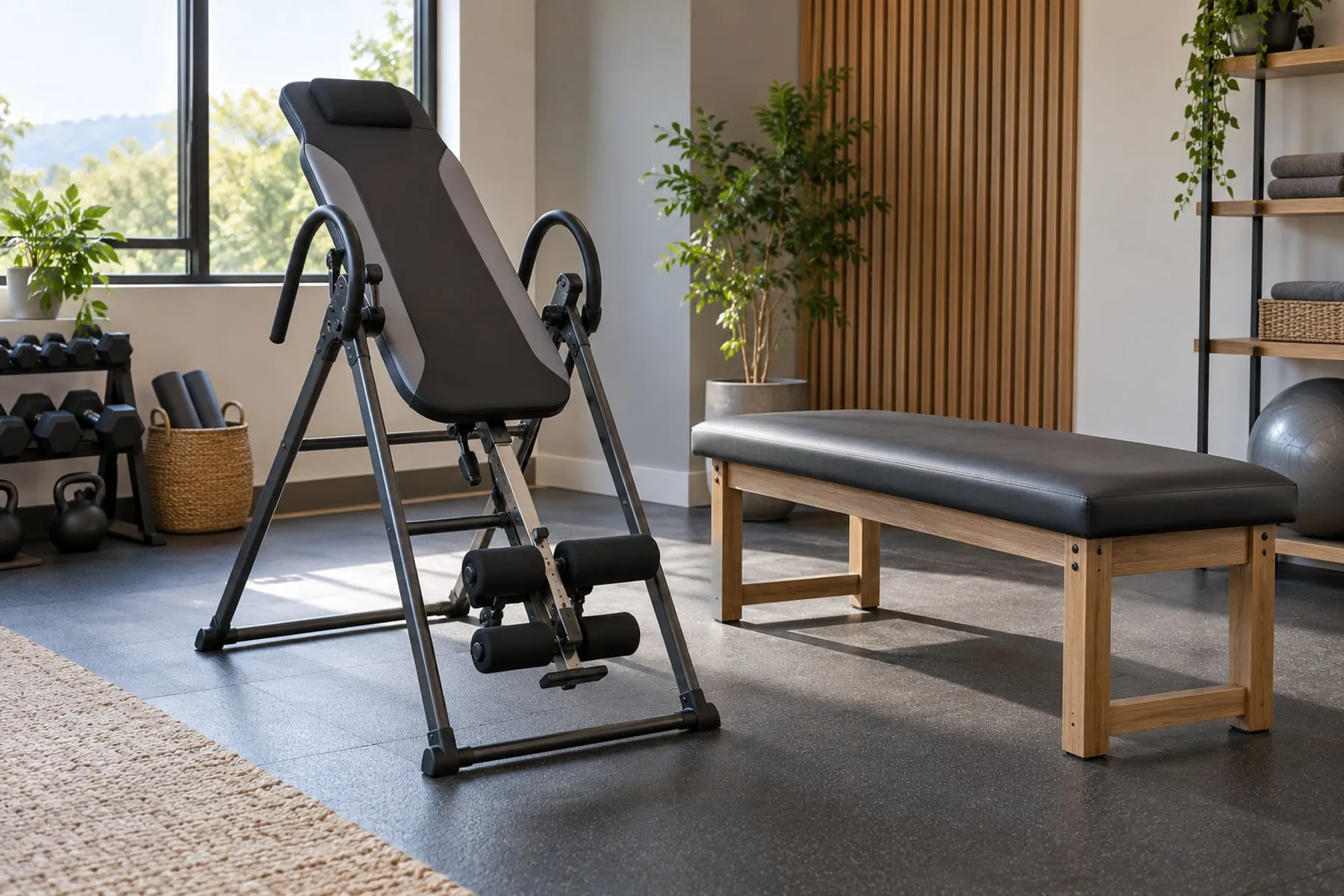

Our pick if you want to try home traction cheaply
Teeter P2 Back Stretcher
The decompression table vs inversion table question mixes up two things: a motorized machine run in a clinic, and a table you tip yourself on at home. For home use, the Teeter P2 is the lowest-cost thing to try, because you can end the stretch the instant you stop pushing. None of the home options is proven to relieve back pain.
- Cheapest tier on this page, and you control the pull by how hard you push
- Maker publishes a manual with stop signs and a contraindication list
- Five-year full warranty
- Warranty
- 5 years
- Price range
- Budget
Maker sourceSpecs from the maker's own product page

Best lower-cost inversion table
Choose it if you want to find out whether going head-down suits you before spending premium money. Skip it if you want a five-year warranty: Innova gives one year.

Best inversion table for years of use
Choose it if you will use a table often and want a tether marked at 20, 40 and 60 degrees plus a five-year warranty. Skip it if you are not sure you will keep using a table. It sits in the premium tier.
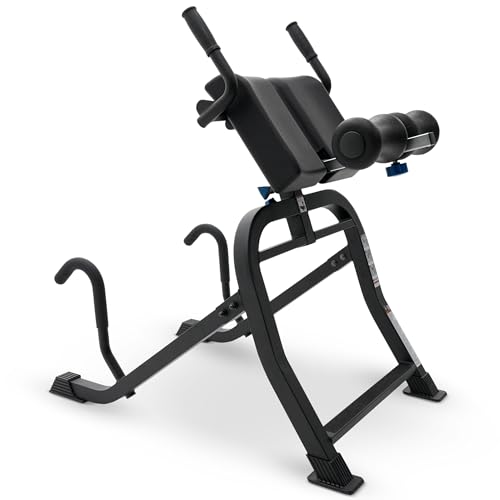
Best home machine closest to a decompression table
Choose it if hanging by the ankles is the problem and you want to be held at the hips and thighs instead. Skip it if you have high blood pressure, glaucoma or anything else that rules out going head-down.
This page compares two kinds of spinal traction machine and lists what you can buy to use at home. We did not test any of these products on people. We read each maker’s own page or manual, opened the trial record for each claim, and named the source next to every health statement. Where no source exists, we say so. If you buy through our links we may earn a commission, which never decides which product we pick or the order we list them in.
Decompression Table vs Inversion Table at a Glance
Search results for “decompression table” are mostly clinics, because a decompression table is a piece of clinic equipment. People who type the comparison are usually asking a different question: is the clinic machine worth booking, or can a table at home do the same job? The honest answer is that neither has been shown to do more than plain traction, and the two machines are built and sold in very different ways.
See the two machines side by side
Clinic Table vs Home Table
| Feature | Motorized decompression table | Inversion table |
|---|---|---|
| What pulls | A motor, run by a computer program | Your own body weight, tipped by gravity |
| Who sets the dose | The clinician, per a protocol | You, by choosing the angle and the time |
| Where it is used | A clinic, usually over a course of sessions | At home, in minutes |
| FDA device class | Class II (powered traction) | Class I (non-powered traction) |
| Direct trial evidence | One small trial against plain traction: no advantage | None against a decompression table |
The table is a summary. The next sections give the source for each row.
What a Motorized Decompression Table Does
The word “decompression” is used for both machines, which is why they get confused. They work very differently.
The Motor and the Sensors
On a motorized decompression table you lie strapped into a pelvic harness while a computer program moves one part of the table to stretch the spine (Hill). One maker of these tables, Hill DT Solutions, says the difference from inversion is the technology: its tables “include sensors that indicate whether a patient’s muscles are resisting the stretch being applied by the table. As the muscles resist, the table reduces the poundage of the pull until the muscles relax, then begins to pull again” (Hill). That is a seller describing its own product, not a clinical standard.
The Course of Sessions
The same maker describes a course of at least 12 sessions, each about 30 minutes (Hill). We found no neutral source for what a course costs, or for whether insurers cover it. The figures in clinic marketing vary too much to quote, so we do not print any. Ask the clinic for a written price and for which trials support the exact device for your diagnosis.
Who Clinics Say Should Not Have It
Hill DT lists pregnancy, metastasized cancer, spinal fusion, broken vertebrae, artificial discs or other spinal implants, osteoporosis and spinal tumor as contraindications, and says a patient should be fully examined first (Hill). A different maker may publish a different list. The point is the same one our home picks make: someone who knows your back should clear you before any machine pulls on it.
What an Inversion Table Does Differently
An inversion table has no motor and no sensors. You lie back on a frame, lock your ankles, and tip until your body weight tilts you toward upside down. You choose the angle, and you control the exit.
Gravity as the Pull
A 2023 paper in Disability and Rehabilitation describes inversion table therapy as a form of spinal traction thought to relieve low back pain through gravity-facilitated traction that distracts the lumbar vertebrae (Kassay, 2023). The word to notice is “thought”. It names the idea behind the table, not a measured result.
The Risks That Come With Going Head-Down
Going head-down brings risks of its own. Two minutes of inversion raised systolic and diastolic blood pressure significantly compared with standing, in a randomized trial of 60 female volunteers aged 20 to 30 (Haskvitz, 1986). Five minutes after people were tipped fully head-down, eye pressure had risen from 16.8 to 32.9 mmHg in healthy eyes and from 21.3 to 37.6 mmHg in eyes with glaucoma (Weinreb, 1984).
Falls are the other danger. A 2021 report of three cervical spinal cord injuries from inversion table falls recommended keeping each inverted trial under one minute (Jung, 2021). That is the authors’ advice, not a clinical standard. Our guide on who should not use an inversion table has the full list.
Two Different Regulatory Classes
The FDA classes powered traction equipment, the category that covers motorized decompression tables, as Class II under 21 CFR 890.5900 (FDA). Non-powered traction apparatus, the category that covers inversion tables, is Class I under 21 CFR 888.5850 (FDA). That compares two categories of device. It does not say either one is safer or works better. It also says nothing about unbranded machines sold online, whose regulatory status we could not check.
Which Works Better? The Evidence
This is the question most readers came for, and the answer is less satisfying than either side’s marketing.
The One Head-to-Head Trial
In a small single-blind randomized trial published in 2018, 48 people with low back pain from a lumbar disc herniation were treated over 20 sessions in six weeks, 24 with conventional motorized traction and 24 with “non-surgical spinal decompression” on a DRX9000 machine. Both groups improved on pain, function and mood, and the authors concluded that decompression “is not superior to” conventional traction “in terms of pain, functionality, depression and quality of life” (Kocak, 2018).
Two limits matter. The trial was small, and both groups got an active treatment, so it cannot show that either beats doing nothing. It also did not include an inversion table. What it does show is that the extra technology did not beat plain traction in that trial.
What the Wider Traction Record Says
A Cochrane review pooled 32 trials with 2,762 people. It concluded that traction, alone or with other treatments, “has little or no impact on pain intensity, functional status, global improvement and return to work” in low back pain, and that this applies to both manual and mechanical traction (Wegner, 2013). The UK’s NICE guideline on low back pain and sciatica tells clinicians: “Do not offer traction for managing low back pain with or without sciatica” (NICE, 2016).
Both a decompression table and an inversion table are forms of traction, so neither has escaped that record. Our page on inversion tables for a herniated disc goes further into what is known for disc patients.
What That Means for Choosing
With no trial separating them, the real differences are practical. A clinic gives you screening, supervision and a clinician who can stop the session, at a cost we cannot quote. A home table is cheaper and always there, but you are your own supervisor, and the head-down position adds blood pressure, eye pressure and fall risks.
What About “Decompression Tables” Sold for Home Use?
Search Amazon for a decompression table and you will find motorized tables at home prices, from brands with no maker page we could find.
Why We Did Not Pick One
A product page for a home-priced motorized table gave us no maker manual to open, no published contraindication list and no trial. In the clinic category, even the makers publish contraindications (Hill). We will not point you at a powered device that pulls on your spine without that information.
What to Look for Before Buying One Anyway
If you consider one, ask for these in writing, and walk away if you cannot get them: a maker manual with stop signs and a contraindication list, the force the motor can apply and how you can stop it instantly, a stated weight limit, and a warranty from a company with an address and phone line. A listing that claims it is safe for every condition is a warning, not a feature.
Best Budget Way to Try Home Traction: Teeter P2 Back Stretcher
The P2 is not a table. It is a lie-down stretcher that gives the user control of the pull.
You control the pullMaker source
by TEETER
Best for people who want to find out whether lower back traction helps them, at the lowest cost on this page.
Skip it if you cannot get down to the floor and up, or have weak or unstable shoulders, elbows or wrists.
The only back stretcher here with a manufacturer manual, a contraindication list, a five-year warranty and an FDA 510(k) summary describing the device. You control the pull with your own arms, so you can stop the instant it feels wrong.
- Warranty
- 5 years
- Price range
- Budget
What we like
- Five-year full warranty from Teeter
- Manual with a contraindication list and clear stop signs
- Three positions, from a seated light stretch to a deep stretch
- Under 4 lb and splits in two for travel
Keep in mind
- Uses your arms and shoulders: harder with weak wrists, elbows or shoulders
- No published user height or weight range
- Costs more than any arch board, though still budget tier
- Holds are short (5 to 10 seconds), so it is an active routine, not a lie-down
Full specs
- Price range
- Budget
- Weight capacity
- Not stated
- Door and frame fit
- Three positions (seated, lying, legs raised) and numbered lap pad widths; you set the force by how hard you push
- Mounting
- Two pieces join without tools and separate for travel; lap pad width set by a numbered knob on each side
- Use
- Pads on the thighs, rollers behind the knees; push the handles toward your feet and hold 5 to 10 seconds
- Warranty
- 5 years full
- FDA
- Teeter calls it FDA-registered 510(k); its 510(k) K162702 covers a portable decompression device, Class I device type
Maker sourceFrom the maker's product page. Not stated means the maker publishes nothing.
We may earn a commission. It never changes what we pick, or the order picks appear in.
How It Works
Teeter describes the P2 as designed for “simple, user controlled decompression”: you push the foam-covered handles, and the foam roller supports behind your legs amplify your leverage (Teeter P2 product page). There are three positions, from a light stretch sitting down to a deep stretch lying with your feet elevated. When you stop pushing, the stretch ends.
What the Manual Tells You
Teeter’s instructions say to hold for 5 to 10 seconds only and repeat at least twice, and to stop immediately for worse pain or any weakness in your legs (Teeter P2 instructions). The manual also lists conditions that need a doctor’s approval first, including osteoporosis, recent fractures, spinal injury, pregnancy and surgically implanted orthopedic supports (Teeter P2 instructions).
What It Won’t Do
Teeter’s page calls the P2 an “FDA Registered 510(k) Medical Device indicated for relief of back pain and related conditions” (Teeter P2 product page). That is the maker’s wording, and a 510(k) means the FDA found the device substantially equivalent to one already sold. It is not a finding that the P2 relieves pain. The page states no user weight limit. Our guide to the best back decompression device compares the P2 with belts and standing frames.
Best Lower-Cost Inversion Table: Innova ITX9688
For readers who want a table rather than a stretcher, this is the lowest-cost inversion table on our list.
Reversible ankle holdersMaker source
by Innova
Best for a first inversion table, to find out whether the position suits you before spending premium money.
Skip it if you want a five-year warranty or have any condition that rules out going head-down.
A lower-cost table whose maker publishes its limits: 300 lb, users 4'10" to 6'6", and ankle holders that can trade places.
- Weight limit
- 300 lb
- User height
- 4'10" to 6'6"
- Warranty
- 1 year
- Price range
- Mid-range
What we like
- Ankle holders reverse, so the foam roller can move to the front
- Headrest adjusts as part of the balance setup
- Six-position pin with a protective cover
- Rated to 300 lb, for users 4 ft 10 in to 6 ft 6 in
Keep in mind
- No heat or massage
- Pin degrees not stated
- One-year limited warranty
Full specs
- Price range
- Mid-range
- Weight capacity
- 300 lb
- User height
- 4'10" to 6'6"
- Angle control
- Six-position pin with protective cover; degrees not stated
- Ankle system
- Reversible ankle holders (U-shaped holders and foam rollers can trade places)
- Heat and massage
- None
- Warranty
- 1 year limited
- FDA
- Not stated
Maker sourceFrom the maker's product page. Not stated means the maker publishes nothing.
We may earn a commission. It never changes what we pick, or the order picks appear in.
What Innova Publishes
Innova’s page lists a 300 lb weight capacity, user heights from 4’10” to 6’6”, a six-position adjustable pin system with a protective cover, an adjustable headrest, and reversible ankle holders: U-shaped holders in front with foam rollers behind, or the reverse (Innova). The warranty is one year, limited. On Amazon it appears under a “Premium” label, and Innova’s page links to that listing.
What You Give Up
A one-year warranty is short against Teeter’s five. Innova’s page does not give the pin angles in degrees, and it does not mention heat, massage or FDA status. Our best inversion tables guide compares the wider range.
Best Inversion Table for Years of Use: Teeter FitSpine X3
The X3 costs more and is the table we would choose for regular use.
Long ankle-lock handle, 5-year warrantyMaker source
by TEETER
Best for people who expect to use a table for years and want marked angles and a long warranty.
Skip it if you are not sure you will keep using a table, or you want heat and massage.
What the premium over a cheaper table buys is the longer ankle-lock handle, the 5-year warranty against Innova's 1 year, and a tether marked at 20°, 40° and 60°. The Innova ITX9600 also lets you set a limit with a pin whose degrees are listed in its manual, so a marked angle is not exclusive to Teeter.
- Weight limit
- 300 lb
- User height
- 4'8" to 6'6"
- Warranty
- 5 years
- Price range
- Premium
What we like
- Tether marked at 20°, 40° and 60°, set before you get on
- Five-year full warranty, against Innova's one year
- Teeter's tables are FDA 510(k) cleared under K162702
- EZ-Reach ankle lock with an extra-long handle
Keep in mind
- No heat or massage
- No raised boarding platform, unlike the LX9
- Rated to 300 lb, max height 6 ft 6 in
Full specs
- Price range
- Premium
- Weight capacity
- 300 lb
- User height
- 4'8" to 6'6"
- Angle control
- EZ-Angle tether marked at 20°, 40° and 60°; full inversion with secure lockout
- Ankle system
- Deluxe EZ-Reach ankle lock, extra-long handle, micro-adjusting closure
- Heat and massage
- None
- Warranty
- 5 years (extension to 10 sold separately)
- FDA
- 510(k) cleared (K162702), Class I device
Maker sourceFrom the maker's product page. Not stated means the maker publishes nothing.
We may earn a commission. It never changes what we pick, or the order picks appear in.
What Teeter Publishes
Teeter lists a 300 lb capacity, user heights from 4’8” to 6’6”, and an EZ-Angle tether with embroidered markings at 20, 40 and 60 degrees (Teeter). The standard warranty is five years, full, with a five-year extension sold separately. The page carries an “FDA-Registered” heading and says the table is a “medical device indicated for 10 back pain conditions”. That is Teeter’s wording.
What It Does Not Do
Teeter’s page lists no heat, massage or raised boarding platform for it. The higher price buys the longer ankle-lock handle, the marked tether and the longer warranty, not proven relief. The same contraindications apply as for any table.
Best Home Machine Closest to a Decompression Table: Teeter DEX II
The DEX II is neither a classic inversion table nor a clinic decompression table.
Hip-supported, no ankle loadMaker source
by TEETER
Best for people who want hip-supported forward inversion with no load on the ankles.
Skip it if you have high blood pressure, glaucoma or any condition that rules out going head-down, or you have no room for a frame that stays set up.
If hanging by your ankles is the problem, the DEX II takes the ankles out: it holds you at the hips and thighs with your knees bent, and Teeter rates it to 350 lb, 50 lb more than any FitSpine table.
- Weight limit
- 350 lb
- User height
- 4'8" to 6'6"
- Warranty
- 5 years
- Price range
- Premium
What we like
- Holds you at the hips and thighs, with no load on the ankles
- Rated to 350 lb for users from 4 ft 8 in to 6 ft 6 in
- Doubles as a back extension and ab crunch station
- Five-year full warranty, like the FitSpine tables
Keep in mind
- No angle setting: one forward stop, so no gentle 20° start
- Does not fold; Teeter says it is often left set up
- The manual asks new users for a spotter strong enough to lift them
- No heat or massage
Full specs
- Price range
- Premium
- Weight capacity
- 350 lb
- User height
- 4'8" to 6'6"
- Angle control
- No angle setting: rotates forward to one fixed stop, knees and hips bent at about 90/90
- Ankle system
- None: your thighs lock between the leg supports and the lap pad, with no load on the ankles
- Door and frame fit
- Lap pad height set so your hips line up with its top edge; leg supports snug behind the thighs
- Mounting
- Five steps in the manual, two wrenches and a screwdriver supplied; BILT app instructions
- Use
- Stand on the base, lean forward on the cane handles and rotate until the lap pad reaches its stop, knees bent
- Warranty
- 5 years full (5-year extension sold separately)
- FDA
- Manual states Teeter inversion products are FDA-registered as 510(k) devices (brand-wide, no DEX-specific number)
Maker sourceFrom the maker's product page. Not stated means the maker publishes nothing.
We may earn a commission. It never changes what we pick, or the order picks appear in.
How It Differs From Both
Teeter says the DEX II supports you at the hips in a bent-knee, bent-hip position, which “flattens the lumbar curve to target decompression on the lower back”, with no load on the ankles (Teeter DEX II product page). You rotate forward until the lap pad reaches its stop, and your thighs carry your weight (Teeter DEX II manual). Teeter’s own comparison says the table gives a broader, full-body stretch and the DEX II targets the lower back, and that the DEX II has a larger footprint and is often left assembled (Teeter, 2026).
Specs and Limits
It is rated to 350 lb, for users 4’8” to 6’6”, with a five-year full warranty (Teeter DEX II product page). It has one forward stop and no angle setting. Our full Teeter DEX II review covers setup and the exercises.
The Specs Side by Side
The columns come from each maker’s own page or manual. Where a maker does not publish a figure, the table says “Not stated”.
| Spec | Editor's choiceTeeter P2 Back StretcherBudget, price tier 1 of 3Maker source | Innova ITX9688Mid-range, price tier 2 of 3Maker source | Teeter FitSpine X3Premium, price tier 3 of 3Maker source | Teeter DEX IIPremium, price tier 3 of 3Maker source |
|---|---|---|---|---|
| Weight capacity | Not stated | 300 lb | 300 lb | 350 lbHighest here |
| User height | Not stated | 4'10" to 6'6" | 4'8" to 6'6" | 4'8" to 6'6" |
| Angle control | Not stated | Six-position pin with protective cover; degrees not stated | EZ-Angle tether marked at 20°, 40° and 60°; full inversion with secure lockout | No angle setting: rotates forward to one fixed stop, knees and hips bent at about 90/90 |
| Ankle system | Not stated | Reversible ankle holders (U-shaped holders and foam rollers can trade places) | Deluxe EZ-Reach ankle lock, extra-long handle, micro-adjusting closure | None: your thighs lock between the leg supports and the lap pad, with no load on the ankles |
| Warranty | 5 years fullHighest here | 1 year limited | 5 years (extension to 10 sold separately)Highest here | 5 years full (5-year extension sold separately)Highest here |
| FDA | Teeter calls it FDA-registered 510(k); its 510(k) K162702 covers a portable decompression device, Class I device type | Not stated | 510(k) cleared (K162702), Class I device | Manual states Teeter inversion products are FDA-registered as 510(k) devices (brand-wide, no DEX-specific number) |
| Buy | See today's price: Teeter P2 Back Stretcher on Amazon (opens in a new tab) | See today's price: Innova ITX9688 on Amazon (opens in a new tab) | See today's price: Teeter FitSpine X3 on Amazon (opens in a new tab) | See today's price: Teeter DEX II on Amazon (opens in a new tab) |
Editor's choiceTeeter P2 Back StretcherMaker source- Weight capacity
- Not stated
- User height
- Not stated
- Angle control
- Not stated
- Ankle system
- Not stated
- Warranty
- 5 years fullHighest here
- FDA
- Teeter calls it FDA-registered 510(k); its 510(k) K162702 covers a portable decompression device, Class I device type
Innova ITX9688Maker source- Weight capacity
- 300 lb
- User height
- 4'10" to 6'6"
- Angle control
- Six-position pin with protective cover; degrees not stated
- Ankle system
- Reversible ankle holders (U-shaped holders and foam rollers can trade places)
- Warranty
- 1 year limited
- FDA
- Not stated
Teeter FitSpine X3Maker source- Weight capacity
- 300 lb
- User height
- 4'8" to 6'6"
- Angle control
- EZ-Angle tether marked at 20°, 40° and 60°; full inversion with secure lockout
- Ankle system
- Deluxe EZ-Reach ankle lock, extra-long handle, micro-adjusting closure
- Warranty
- 5 years (extension to 10 sold separately)Highest here
- FDA
- 510(k) cleared (K162702), Class I device
Teeter DEX IIMaker source- Weight capacity
- 350 lbHighest here
- User height
- 4'8" to 6'6"
- Angle control
- No angle setting: rotates forward to one fixed stop, knees and hips bent at about 90/90
- Ankle system
- None: your thighs lock between the leg supports and the lap pad, with no load on the ankles
- Warranty
- 5 years full (5-year extension sold separately)Highest here
- FDA
- Manual states Teeter inversion products are FDA-registered as 510(k) devices (brand-wide, no DEX-specific number)
Maker source from the maker's own page or manual, not independently testedListing only retail listing, no maker spec sheetNot stated the maker publishes nothing
Only the weight row and the warranty row separate these four cleanly. The P2 states no weight limit, and the ITX9688 carries one year where the Teeter products carry five.
Who Should Not Use Either Machine
Neither a clinic table nor a home table is for everyone, and a screening visit costs less than guessing.
Conditions That Rule Out Inversion
Teeter’s contraindication list says inversion is contraindicated in any condition that may be made more severe by raised blood pressure, intracranial pressure or the mechanical stress of the inverted position. It names unexplained tingling or weakness, a history of stroke or intracranial bleed, high blood pressure, anticoagulant use, osteoporosis, fractures, surgically implanted orthopedic supports, glaucoma, retinal detachment, hiatal hernia and pregnancy, among others, and says not to use an inversion product until a physician approves (Teeter).
Conditions Clinics List for Decompression Tables
The clinic list from Hill DT overlaps: osteoporosis, spinal fusion, broken vertebrae, implants, pregnancy and tumors (Hill). If any of these apply to you, neither machine is a home experiment.
Pain That Is New or Keeps Getting Worse
Sharp pain, pain that wakes you at night, or leg symptoms that do not ease need examination before any traction. A machine is not a diagnosis.
How to Choose Between Them
Three questions settle most cases.
Can a Clinician Examine You First?
If back pain is severe or has leg symptoms, start with a doctor or physical therapist, not a purchase. If a clinic offers a decompression course, ask for the trials that support that exact device for your diagnosis, and ask what happens if you do not improve.
Can You Go Head-Down?
If your blood pressure, eyes or balance rule out inversion, skip the inversion table and the DEX II. The P2 keeps you lying on the floor. If inversion is allowed and you want to try one, begin shallow and brief, as the table’s manual describes.
What Will You Accept Without Proof?
Every home option here is a trial of one: you. Pick the one with the clearest manual and the easiest stop, use it in short sessions, and judge it over a couple of weeks. If nothing changes, the Cochrane record says that is a common result, and a physical therapist is the next step, not a stronger machine. For equipment-free options, see how to decompress your spine.
Your questions, answered
Frequently Asked Questions
Is a decompression table better than an inversion table?
Nobody has shown that. The one trial we found that compared a branded motorized decompression machine with plain motorized traction saw both groups improve, with no advantage for the decompression machine. No trial we found compares a clinic table with a home inversion table. They are different machines, so the choice is practical: supervision and cost against convenience.
Is there a good decompression table for home use?
Motorized decompression tables are clinic equipment, and we found no maker page, manual or trial for the home-priced versions sold online, so we cannot recommend one. For home use the category you can actually check is non-motorized: an inversion table, a leverage stretcher or a hip-supported machine, each with a published manual and contraindication list.
Do inversion tables decompress the spine?
That is the design idea, not a measured result. Hanging head-down lets gravity act on your body weight, and a 2023 paper describes inversion as spinal traction that is thought to distract the lumbar vertebrae. We found no study that measured disc pressure on a home table, so decompress describes the intent.
How long should you be on a decompression table?
At a clinic, that is set by whoever runs the machine. One maker of these tables describes sessions of about 30 minutes. A home inversion table is a different routine: the only published guidance we found tied to injury risk was to stay inverted under a minute at a time. Follow your clinician and your device manual, not a general figure.
Why is my back pain worse after using an inversion table?
We cannot tell you the cause, and it needs checking. Traction does make some people worse: in a Cochrane review of 32 traction trials, seven reported adverse effects, including more pain, worse nerve signs and later surgery. Stop at once if pain spreads, a leg turns weak or numb, or you feel dizzy, and see a doctor before trying again.
18 sources used for this guide
Each linked to the original. Citations in the text jump here.
View sources
Hill DT Solutions LLC. What Is a Spinal Decompression Table?. hilldtsolutions.com/spinal-decompression-table-info.
Kocak FA, Tunc H, Tomruk Sutbeyaz S, Akkus S, Koseoglu BF, Yilmaz E. Comparison of the short-term effects of the conventional motorized traction with non-surgical spinal decompression performed with a DRX9000 device on pain, functionality, depression, and quality of life in patients with low back pain associated with lumbar disc herniation: A single-blind randomized-controlled trial. Turkish Journal of Physical Medicine and Rehabilitation 2018;64(1):17-27.
Wegner I, Widyahening IS, van Tulder MW et al. Traction for low-back pain with or without sciatica. Cochrane Database of Systematic Reviews 2013, CD003010.
National Institute for Health and Care Excellence (NICE). Low back pain and sciatica in over 16s: assessment and management, Recommendations. NICE guideline NG59, published 30 November 2016, last updated 29 July 2026.
FDA. Device classification, product code ITH: Equipment, Traction, Powered. U.S. Food and Drug Administration, device classification database (openFDA), 21 CFR 890.5900.
FDA. Device classification, product code HST: Apparatus, Traction, Non-Powered. U.S. Food and Drug Administration, device classification database (openFDA), 21 CFR 888.5850.
Teeter. Are there health issues that would prevent me from inverting?. teeter.com, Support Center (the same list appears in the owner's manual).
Haskvitz EM, Hanten WP. Blood pressure response to inversion traction. Physical Therapy 1986;66(9):1361-1364.
Weinreb RN, Cook J, Friberg TR. Effect of inverted body position on intraocular pressure. American Journal of Ophthalmology 1984;98(6):784-787.
Jung SH, Hwang JM, Kim CH. Inversion Table Fall Injury, the Phantom Menace: Three Case Reports on Cervical Spinal Cord Injury. Healthcare (Basel) 2021;9(5):492.
Kassay A, Soliman MAR, Jhawar BS. Recommendations for inversion table therapy. Disability and Rehabilitation 2023;45(22):3779-3782.
Innova. ITX9688 Inversion Table. innovaproductsinc.com, product page.
Teeter. FitSpine X3 Inversion Table. teeter.com, product page.
Teeter. P2 Back Stretcher. teeter.com, product page, accessed October 2026.
Teeter. P2 Back Stretcher: Assembly and Use Instructions. Owner's instructions, P21040.
Teeter. DEX II Commercial Inversion & Core Training System. teeter.com, accessed September 2026.
Teeter. DEX II Inversion & Core Training System: Assembly & User Guide. Owner's manual, label D12010.
Teeter. Inversion Table vs. DEX II: Recline vs. Forward Inversion. teeter.com blog, June 2026.